

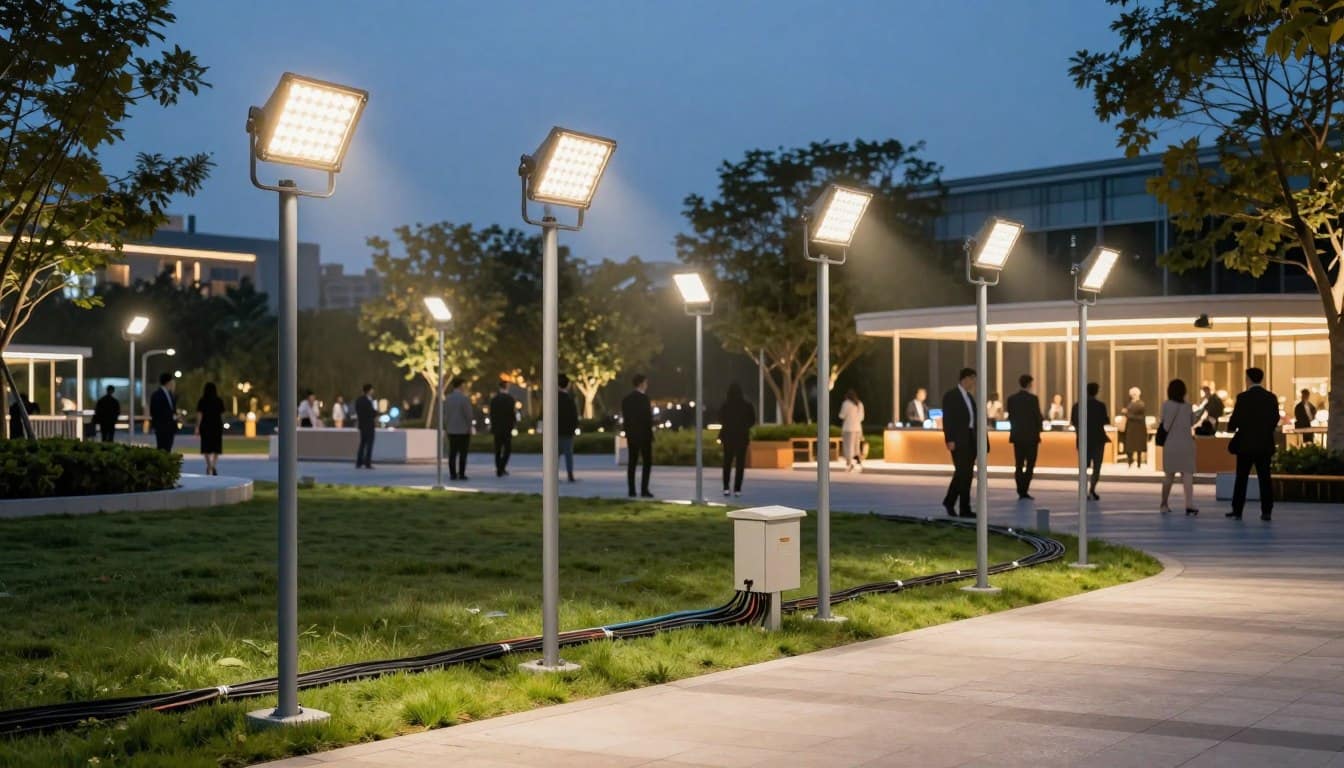


One poorly placed fixture can leave a parking area dark while wasting energy elsewhere. A successful site plan treats commercial outdoor LED lighting as one complete system. Fixture choice, wiring, mounting height, controls, and service access must work together from the start.
Quick answer: Match ISON IAHP1 and HARRIS Gen 2 LSWF2, FLGA4, or RDWL1 fixtures to coverage needs. Use code-compliant, weather-resistant wiring, then place fixtures near parking, walkways, entries, façades, and service areas. Add zoning, sensors, and photocells to improve security and energy control.
Connecticut properties face snow, ice, freeze-thaw movement, coastal moisture, and New England soil. These conditions can affect anchors, conduit, drainage, and buried cable. Cool-season grass and protected planting beds also shape fixture placement.
This guide introduces the ISON IAHP1 area light high performance family and Gen 2 IAHP2 options. It also reviews the HARRIS lumen select wall pack LSWF2, FLGA4 architectural flood fixture, and RDWL1 roadway product.
Use this installation planning guide to compare optics, wiring, controls, and mounting needs. For lower-voltage landscape connections, review low-voltage landscape options. Then balance visibility, glare control, security, plant protection, efficiency, and maintenance before you request quote from ctlawn.net.
Key Takeaways
- Connecticut weather demands durable, well-sealed equipment.
- Mounting height and beam spread determine coverage.
- Weather-resistant wiring must meet local code.
- Controls require on-site testing and calibration.
- A balanced layout protects visibility, plants, and service access.
What Fixtures Suit Commercial Outdoor LED Lighting?
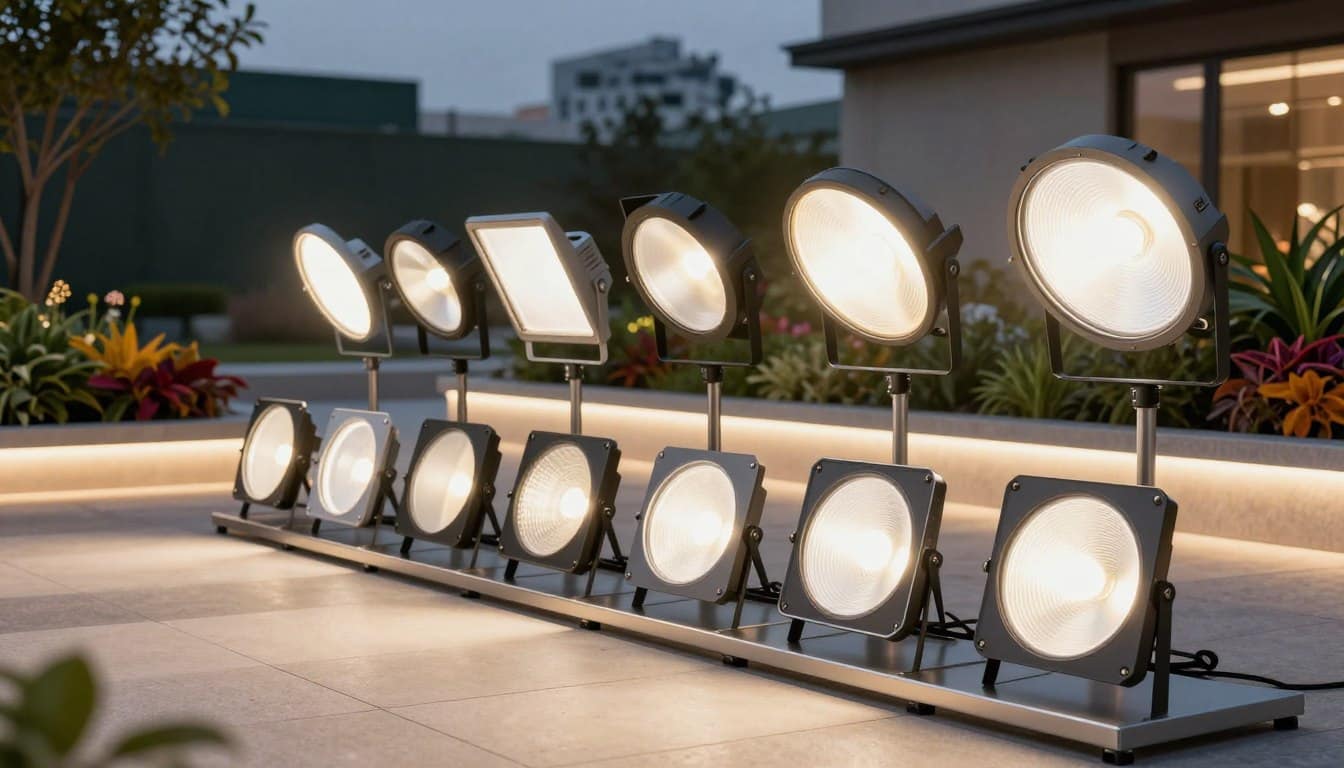
Fixture selection should follow the site plan, not wattage alone. Review optics, pole height, mounting direction, color temperature, controls, service access, and local electrical rules. A fixture planning guide can help shape the first layout.
ISON Area Lights for High-Performance Site Coverage
ISON IAHP1 and new IAHP2 suit parking lots, loading zones, drive lanes, and site edges. Proper spacing, mounting height, and photometric testing help create even coverage with controlled glare.
HARRIS Wall Packs and Canopy Lights
HARRIS Lumen Select Canopy Square LSCS1 fits covered entries, fueling areas, and pedestrian transitions. Choose LSWF2 for full cutoff control or LSWS2 for semi-cutoff distribution where some wall brightness supports visibility.
Architectural Flood Lights and Roadway Lighters
FLGA4 frames façades, signs, corners, and landscape features. New RDWL1 supports internal drives and access lanes with consistent forward visibility. Use fixture adjustment tips after installation.
- Full cutoff: reduces upward spill.
- Semi-cutoff: adds limited wall glow.
- Controls: test sensors, photocells, and reset settings.
| Category | Model | Best fit | CT note |
|---|---|---|---|
| Area | IAHP1 / IAHP2 | Parking and drives | Check snow exposure |
| Wall or canopy | LSCS1 / LSWF2 / LSWS2 | Entries and walls | Limit neighbor glare |
| Flood or roadway | FLGA4 / RDWL1 | Façades and lanes | Confirm access and code |
Request a quote after reviewing the photometric plan, wiring route, and maintenance needs.
How Should Commercial Outdoor LED Lighting Be Wired?
Reliable wiring begins with a site plan, not an open trench. Mark panel capacity, circuit paths, disconnects, fixture loads, control zones, and future service points. A professional wiring planning guide can support this review.
Planning Safe, Durable Wiring for New England Conditions
Connecticut freeze-thaw cycles can shift shallow conduit. New England soil also holds moisture and stone. Follow electrical code for trench depth, bedding, sealing, transitions, grounding, bonding, and mechanical protection. Keep junction boxes accessible, use weather-rated connections, and separate circuits from irrigation lines. Apply GFCI and surge protection where required.
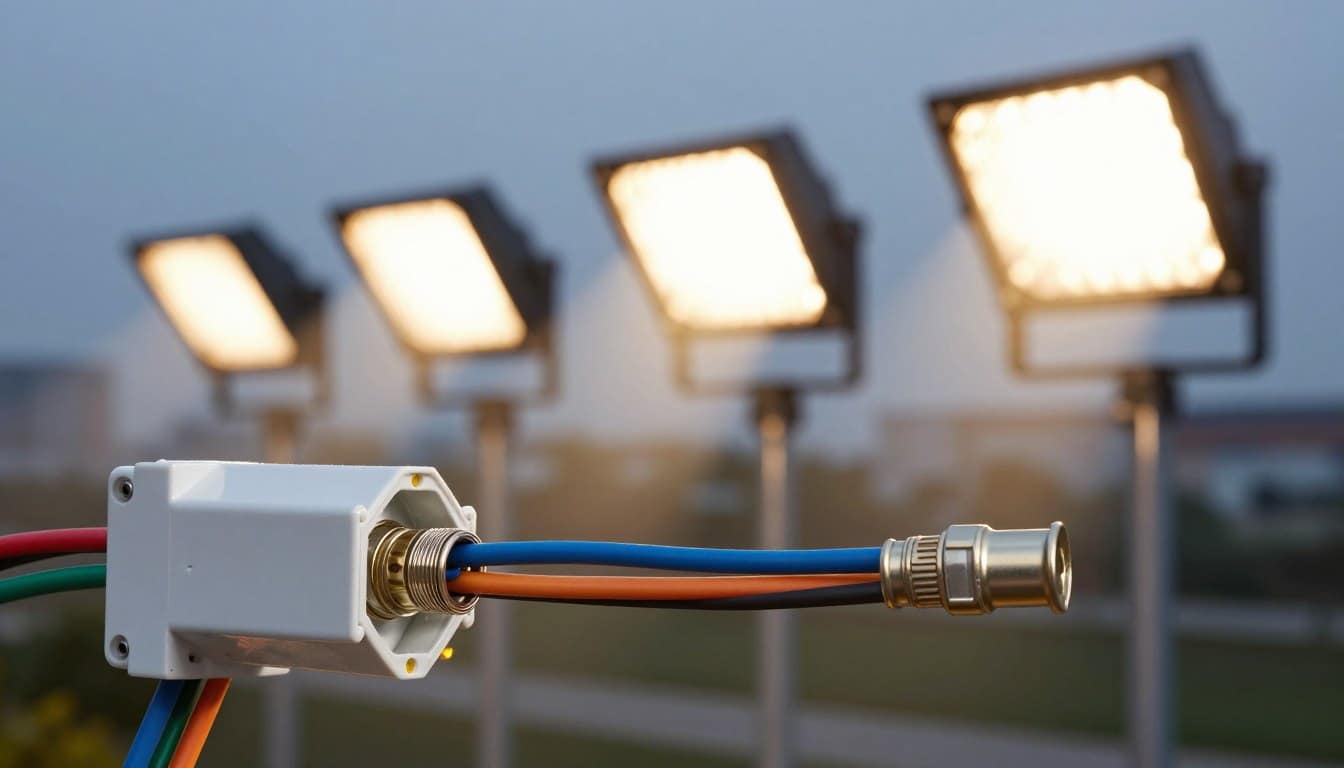
Plan each run for the LSWF2 and LSWS2 wall packs, FLGA4 flood fixture, and RDWL1 roadway unit. Limit splices and check voltage drop. Photocells, astronomical timers, occupancy sensors, and network controls can divide zones and reduce waste. A low-voltage wiring resource may help with landscape circuits. A licensed electrician should verify utility coordination, local rules, trench conditions, and system commissioning before energizing.
| Planning item | Primary concern | Recommended check |
| Buried conduit | Movement and moisture | Confirm depth, bedding, seals, and protection |
| Connections | Corrosion and faults | Use rated boxes, bonding, grounding, and GFCI |
| Controls | Unneeded operation | Test zones, sensors, timers, and reset settings |
Which Layout Works Best for Business Properties?
A strong site plan follows how people move, park, enter, and work. Start with accessible entrances, paths, stairs, parking aisles, loading areas, dumpsters, and building approaches. These points guide safety and customer visibility.
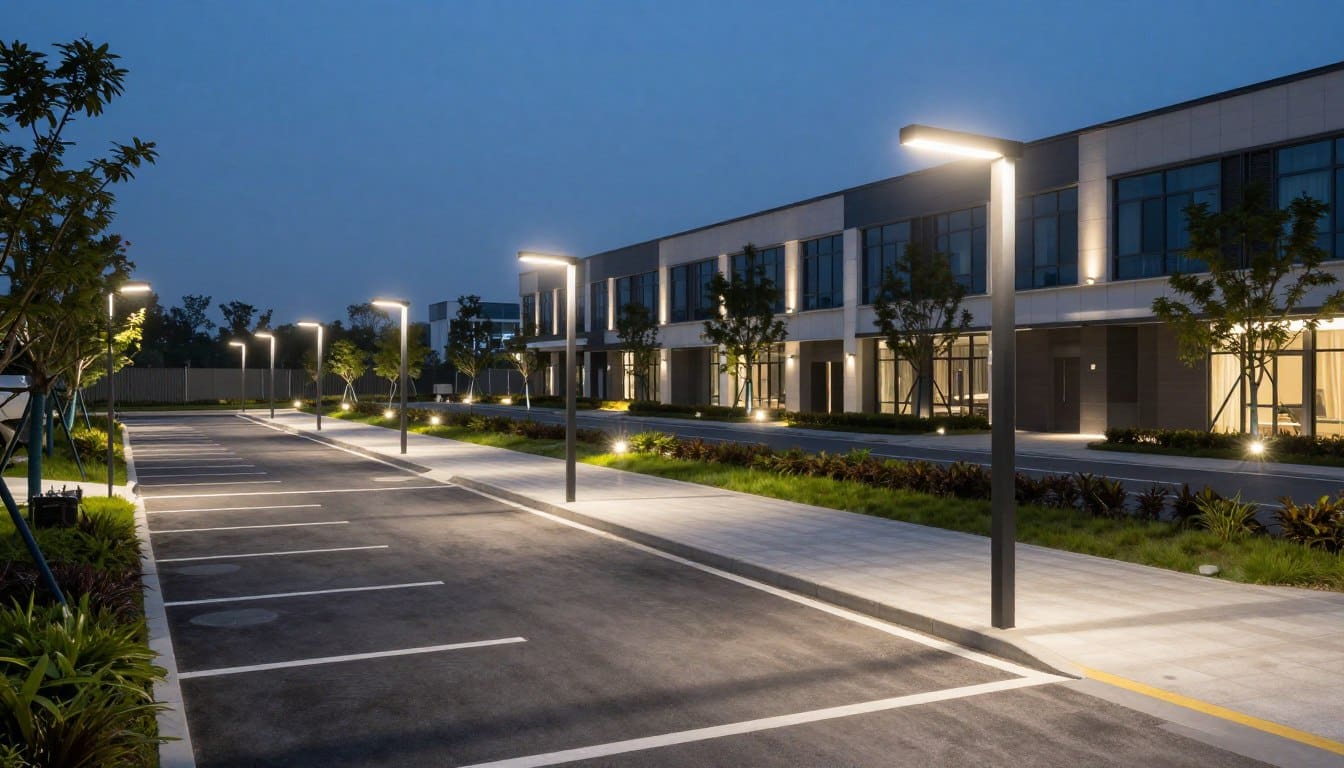
Pole-mounted IAHP2 area light high performance fixtures can overlap across parking and circulation zones. Overlap helps limit dark gaps caused by snowbanks, mature trees, or seasonal planting changes. Keep poles clear of plow routes and drainage paths.
- Place LSCS1 beneath covered entries and canopies.
- Use an LSWF2 wall pack full cutoff near service doors.
- Choose LSWS2 when a wall pack semi-cutoff pattern suits the wall.
- Aim FLGA4, an architectural flood light, at signs and façades without glare.
- Use RDWL1, a roadway lighter, along drives and turning areas.
Account for Connecticut soil, salt, turf, tree growth, and snow storage. Keep fixtures accessible for lawn care and repairs. A photometric review should confirm sightlines, pavement markings, and control zones. Pair the plan with professional landscape installation services, then request quote before choosing pole locations or installation timing.
Conclusion
Effective site illumination starts with the right fixture, safe wiring, controlled distribution, and a layout built around real traffic. ISON products deliver high performance for parking areas, while HARRIS LED families serve walls, canopies, façades, and roads. A select wall pack, lumen select wall unit, or area light should match its task, not replace another category.
Review snow storage, soil movement, drainage, turf, coastal moisture, power capacity, glare, controls, and service access. See fixture options and a low-voltage setup guide. Visit ctlawn.net to request quote for planning and maintenance. Contact CTLawn for a professional quote before trench routes are approved.
FAQ
What works best for a Connecticut parking lot?
Photometric coverage, pole height, traffic, snow storage, and power design decide the answer.
Which wall pack pattern fits?
Choose full cutoff for glare control or semi-cutoff for wider wall spread.
How do I get a quote?
Contact ctlawn.net for a property review and maintenance plan.