





Most gas-powered equipment uses separate fuel and lubricant tanks. That design makes fluid care simple, yet one low-level check can prevent costly damage during Connecticut’s busy growing season.
Most four-cycle equipment uses SAE 30, SAE 10W-30, or synthetic SAE 5W-30. The owner’s manual sets the exact specification. Select a grade for the design and starting temperature, then check the dipstick. In Connecticut, these choices cover most seasonal work, but model instructions always come first.
The lawn mower oil type depends on the engine design, manufacturer rules, and weather. Lubricant reduces friction, carries away heat, and protects moving parts. Low or deteriorated fluid can lower performance, cause costly repairs, and lead to complete breakdown, according to an October 7, 2022 reference.
Connecticut’s cool-season grass and New England climate bring cool spring and fall starts. This guide covers viscosity grades, synthetic options, dipstick checks, service intervals, and practical turf protection. For dependable seasonal care, review this small-engine guide and visit CT Lawn for a professional quote.
Key Takeaways
- Four-cycle equipment usually uses SAE 30, 10W-30, or 5W-30.
- The owner’s manual provides the final specification.
- Cool spring and fall starts affect grade selection.
- Low fluid can cause heat, wear, and major damage.
- Regular checks support reliable Connecticut turf care.
What lawn mower oil type does your engine need?
Before adding lubricant, identify the combustion design under the hood. The right choice depends on how the engine stores fuel and protects its moving parts.
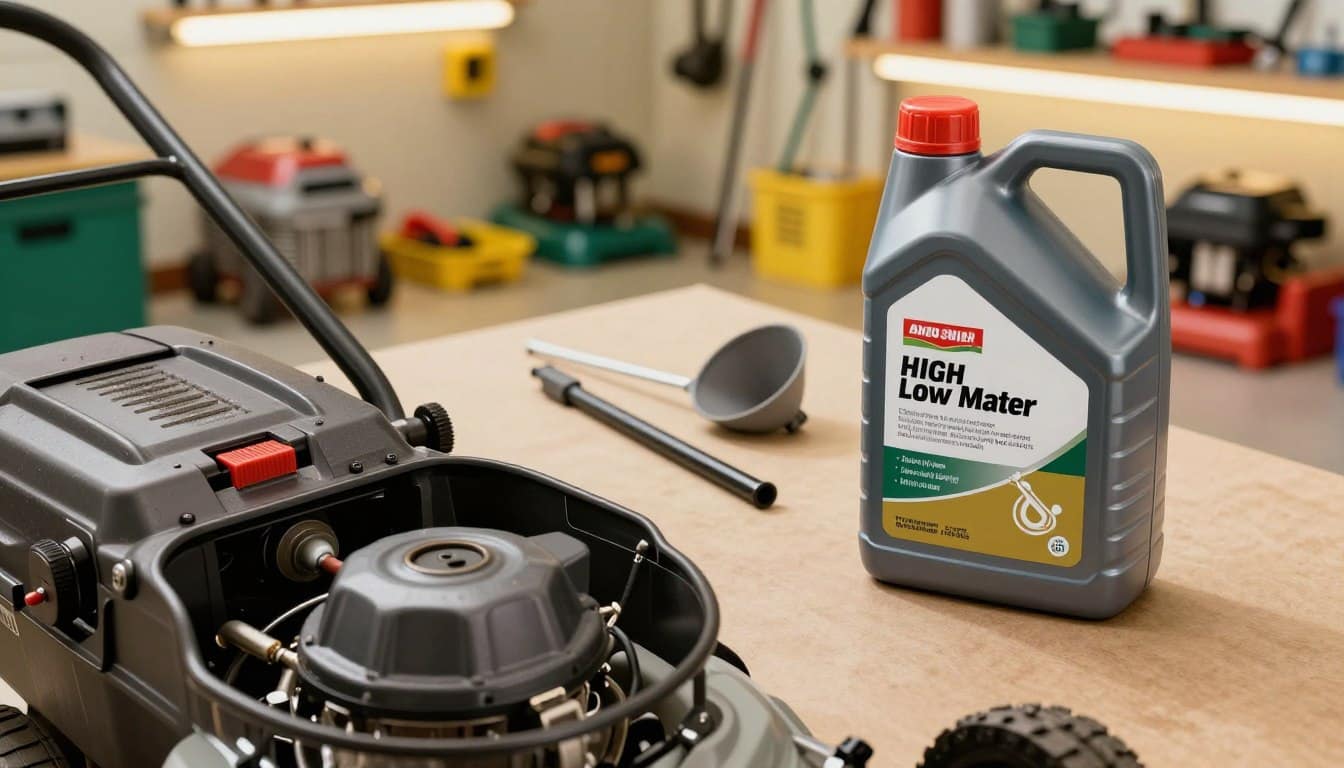
How four-cycle and two-cycle mower engines differ
A four-cycle engine is the common design in residential equipment. It burns gasoline while keeping oil in a separate lubrication system. Never pour lubricant into the fuel tank unless the maker specifically instructs you to do so.
Two-cycle mower engines burn a gasoline-and-lubricant mixture from one tank. This design is more common in chainsaws, trimmers, and similar tools. Emissions rules have made two-cycle engines less common, but some mowers still use them.
Why your owner’s manual is the final authority
Your owner manual lists viscosity, capacity, API service rating, and any mixing ratio. Ratings such as SF, SG, SH, and SJ appear on some labels; a later rating generally offers a stronger specification.
- Use automotive engine oil only when its grade and API rating match the manual.
- Photograph the model and serial labels before asking a dealer or lawn-care professional for help.
Which oil grades work best in Connecticut weather?
Connecticut’s shifting seasons make viscosity an important choice for small engines. Viscosity shows how quickly lubricant flows at different temperatures. The “W” means winter: the first number describes cold flow, while the second reflects warm operating viscosity. Always confirm the approved grade in your owner’s manual.
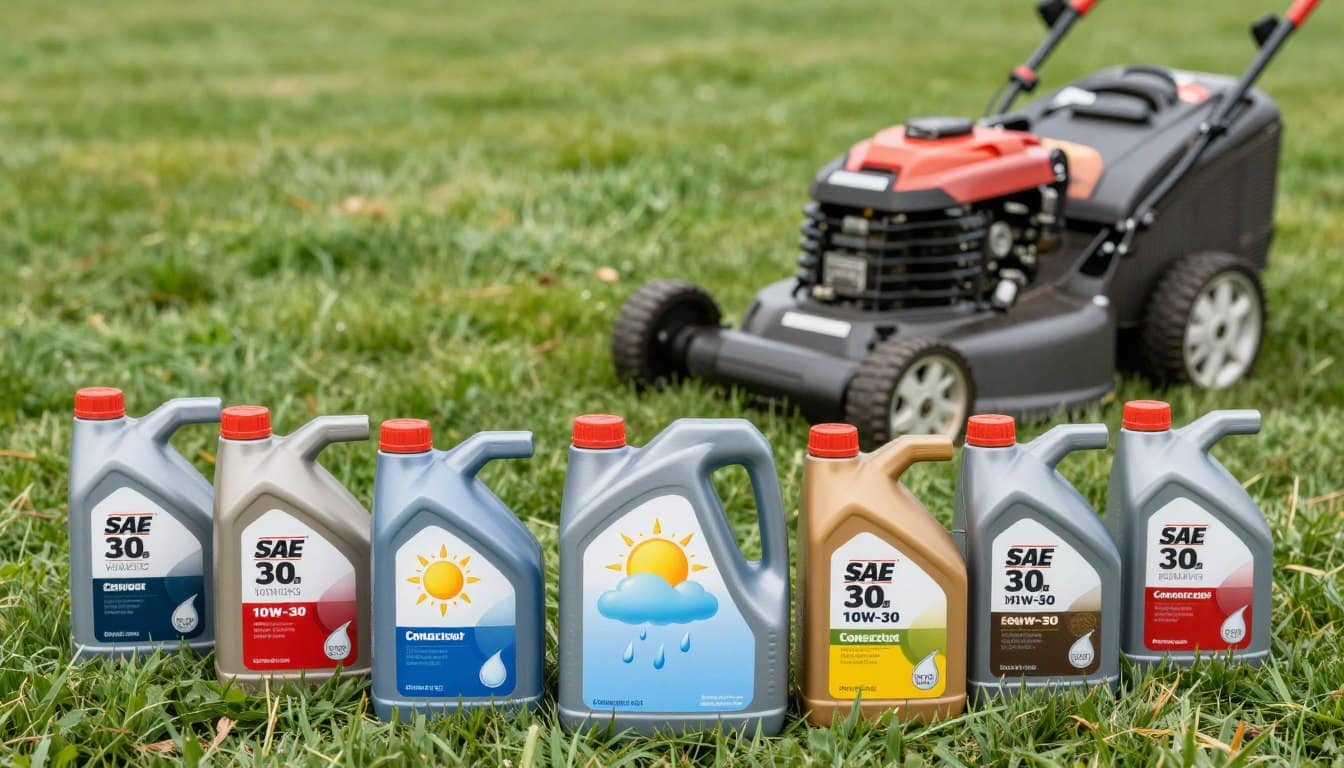
SAE thirty for warmer mowing conditions
SAE 30 suits established summer routines when warmer temperatures match the manufacturer’s range. It offers steady protection during normal cutting.
SAE ten-W-thirty for changing temperatures
SAE 10W-30 flows more easily during cool starts and handles changing temperatures well. It may increase consumption in some engines, so check the level often.
Synthetic SAE five-W-thirty for year-round protection
Synthetic SAE 5W-30 supports cold starts and broad operating temperatures. It may reduce consumption when approved for your machine.
| Grade | Starting behavior | Main advantage | Connecticut use |
|---|---|---|---|
| SAE 30 | Best in warm conditions | Simple summer protection | Established summer routines |
| SAE 10W-30 | Improved cool starts | Flexible seasonal coverage | Spring and fall changes |
| Synthetic 5W-30 | Strong cold starting | Wide protection range | Year-round home use |
15W-50 fits continuous commercial work more than occasional residential cutting. For the correct engine oil and safe oil change steps, follow the manual first.
Should you use synthetic oil in a lawn mower?
Synthetic oil may suit equipment that faces cold starts, long work sessions, or repeated heat cycles. It uses highly refined base materials and artificial compounds, rather than relying only on direct crude-oil refining. This formula supports steady lubrication as temperatures change.
When approved by the manufacturer, synthetic SAE 5W-30 can make starting easier and may reduce consumption. It can also support smoother performance and stronger protection for an engine used throughout Connecticut’s spring, summer, and fall. Still, results depend on the machine, workload, and service condition.
Full synthetic, synthetic blend, and conventional products offer different price points and formulas. Synthetic mower lubricant often costs more, so the value depends on climate exposure and annual use. The correct viscosity and service rating matter more than premium marketing.
- Follow the maker’s approved grade and rating.
- Check the level before each cutting session.
- Replace the lubricant at the scheduled interval.
Synthetic oil does not remove routine maintenance. Even durable engines need fresh fluid at the required interval to preserve performance and service life.
How do you check and change lawn mower oil?
A quick fluid check gives small engines a safer start and helps prevent avoidable repairs. Park the machine on level ground, stop the engine, and let hot parts cool before you begin.
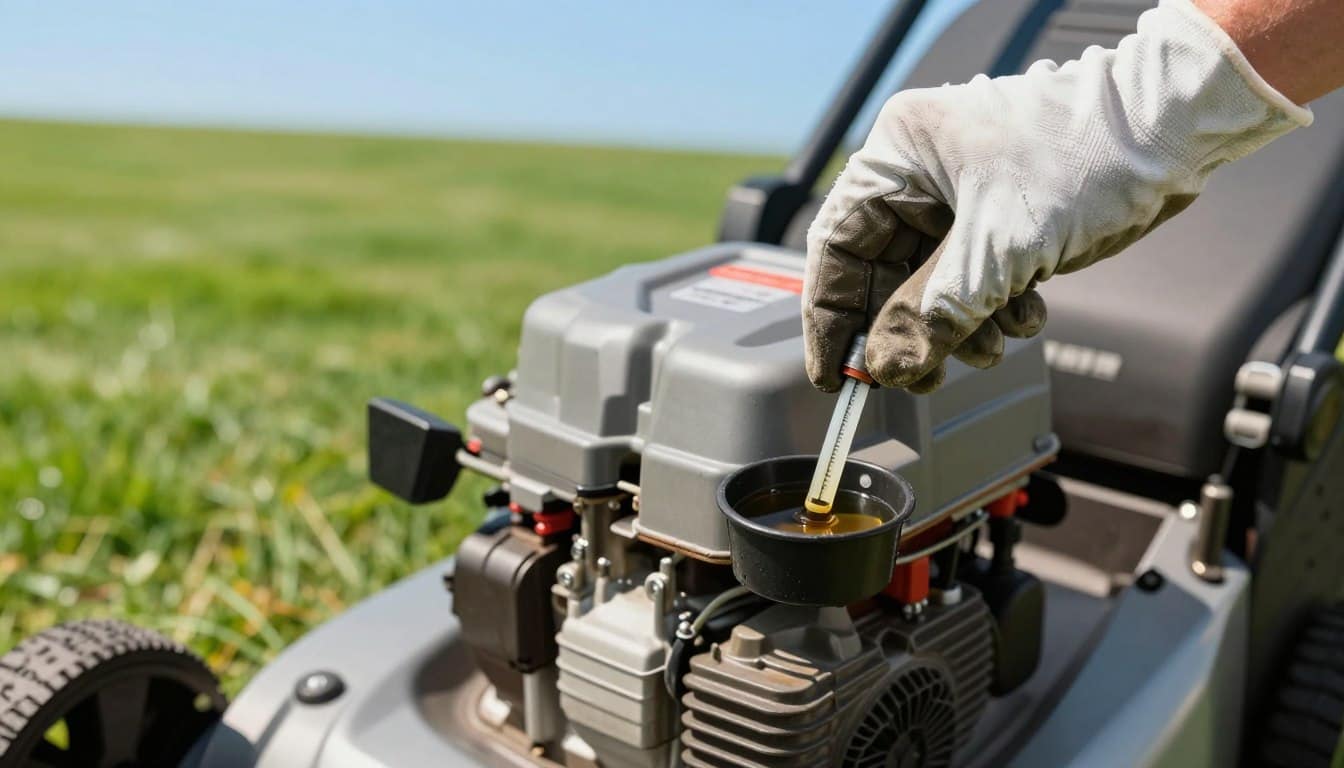
How to check the oil level safely
- Remove the dipstick, wipe it clean, reinstall it securely, then remove it again.
- Confirm the level sits between both arrow marks. Never fill above the upper mark.
- Excess fluid can harm seals, gaskets, and the combustion chamber.
- For the correct engine oil capacity, follow the owner manual.
When to change oil in walk-behind and riding mowers
Change oil in walk-behind units once each season or every 50 hours. Riding equipment and zero-turn units generally need service every 100 hours or once yearly. Use whichever comes first, unless the manual states otherwise.
- Service a new mower after its first three to five hours. Early wear may release fine metal filings.
- Warm the engine for several minutes, shut it off, disconnect the spark plug wire, and drain into a safe container.
- Many John Deere riding models hold about 1.8 to 2.2 quarts, or 58 to 70 ounces.
| Equipment | Typical interval | Safety point |
|---|---|---|
| Walk-behind | Seasonally or every 50 hours | Check before each session |
| Riding or zero-turn | Seasonally or every 100 hours | Confirm capacity in the manual |
How does proper oil maintenance protect Connecticut lawns?
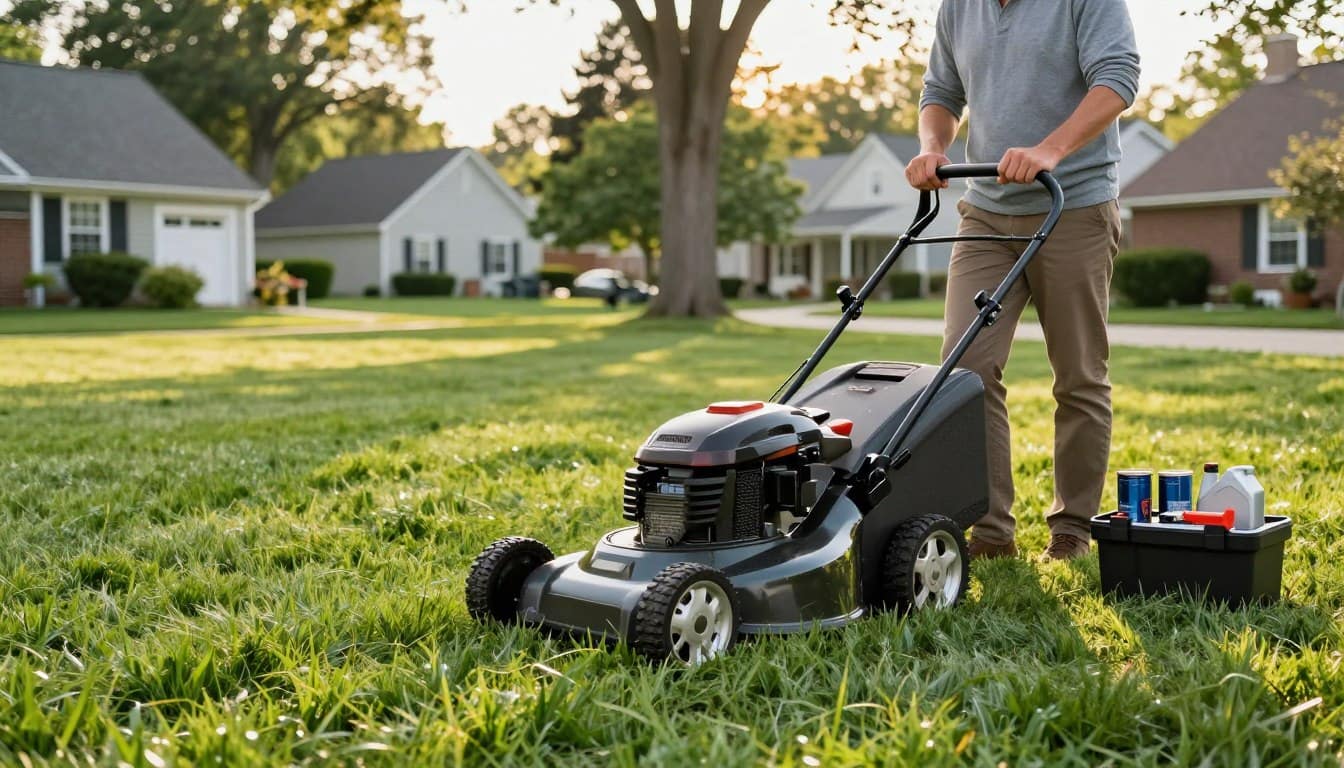
Connecticut’s cool-season grass grows quickly during mild spring and fall weather. A dependable mower helps homeowners keep an even cut when New England temperatures change from one week to the next. The approved grade supports smooth starts and steady power in these conditions.
Fresh engine oil limits friction, heat, and wear inside lawn mower engines. A low or deteriorated level can reduce performance, raise repair costs, or cause a complete breakdown. Regular checks also help preserve blade speed, which supports a cleaner lawn appearance.
- Service walk-behind equipment before demanding growth periods.
- Maintain riding mowers on larger properties to avoid delayed cuts.
- Follow the manual before adding additives or changing products.
Hot Shot’s Secret FR3 Friction Reducer claims up to a 5% increase in mileage and horsepower. Its Gasoline Extreme product cleans injectors, removes valve deposits, and lubricates fuel-system parts. These products do not replace the correct engine oil or scheduled maintenance.
For help with equipment, soil, or seasonal turf needs, Connecticut homeowners can seek guidance at this approved lubricant guide or contact ctlawn.net for professional support.
Conclusion
Choosing the correct lawn mower oil type starts with the engine design and the owner’s manual. Confirm the required grade, API rating, and capacity before buying.
SAE 30 fits warm conditions. SAE 10W-30 suits changing weather, while synthetic SAE 5W-30 may protect across seasons when approved. Check the level before each session, then service walk-behind or riding equipment by season or operating hours.
What should I use in my machine in Connecticut? Follow the manual; one of these grades may fit your engine.
How often should I change fluid in riding equipment? Most units need service once yearly or every 100 hours, but the maker’s schedule comes first.
Can I use car oil in my lawn mower? Only as a short-term emergency when viscosity and API ratings match. For details, read this car-fluid guidance.
Visit ctlawn.net for a Connecticut lawn-care quote and expert help.
Meta Title: What Kind of Oil Does a Lawn Mower Need? (Quick Guide).