




Have you ever wondered why your lawn doesn’t always respond as expected after applying weed and feed products? Knowing when to water lawn after weed and feed is one of the most important factors in achieving a lush, healthy yard. While these products provide a convenient combination of fertilizer and weed control, their success depends largely on proper watering practices. Applying water too soon or waiting too long can reduce effectiveness, making timing a critical part of your lawn care routine. Understanding the best irrigation schedule can help maximize results and keep your grass looking its best throughout the growing season.
Many homeowners struggle with achieving a healthy lawn while avoiding wasteful practices. Knowing the precise moment to water can make all the difference. It ensures that the product penetrates the soil effectively, targeting unwanted weeds while nourishing your grass. This guide will help you navigate the specific requirements for successful lawn care.
By mastering the art of timing, you can avoid common mistakes that wash away valuable nutrients. Let’s explore how to enhance your lawn applying techniques for a lush, weed-free outdoor space.
Key Takeaways
- Understanding irrigation timing is essential for effective lawn care.
- Weed feed treatments combine fertilizer and herbicide for convenience.
- Proper timing prevents washing away the product before it works.
- Correct application techniques lead to a healthier lawn.
- Mastering timing enhances the effectiveness of your lawn care routine.
Understanding Weed and Feed Treatments
Exploring how lawn care products work is key to achieving a lush green yard. Weed feed products are specifically designed to deliver essential nutrients while simultaneously targeting unwanted plants. These products utilize a potent herbicide that eliminates weeds effectively.
The mechanism of action often relies on absorption through the leaves or roots of the plants. Understanding this interaction is vital for optimal results. Here’s a breakdown of the two main types of products:
| Type | Application Timing | Function |
|---|---|---|
| Pre-Emergent | Before weeds sprout | Creates a barrier to prevent seed development |
| Post-Emergent | After weeds have emerged | Kills existing weeds through contact |
Choosing between these products depends on the current state of your yard. Always check the label to ensure compatibility with your grass type and specific weed issues. Many modern solutions combine both approaches, simplifying seasonal maintenance for homeowners.
Factors Influencing Watering Timing
Understanding the factors that influence irrigation timing can enhance your lawn care routine. The type of product used plays a significant role in determining how quickly you should irrigate your grass following treatment.
Granular products typically work slowly. They require moisture to dissolve and penetrate the soil effectively. This method carries a lower risk of fertilizer burn. In contrast, liquid weed feed solutions absorb quickly. Watering too soon can dilute their active ingredients, reducing effectiveness.
Weather conditions also affect your watering strategy. Extreme heat can increase evaporation, while impending rain may render additional watering unnecessary. Additionally, soil moisture levels impact how well fertilizers and herbicides are absorbed. Saturated soil may cause products to leach away, preventing their benefits.
Homeowners should monitor local weather forecasts. This helps avoid applying treatments just before heavy rain. Balancing these environmental factors is essential for maintaining a beautiful yard while using chemical treatments effectively.
Effective Strategies for when to water lawn after weed and feed

Timing your irrigation correctly can greatly influence the success of your lawn care. Knowing whether you are using a granular or liquid formulation is crucial for effective results.
For granular post-emergent products, it is standard practice to wait 24 to 72 hours. This allows the granules to dissolve properly on the weeds. Liquid weed feed applications are fast-acting, requiring a wait of 24 to 48 hours to prevent washing away the active ingredients.
Some granular pre-emergent products may need watering within three days. This helps activate the herbicide and move it into the soil effectively. Always consult the manufacturer’s label, as specific products may have unique requirements.
Waiting the correct number of hours ensures that the herbicide has sufficient contact time to kill the weeds. If you are applying weed feed to a large area, create a clear schedule for watering different sections. Proper timing is essential for achieving the desired results for your property.
Pre-Treatment Preparation and Application Best Practices
Proper preparation is the cornerstone of effective lawn care. Before applying weed feed, taking the right steps can significantly enhance results. Mowing your grass 1 to 2 days prior allows the product to penetrate the soil better, ensuring optimal absorption.
Experts at the University of Arizona recommend applying granular post-emergent products on wet weeds. This method helps the granules adhere effectively to the leaves, improving herbicide uptake. Additionally, light watering before application can help prevent chemical burn on your grass.
Homeowners should focus on techniques that ensure even distribution of the product across the yard. This practice avoids patchy results or over-fertilization. Avoid applying weed feed during extreme heat or drought, as these conditions can stress your grass.
Always use a calibrated fertilizer spreader to prevent over-application in any area. Taking the time to prepare your yard correctly will significantly improve the efficacy of your chosen lawn care products this season. For more detailed tips, check out this guide on applying weed feed.
Post-Treatment Irrigation Techniques
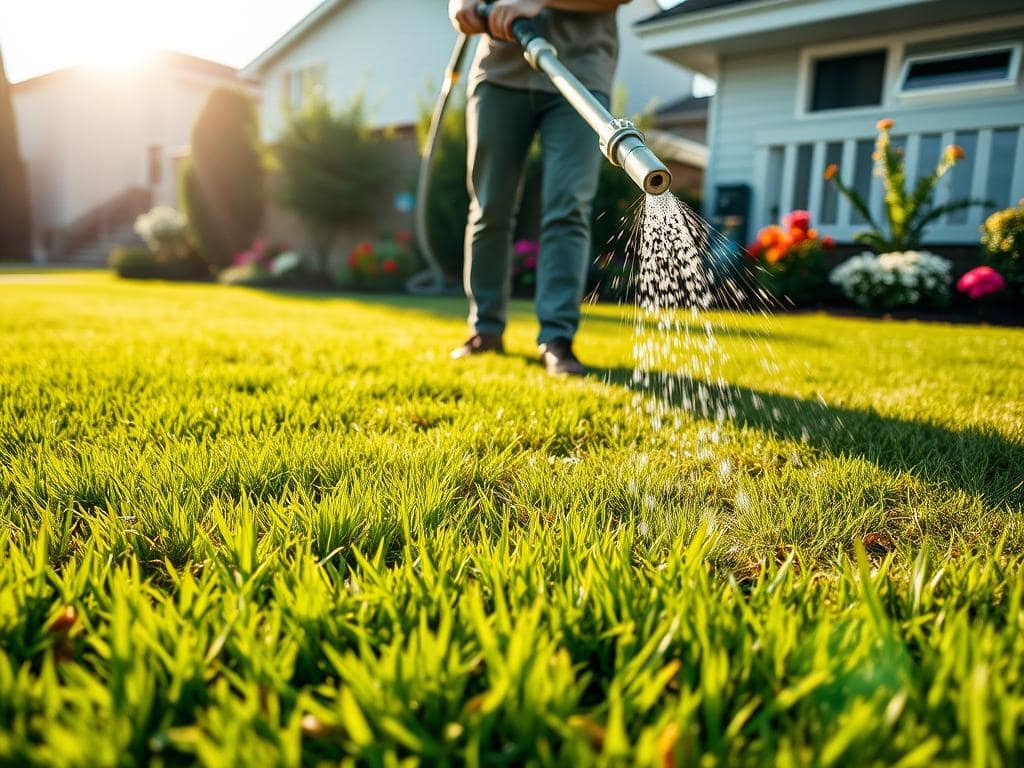
Effective irrigation techniques can significantly impact the health of your grass. After the required waiting period, it’s crucial to apply approximately 1/2 to 1 inch of water to activate the fertilizer. This ensures that nutrients penetrate the soil effectively.
Using a sprinkler system is the best way to ensure even coverage. A strong hose jet might wash away the applied products, reducing their effectiveness. If you wait too long to water, the salts in the fertilizer may concentrate in the soil, causing significant damage to your grass.
When watering, avoid using too much water, as this can lead to runoff and nutrient leaching into the groundwater. Kansas State University suggests that pre-emergent products require thorough soaking to move the herbicide into the soil where seeds germinate.
Consistent watering habits, such as 20-minute sessions three times a week, help maintain turf health throughout the season. If you’re unsure how long to water, monitor the soil moisture to ensure it is damp but not puddling. Proper irrigation after treatment is the final step in a successful lawn care program.
Managing Risks: Avoiding Fertilizer Burn and Overwatering
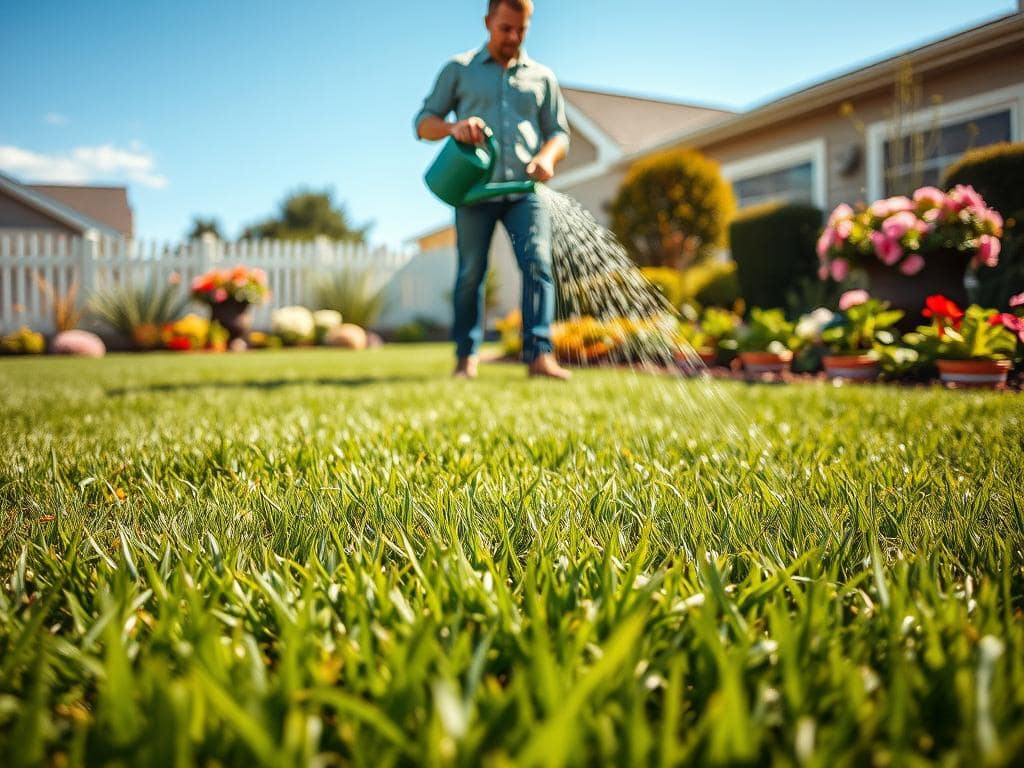
Managing the balance between watering and applying products is crucial for a thriving yard. Homeowners must be aware of the risks associated with improper irrigation. Overwatering can dilute chemicals, reducing the effectiveness of weed feed treatments. Additionally, it can lead to runoff, harming local waterways.
Fertilizer burn is another common concern. This occurs when salts from the product concentrate in the soil, often due to inadequate watering. Recognizing the symptoms of overwatering is vital for maintaining a healthy yard.
| Symptoms | Causes | Solutions |
|---|---|---|
| Yellowing grass | Excessive watering | Reduce irrigation frequency |
| Fungal growth | Too much moisture | Improve drainage |
| Patches of dead grass | Uneven application | Ensure even distribution |
To minimize the risk of fertilizer burn, follow the manufacturer’s instructions on water activation. Proper distribution through controlled irrigation helps prevent salt concentration. Homeowners should monitor their grass for signs of stress, ensuring their yard remains vibrant and weed-free.
Seasonal Considerations for Lawn Care
Adapting your lawn care strategy to seasonal shifts can yield better results. Applying weed feed products during spring and fall is essential. The ideal temperature range for these applications is between 60°F and 90°F. This ensures that the chemicals work effectively on unwanted plants.
Light rain can be beneficial, helping dissolve granules. However, heavy rain may wash away the chemicals before they can act. It’s crucial to adjust your watering schedule based on the current weather patterns.
Spring and Fall Application Tips
- Apply weed feed in spring and fall for optimal results.
- Monitor your grass type’s specific needs throughout the season.
- Unexpected rain may require a 10 to 14-day observation period.
Adjustments for Rainy and Dry Conditions
- Increase irrigation during dry summer months to protect roots.
- Check long-term forecasts before applying treatments.
- Waiting too long to water may reduce product effectiveness.
- Spring is critical for controlling crabgrass; timing is essential.
Conclusion
Mastering the nuances of lawn care can lead to a flourishing green space. Achieving a healthy yard requires a strategic approach to applying weed feed while following the correct irrigation timing for your specific product. Homeowners who understand the requirements for their chosen treatment will see significantly better results.
Proper watering post-treatment is crucial for activating nutrients. This ensures that herbicides effectively control weeds without damaging the grass. By adhering to these guidelines, you can avoid common mistakes like fertilizer burn or runoff, enhancing your lawn care efforts.
Remember, every yard is unique. Always read the product label to tailor your watering schedule to the specific needs of your grass. Consistent care and attention to detail will help you maintain a beautiful, weed-free outdoor space to enjoy all season long.