

Have you ever wondered what the secret is to achieving a vibrant, green yard? Many homeowners in Connecticut ask themselves, “When to aerate my lawn in CT?” Timing is crucial for optimal lawn health, especially in our unique climate.
Aeration is a vital practice that helps your grass thrive. It involves perforating the soil with small holes, allowing air, water, and nutrients to penetrate deep into the roots. Given Connecticut’s mixed humid climate and heavy clay soils, lawns often face soil compaction. This restricts root development and leads to thinning turf.
For cool-season grasses, the best time for aeration is during peak growth seasons—mid-spring and fall. Fall aeration, specifically from late August through mid-October, is ideal. Cooler air and warm soil foster robust root growth, while autumn rainfall aids in breaking down aeration cores. By understanding the right timing, you can transform a struggling lawn into a lush landscape.
By the end of this guide, you will grasp the best times for aeration, how to prepare your lawn, and the essential follow-up care for lasting results. With professional services like C&T Lawn and Landscape, navigating the complexities of aeration becomes easier, ensuring your yard flourishes.
Key Takeaways
- Understanding the best time for aeration is key to a healthy lawn.
- Aeration improves air, water, and nutrient access to grass roots.
- Connecticut’s climate and heavy clay soils make timing critical.
- Fall is the ideal season for aeration, promoting vigorous root growth.
- Professional services can simplify the aeration process for homeowners.
Understanding Why and When to Aerate Lawn in CT
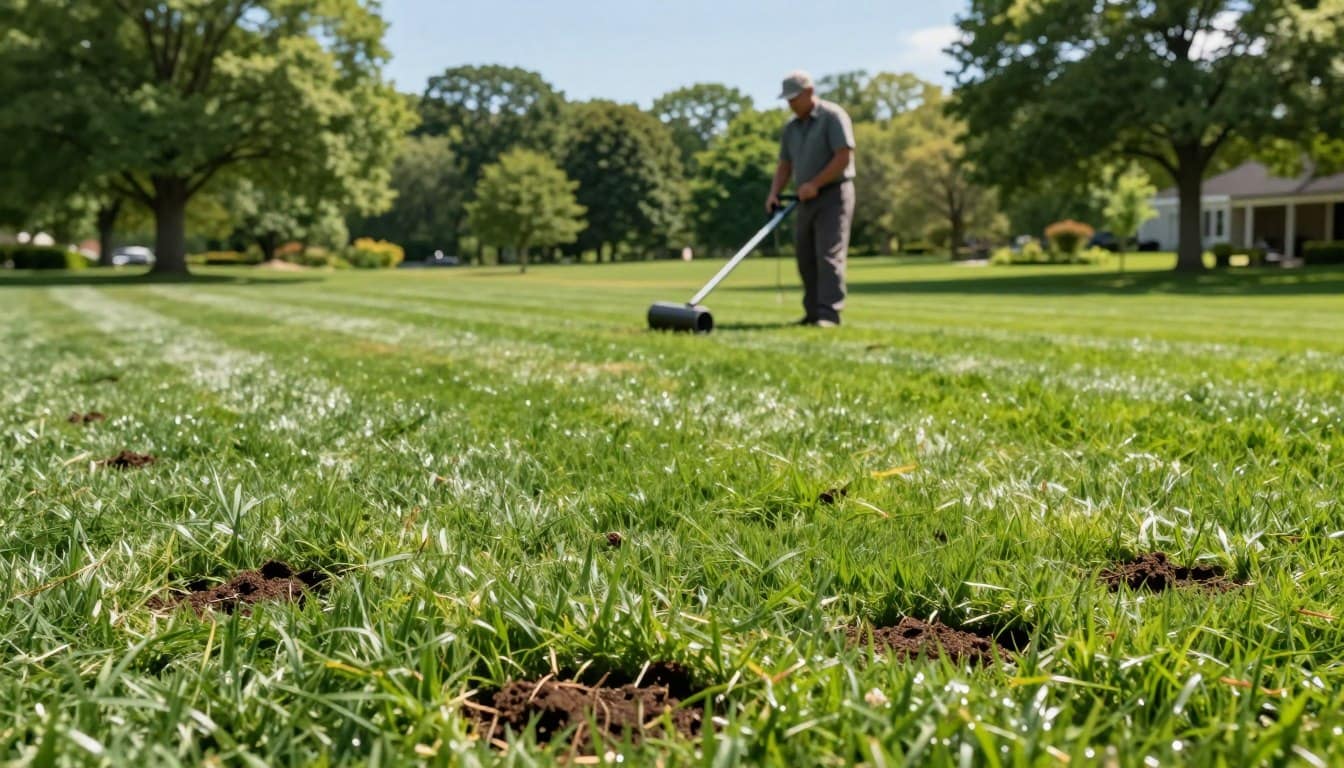
Maintaining a healthy yard in Connecticut requires understanding the challenges posed by soil conditions. One of the most significant issues is soil compaction. This occurs when soil particles are pressed together, reducing the space between them. Heavy clay soils, common across Connecticut, are particularly susceptible to becoming dense and impermeable over time.
Compaction can be exacerbated by regular foot traffic from children playing, backyard gatherings, and routine lawn maintenance. As soil becomes compacted, it limits access to essential air and water for grass roots. Consequently, this can suffocate the roots, leading to shallow root systems that struggle to thrive, especially during the hot, dry summer months.
The Impact of Soil Compaction on Connecticut Lawns
Compacted soil not only affects the roots but also creates conditions that invite weeds. For instance, if you find it difficult to push a screwdriver into your soil, it’s a clear sign of compaction. The lack of pore space prevents roots from growing deep, making cool-season grasses vulnerable to drought stress.
Benefits of Aeration for Cool-Season Grasses
Core aeration is a solution that removes plugs of soil, allowing air, water, and nutrients to reach grass roots. This process creates channels that stimulate deeper root growth and promote thicker turf development. For cool-season grasses like Kentucky Bluegrass and Fine Fescue, aeration can significantly enhance lawn health.
Aeration also helps manage thatch buildup. Thatch is a layer of dead grass stems and roots that can accumulate on the soil surface. If it exceeds half an inch, it can reduce oxygen and moisture access. By aerating, you improve airflow, allowing microorganisms to break down organic matter more efficiently, thus reducing thatch.
Signs Your Lawn Needs Aeration
Identifying when your lawn requires aeration is crucial. Here are some telltale signs:
- Water pooling on the surface after rainfall.
- Thinning grass in high-traffic areas.
- A spongy or hard feel underfoot.
- Difficulty pushing a screwdriver into the soil.
For Connecticut lawns experiencing heavy use or showing signs of decline, annual aeration is essential for maintaining long-term health and preventing weed infestations. Regular aeration not only improves soil conditions but also enhances overall lawn care, reducing the need for excessive water, fertilizer, and weed control interventions.
| Condition | Signs | Recommended Action |
|---|---|---|
| Soil Compaction | Difficult to insert a screwdriver | Aerate annually |
| Thatch Buildup | Layer exceeds 1/2 inch | Aerate and dethatch |
| Thinning Grass | Visible patches in high-traffic areas | Aerate and overseed |
Understanding these factors will empower you to take the right steps for a vibrant, green yard. For more detailed insights on lawn care, consider visiting this resource.
Optimal Timing: When to Aerate Your Lawn in Connecticut

Knowing the right moments for aeration can significantly impact your yard’s health. In Connecticut, the optimal aeration windows align with the peak growing seasons for cool-season grasses. Understanding these periods will help you maximize your lawn’s potential.
Spring Aeration: Mid-April to Mid-June for Recovery and Growth
The spring aeration window occurs from mid-April to mid-June. During this time, grass is actively growing and can recover quickly from the aeration process. This season is suitable for lawns that may have suffered damage during winter. However, it’s essential to note that weed competition is higher in spring, which can hinder recovery.
Fall Aeration: Late August to Mid-October – The Best Time for CT Lawns
Fall aeration is typically recommended from late August through mid-October. This timeframe is ideal, as it allows for aeration 4-6 weeks before the ground freezes. The combination of cooler air temperatures and warm soil promotes aggressive root growth, ensuring your grass establishes a strong foundation before winter dormancy.
During fall, grass roots can access air, water, and nutrients at their most active growth phase. This results in lush, green growth the following spring. For Connecticut lawns, mid-September to late-September is particularly effective for aeration.
Weather and Soil Conditions to Consider Before Aerating
Before aerating, it’s crucial to assess weather and soil conditions. The soil should be moist but not soggy. If the ground feels rock-hard, watering it the day before can soften it, making core extraction easier. Aerating just before a light rain or planned irrigation can help the extracted soil cores break down naturally, returning organic matter to the lawn surface.
Avoid aerating during periods of drought stress or extreme heat. Cool-season grasses are especially vulnerable during these conditions and may not recover well. Planning your aeration schedule around other fall lawn care tasks, such as overseeding and fertilizing, can lead to maximum efficiency and results.
Core Aeration vs. Spike Aeration: Choosing the Right Method
Choosing the right aeration method can make a world of difference for your yard. Two primary techniques exist: core aeration and spike aeration. Understanding their differences is essential for effective lawn care, especially in Connecticut’s unique soil conditions.
How Core Aeration Works and Its Advantages
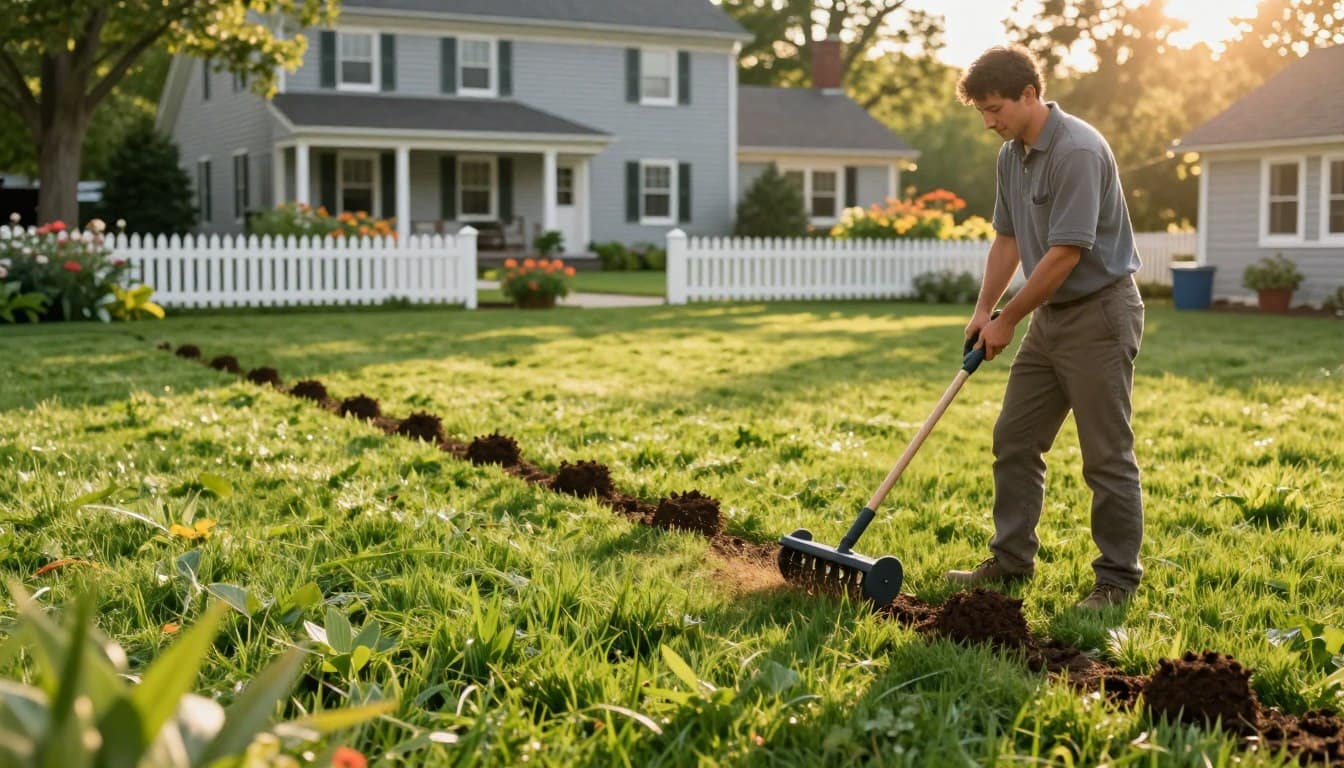
Core aeration involves mechanically removing small plugs of soil and thatch. This process creates open channels that allow air, water, and nutrients to penetrate deep into the root zone of cool-season grasses. A core aerator uses hollow tines to extract soil cores approximately two to three inches deep. These cores are then deposited on the lawn surface, where they naturally break down over time.
The primary advantages of core aeration for Connecticut lawns include:
- Reduced soil compaction, allowing for better root growth.
- Improved drainage, which helps prevent water pooling.
- Enhanced thatch decomposition, promoting a healthier turf.
- Better fertilizer efficiency, as nutrients reach roots more effectively.
Drawbacks of Spike Aeration in Connecticut Soils
In contrast, spike aeration uses solid tines to poke holes in the ground without removing any soil material. This method can worsen compaction in clay-heavy Connecticut soils by compressing the soil around each hole. The holes created tend to close up quickly after rainfall or irrigation, providing only temporary benefits.
For homeowners dealing with compacted ground, heavy foot traffic areas, or lawns with thatch buildup exceeding half an inch, core aeration is the clear choice. While spike aeration may work for sandy soils less prone to compaction, most Connecticut lawns will see superior results from core aeration performed at the right time of year.
Consider renting a core aerator or hiring professional services like C&T Lawn and Landscape. They ensure the job is done correctly with commercial-grade equipment that extracts proper soil cores.
Preparing Your Lawn for Aeration
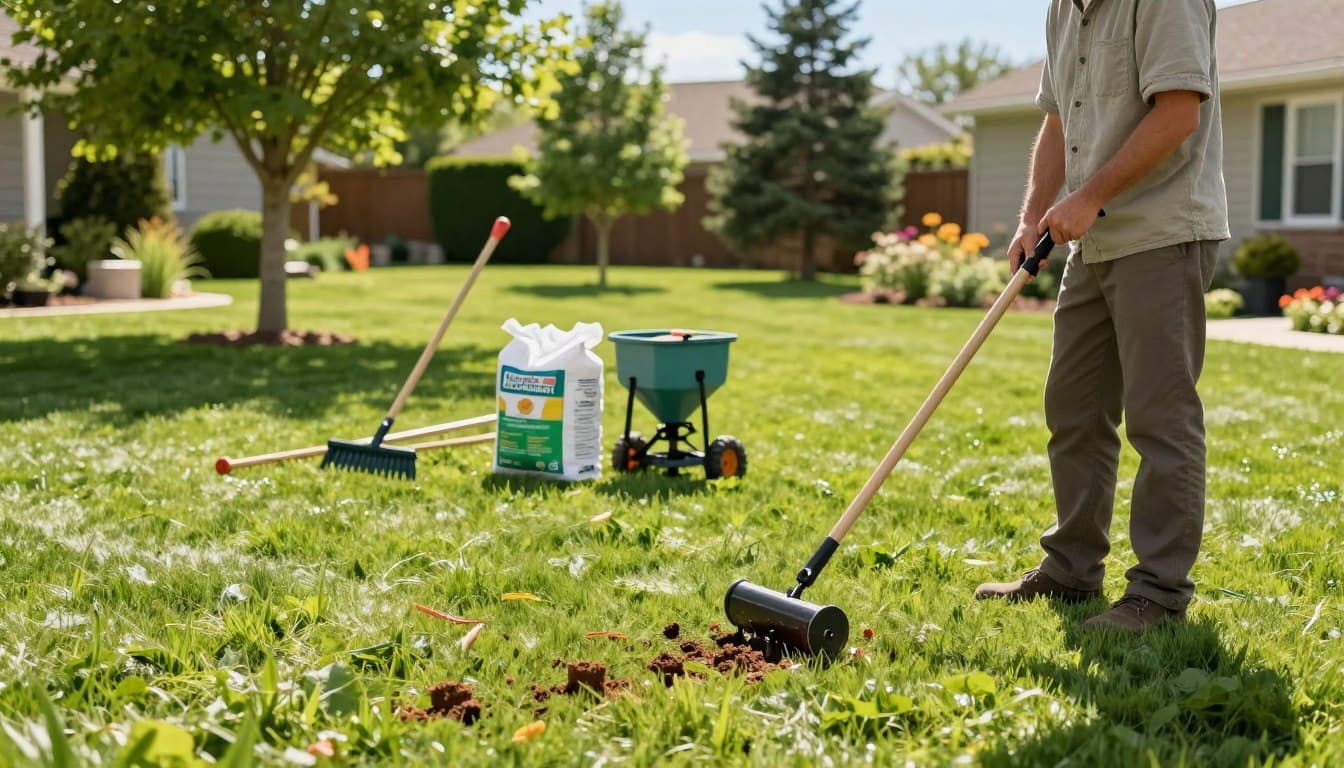
Getting your yard ready for aeration is essential for achieving the best results. Proper preparation ensures that the aeration process effectively enhances soil health and grass growth. Here are the key steps homeowners should follow before starting.
Assessing Soil Moisture and Lawn Traffic
Begin by checking the moisture levels in your soil. The ideal condition is moist but not soggy. Soil should crumble easily when squeezed but not drip water. If the ground feels rock-hard, consider watering it deeply one to two days before aeration. Properly moistened soil allows aerator tines to penetrate correctly, extracting clean cores.
Removing Thatch and Debris for Better Results
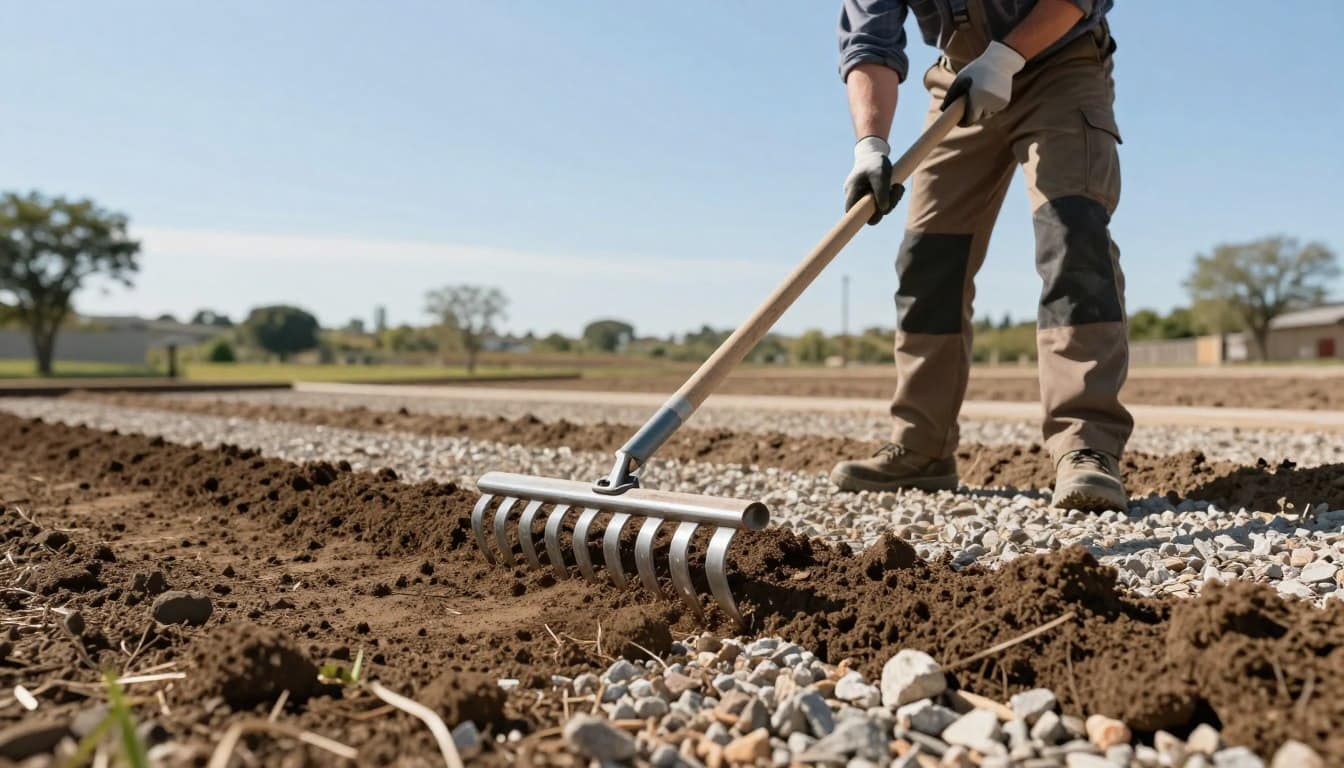
Thatch can be a barrier to healthy grass growth. A layer thicker than half an inch can prevent air, water, and nutrients from reaching the roots. This buildup is often caused by excessive chemical fertilization, pesticide use, frequent shallow watering, and mowing too short. If you notice significant thatch accumulation, consider dethatching or power raking before aeration.
Additionally, clear the lawn of any debris, fallen branches, and children’s toys. This ensures that the aerator can operate without obstruction and minimizes safety hazards during the process.
Using Lawn Equipment and Tools Correctly
When it comes to using equipment, proper technique is crucial. Mow your grass to a slightly lower height than normal—about two to two and a half inches—one or two days before aeration. This reduces interference with the aerator tines and improves soil penetration.
When operating a core aerator, make overlapping passes across the entire lawn area. Pay special attention to high-traffic zones and compacted areas that need extra coverage. Mark all sprinkler heads, underground utility lines, and shallow irrigation components with flags or chalk to prevent costly damage during the aeration process.
| Preparation Step | Details | Benefits |
|---|---|---|
| Assess Soil Moisture | Ensure soil is moist but not soggy. | Allows for effective aeration and core extraction. |
| Remove Thatch | Dethatch if layer exceeds 1/2 inch. | Improves air, water, and nutrient access to roots. |
| Clear Debris | Remove obstacles from the lawn. | Ensures safety and efficiency during aeration. |
| Mow Grass | Cut grass to 2-2.5 inches before aeration. | Enhances aeration effectiveness. |
| Mark Utilities | Use flags or chalk to mark underground lines. | Prevents damage during the aeration process. |
Following these preparation steps will set the stage for successful aeration. For further information on lawn care techniques, check out this resource.
Overseeding and Fertilizing Around Aeration for Best Results
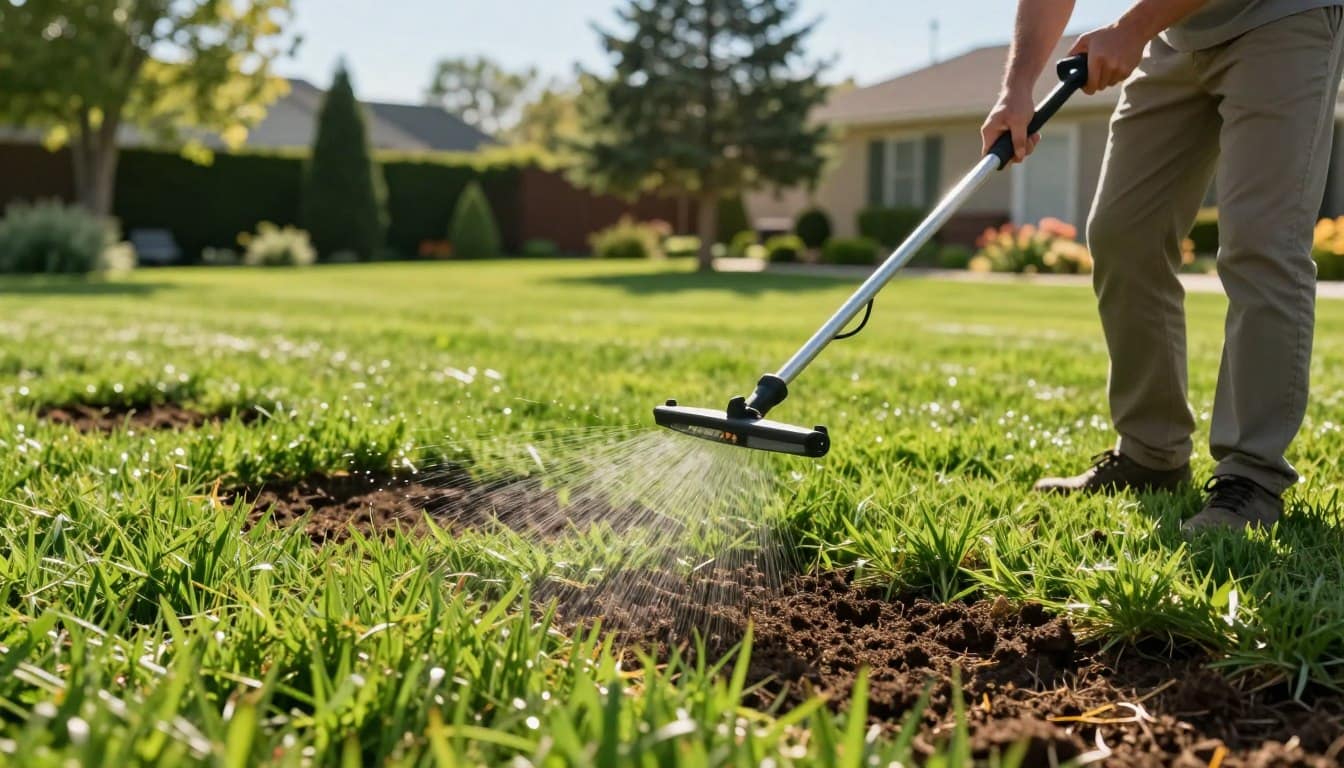
Achieving a thriving yard involves more than just aeration; overseeding and fertilizing are key components. These practices can significantly enhance your lawn’s health and appearance, especially in Connecticut’s unique climate.
Selecting Grass Seed Mixes Suitable for Connecticut Climate
Choosing the right grass seed mix is crucial for success. For Connecticut’s mixed humid climate, consider a blend of Kentucky bluegrass and perennial ryegrass for sunny areas. For shaded sections, fine fescue or tall fescue blends work best. High-quality seed with low weed content and no pesticide coatings is recommended. Local sources and reputable seed companies can provide blends suited to New England conditions.
Timing Overseeding After Aeration for Optimal Germination
The best time for overseeding is from August 15 to September 15. During this period, soil temperatures reach ideal levels for quick germination. Overseeding immediately after aeration is effective because the open aeration holes create perfect seed-to-soil contact. This dramatically improves germination rates for new grass seed.
Choosing and Applying Fertilizers Based on Soil Tests
Before applying any fertilizer, obtain a soil test through the UConn Extension service. This test reveals the current pH level and nutrient profile, allowing for precise fertilizer selection. Connecticut law restricts phosphorus application to established lawns unless a soil test indicates a deficiency. After aeration and overseeding, applying a slow-release granular fertilizer is ideal. This type of fertilizer provides a steady supply of nutrients that support both existing grass recovery and new seedling growth throughout the fall season.
Seasonal Lawn Care Tasks to Complement Aeration
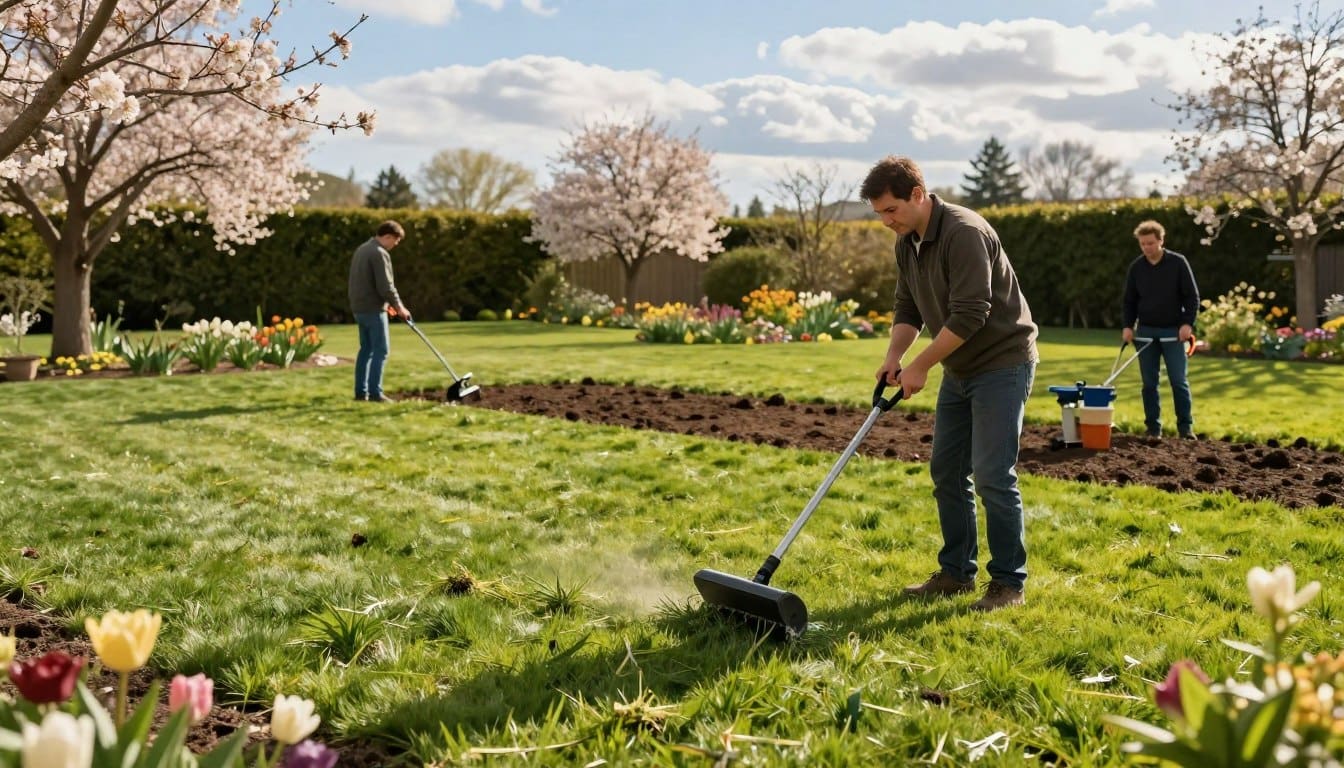
To achieve a lush yard, it’s essential to follow a seasonal lawn care routine. Each season presents unique tasks that work together to enhance the health and appearance of your grass. Here’s a comprehensive overview of what to do throughout the year.
Spring Care: Dethatching, Soil Testing, and Early Fertilizing
Spring is a critical time for lawn care. Start by raking and dethatching your yard from mid-March to mid-April. This removes winter debris and any excess thatch that can suffocate your grass.
Next, conduct a soil test during the same period. This will inform you about nutrient levels and pH, helping you choose the right fertilizer.
As the season progresses, prepare for the first mowing at a height of 3-4 inches in late April to early May. Fertilize your lawn during this time to provide the nutrients needed for vigorous growth. If you missed the fall aeration window, consider aerating now as well.
Summer Maintenance: Watering, Mowing, and Pest Management
Summer requires consistent maintenance to protect your lawn from heat stress. Mow weekly at a height of 3-4 inches to encourage deeper root growth. This height helps conserve soil moisture during hot, dry spells.
Water your grass deeply and infrequently, aiming for 1-1.5 inches per week, ideally in the early morning. This minimizes evaporation loss and ensures your lawn gets the moisture it needs.
Keep an eye out for pests like grubs and chinch bugs. Diseases such as brown patch and dollar spot can also threaten your turf. Implement appropriate organic or conventional treatments to manage these issues effectively.
Fall Preparation: Leaf Removal, Final Mowing, and Equipment Winterizing
As summer fades, it’s time to prepare for fall. Start by aerating your lawn from mid-September to late-September, followed by overseeding any thin or bare areas. Apply fall fertilizer to strengthen roots before winter dormancy.
Be diligent about removing fallen leaves from October to November. Leaves can smother grass and promote disease if left unchecked. Your final mowing should occur late October to early November, cutting the grass to about 2 inches to prevent snow mold.
Don’t forget to winterize your equipment, including mowers and sprinkler systems, and store your tools properly for the winter months.
Winter Care: Planning for Spring
During winter, avoid walking on snow-covered grass to prevent crown damage. Use de-icing products sparingly near your lawn areas to protect your turf. This is also the perfect time to plan for your spring lawn care schedule.
| Season | Tasks | Timing |
|---|---|---|
| Spring | Dethatch, soil test, fertilize, mow | March to May |
| Summer | Mow, water, manage pests | June to August |
| Fall | Aerate, overseed, fertilize, remove leaves | September to November |
| Winter | Avoid walking on grass, plan for spring | December to February |
By following this comprehensive lawn care schedule, you can ensure your yard remains healthy and vibrant throughout the year. For more detailed insights on lawn maintenance, consider visiting this resource.
Watering and Mowing Best Practices After Aeration
After aeration, it’s essential to follow specific watering and mowing practices to ensure your grass thrives. Proper care during this period can significantly impact seed germination and root growth.
Proper Irrigation for Seed Germination and Root Growth
Watering is critical immediately after aeration, especially if overseeding has occurred. The exposed seeds in aeration holes need consistent moisture to trigger germination and support early seedling development.
Here are some watering guidelines:
- Water lightly and frequently, ideally two to three times daily, to keep the soil surface moist without creating puddles.
- Avoid washing away seeds in sloped areas by ensuring even moisture distribution.
- Transition from frequent light watering to deeper, less frequent irrigation as seedlings establish. Aim for one to one and a half inches of water per week, applied in the early morning.
Maintaining Correct Mowing Heights for Cool-Season Grasses
Mowing height plays a vital role in maintaining healthy grass. Here are the recommended heights for common cool-season grasses:
| Grass Type | Recommended Height (inches) |
|---|---|
| Kentucky Bluegrass | 1.5 – 2.5 |
| Fine Fescue | 2 – 2.5 |
| Tall Fescue | 2 – 3 |
| Perennial Ryegrass | 1.5 – 2 |
During summer, maintain grass at 3 to 4 inches to encourage deeper root growth and conserve moisture. Remember the one-third rule: never remove more than one-third of the grass blade length in a single mowing session. This practice helps avoid stressing the turf and reduces opportunities for weed invasion.
Mitigating Lawn Stress During High Foot Traffic Periods
After aeration, it’s crucial to minimize lawn stress, especially during high foot traffic periods. Here are some strategies:
- Redirect pathways temporarily after aeration to reduce pressure on newly aerated areas.
- Use stepping stones in frequently traveled zones to protect grass.
- Allow the lawn adequate recovery time before resuming heavy use.
Additionally, leaving grass clippings on the lawn after mowing acts as a natural mulch, returning valuable nitrogen to the soil and reducing the need for extra fertilizer applications throughout the growing season.
Managing Weeds and Pests Post-Aeration
After aeration, managing weeds and pests is essential for maintaining a healthy lawn. The process of aeration opens up the soil, creating opportunities for effective weed control and pest management. By implementing the right strategies, you can ensure your grass thrives while minimizing competition from unwanted plants.
Pre- and Post-Emergent Weed Control Strategies
Timing is crucial for effective weed management. Aeration creates a perfect opportunity to apply pre-emergent herbicides, forming a barrier against germinating weed seeds. In Connecticut, the ideal time for this application is mid-March to mid-April, coinciding with the blooming of forsythia bushes. This timing helps prevent annual grassy weeds like crabgrass, foxtail, and goosegrass from establishing in your turf.
For broadleaf weeds such as dandelions, ground ivy, and plantain, use post-emergent herbicides. Spot treat these weeds when soil temperatures consistently exceed 60 degrees Fahrenheit, typically from mid-April through mid-June. This targeted approach will help keep your lawn clear of unwanted plants.
For those looking for organic alternatives, consider using corn gluten meal. This natural product acts as a pre-emergent weed suppressant and provides nitrogen, benefiting your grass while preventing weed growth.
Common Lawn Pests in Connecticut and Treatment Options
Connecticut lawns face various pests that can damage your turf. Common culprits include:
- Grubs: These pests cause irregular brown patches and spongy turf. Apply beneficial nematodes during summer for effective control.
- Chinch Bugs: They create yellowing patches in drought-stressed areas. Use insecticidal soaps to manage these pests.
- Brown Patch: This fungal disease manifests as circular brown patches. Avoid excessive nitrogen fertilization before hot weather to prevent outbreaks.
Monitoring your lawn regularly is vital for early detection of weed or pest issues. A healthy, well-aerated lawn with deep roots is naturally more resistant to both weed invasion and pest damage. This reduces the need for chemical interventions over time.
For comprehensive lawn care, consider a program that includes seasonal fertilization, pre-emergent and post-emergent weed control, and lawn health monitoring. This approach promotes lush, green turf year-round. For more information on effective weed control strategies, visit this resource.
| Pest | Signs | Treatment |
|---|---|---|
| Grubs | Irregular brown patches, spongy turf | Apply beneficial nematodes in summer |
| Chinch Bugs | Yellowing patches in drought-stressed areas | Use insecticidal soaps |
| Brown Patch | Circular brown patches | Avoid excessive nitrogen before hot weather |
Common Mistakes to Avoid When Aerating Your Lawn
Understanding the common pitfalls in aeration can lead to a healthier yard. Many homeowners overlook critical aspects that can hinder the benefits of this essential lawn care practice. By recognizing these frequent errors, you can ensure optimal results for your grass.
Aerating When Soil Is Too Dry or Too Wet
One of the most common mistakes is aerating when the soil is either too dry or too wet. If the ground is dry, aerator tines struggle to penetrate, leading to inadequate core extraction. This results in minimal benefits for your grass.
Conversely, aerating when the soil is excessively wet can worsen compaction. Heavy equipment may create ruts and produce messy cores that fail to facilitate proper air and water channels. Always check soil moisture before starting the aeration process.
Neglecting Overseeding or Fertilization After Aeration
Another critical error is skipping overseeding or fertilization after aeration. The open channels created during aeration present a perfect opportunity for grass seed and nutrients to reach the root zone. Failing to take advantage of this time-sensitive window can waste the potential benefits of aeration.
Ignoring Lawn Recovery and Traffic Restrictions Post-Aeration
Post-aeration recovery is vital for new seedlings. Allowing heavy foot traffic too soon can damage emerging grass and compact the freshly aerated soil. It’s essential to limit traffic on the lawn, keep pets off newly seeded areas, and avoid mowing until the new grass reaches the appropriate height.
Additionally, using the wrong type of aerator can lead to poor results. For Connecticut’s heavy clay soils, core aeration is recommended over spike aeration. Spike methods can exacerbate compaction, providing only temporary relief.
Timing is also crucial. Aerating during the heat of summer, when cool-season grasses are dormant, or too late in fall, when the ground is near freezing, can hinder recovery. Always plan your aeration schedule carefully.
Lastly, don’t forget to mark underground utilities, sprinkler lines, and invisible pet fences before aerating. This precaution can prevent costly repairs and ensure a safe aeration process.
For those unsure about the aeration process, consider hiring professional services like C&T Lawn and Landscape. Their expertise ensures the job is done correctly, maximizing the benefits for your lawn.
| Mistake | Impact | Solution |
|---|---|---|
| Aerating when soil is too dry | Poor penetration and inadequate core extraction | Check soil moisture; aerate when moist |
| Aerating when soil is too wet | Increased compaction and messy cores | Wait for optimal soil conditions |
| Neglecting overseeding | Wasted aeration benefits | Always overseed after aeration |
| Ignoring recovery | Damage to new seedlings | Limit traffic and avoid mowing |
| Using spike aeration | Worsened soil compaction | Use core aeration for clay soils |
| Poor timing | Inadequate recovery | Aerate during optimal seasons |
| Not marking utilities | Potential damage and costs | Always mark before aerating |
Conclusion: Achieving a Healthy, Vibrant Lawn with Proper Aeration Timing
For homeowners seeking a lush yard, understanding aeration timing is crucial. Fall remains the best time for aeration, specifically from late August through mid-October. This period maximizes root growth and enhances recovery for grass.
Properly timed aeration offers numerous benefits, including reduced soil compaction, improved drainage, and deeper roots. A thicker turf naturally resists weeds and pests, creating a healthier landscape.
Integrating aeration into a comprehensive lawn care schedule, including soil testing and appropriate fertilization, ensures lasting results. Homeowners should view aeration as a key component of their annual strategy.
While DIY options exist, professional services like C&T Lawn and Landscape provide expertise and equipment for optimal results. Investing in proper aeration techniques pays off, transforming struggling lawns into vibrant green spaces.
Mark your calendars for the upcoming fall aeration window. Take the first step toward achieving the beautiful Connecticut lawn you desire!