

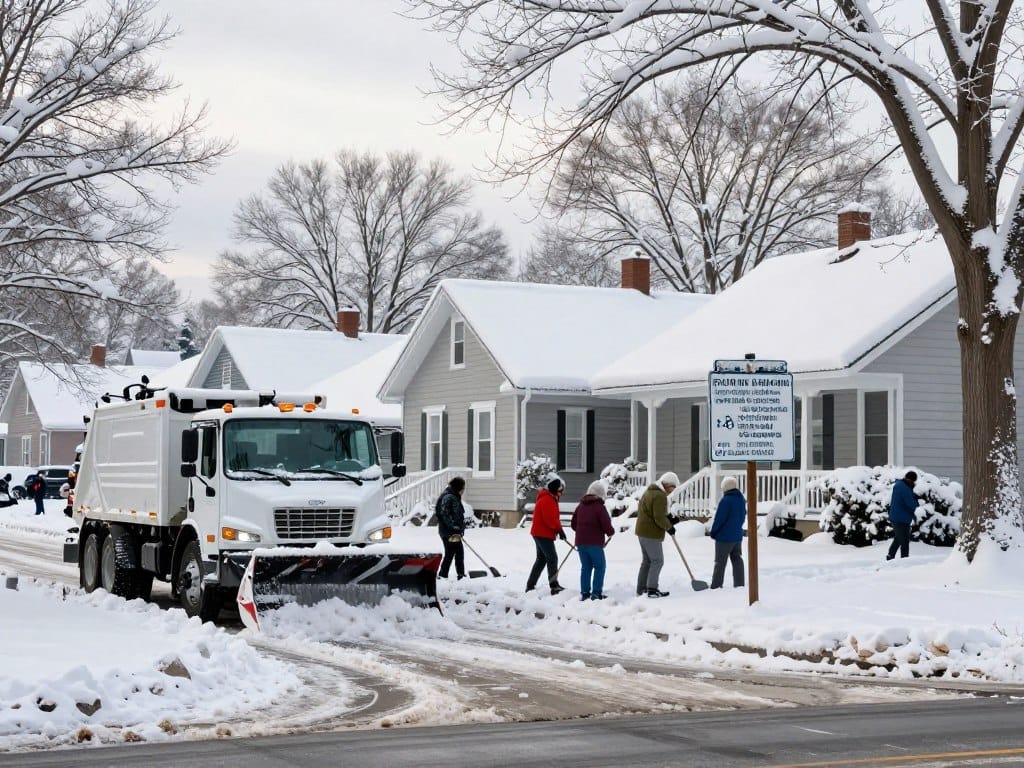




How much snowfall triggers a required response? Under Northwest Indiana snow removal ordinances, the threshold varies by community, ranging from any accumulation in St. John to 2 inches in several towns. Griffith has the strictest listed trigger at 1 inch. That range makes one clear point: local rules, not one universal standard, guide each winter event.
The “two-inch rule” works as a planning shortcut, but it does not apply everywhere. Griffith, Dyer, Schererville, Crown Point, St. John, Homewood, and South Holland set different expectations for property owners.
Commercial property managers, HOA boards, and facility directors must plan crews, keep walkways open, and document timely service. Main roads receive attention before secondary roads, subdivisions, and alleys during a weather event. C&T Lawn and Landscape, based in Lynwood, Illinois, helps clients plan snow ice response across the service area. Call 708-596-2320 for commercial support in Northwest Indiana and the Chicago Southland.
This guide compares town triggers, reviews sidewalk deadlines, explains why pushing material into streets creates risk, and outlines a repeatable winter process for each day of a storm.
Key Takeaways
- Trigger depths differ by town.
- St. John responds to any accumulation.
- Griffith uses a 1-inch trigger.
- Several communities use a 2-inch threshold.
- Property leaders should document service times.
- Main routes receive priority during storms.
Northwest Indiana Snow Removal Ordinances at a Glance
Local thresholds shape winter response. The street department often starts roadway service at 1 inch, with main routes ahead of subdivisions, alleys, and secondary streets. Private sites may need earlier checks for snow ice, entrances, loading zones, and sidewalks.
Triggers and Walkway Deadlines
Residents generally must clear walks within 24 hours of each weather event. St. John requires clear walks by 6 p.m. daily. Review the state compliance guide for broader context.
Street Placement and Commercial Duties
Do not push private piles into public streets. Contracts may require service before a town trigger, plus salt, inspections, and records. Homewood also holds the property owner liable for contractor conduct under Section 34-8(c).
| Town | Trigger | Sidewalk deadline | Into-street penalty | Ordinance no. |
|---|---|---|---|---|
| Griffith | 1 inch | Not verified | Not verified | Strictest listed trigger |
| Dyer | 2 inches | Not verified | Not verified | 8-53(b) |
| Schererville | 2 inches | Not verified | Not verified | Ordinance 791 |
| Crown Point | 2 inches | Not verified | Towed without notice; $5–$300 per day | Not provided |
| St. John | Any snowfall | 6 p.m. daily | Warning; $50, $100, then $150 | Sections 21-1, 21-3 |
| Homewood | 2 inches | Not verified | Owner liable for contractor conduct | Sections 40-79, 34-8(c) |
| South Holland | 2 inches | 8 hours after event ends | Not verified | Not provided |
Sidewalk and Snow Removal Duties for Property Managers
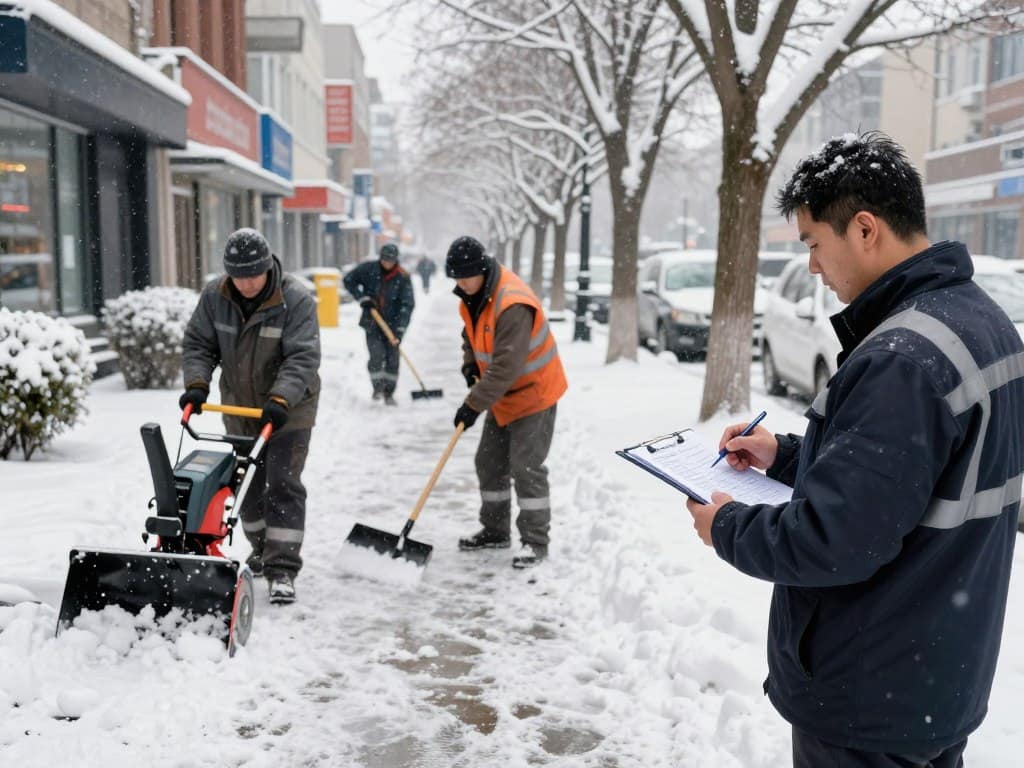
Reliable winter care starts with a plan, not a last-minute call. Assign an on-call crew before the forecasted event. Use the trigger in the applicable section instead of waiting for every property to reach two inches.
Build a Clear Site Procedure
Inspect entrances, sidewalks, curb ramps, fire lanes, loading zones, and drainage points. Record each check within hours of service. Crews should clear snow and ice from sidewalks, then apply salt where needed.
Anti-icing mixtures may protect bridges, intersections, and busy areas before an event. De-icing starts after ice or snow begins to build on road surfaces. Coordinate private work with the street department, since main streets may be treated first.
When practical, let the plow pass before final sidewalk work. Keep workers several car lengths behind moving equipment. Check mailbox posts for damage from rolling material, since the city may not accept liability.
- Use time-stamped photos and weather notes.
- Log material amounts and completion times.
- Confirm contractor arrival and departure.
| Task | Timing | Record |
|---|---|---|
| Inspect access areas | Before and after service | Photos and checklist |
| Apply treatment | Before or during buildup | Material log |
| Confirm completion | Same day | Manager report |
Town-Specific Rules for Commercial Sites and HOAs
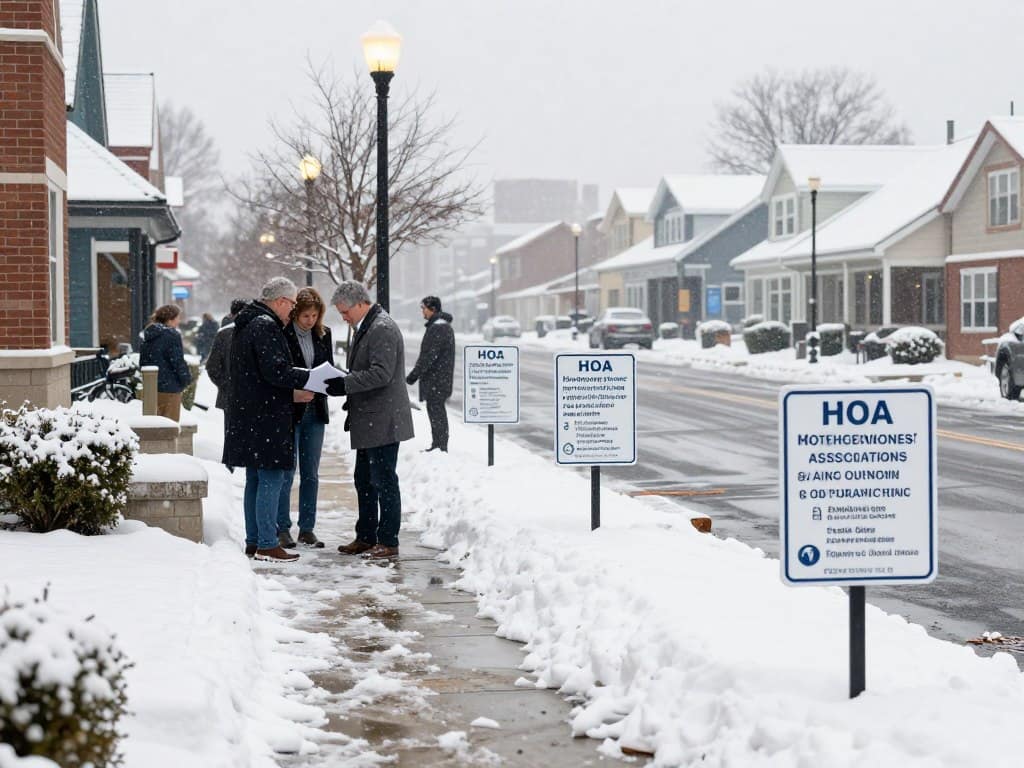
Different communities place different duties on owners, managers, and vendors. In St. John, commercial sites and HOAs must clear the sidewalk by 6 p.m. each day after any snowfall under Section 21-1. The rule does not wait for a two-inch accumulation.
Section 21-3 also controls material pushed into public streets. Enforcement starts with a warning, then rises to $50, $100, and $150 penalties. A written route plan should mark storage areas and no-push zones.
Homewood’s Section 34-8(c) makes the property owner responsible for contractor conduct. Contracts should list timing, materials, inspection checks, photo records, and missed-visit steps. Managers should also map entrances, sidewalk edges, and public right-of-way transitions.
Carmel follows separate guidance, not a Northwest Indiana rule. Businesses clear walks by noon the day after an event; residential owners have 72 hours after a major event. City paths follow nearby streets after roadway work. Trails may take two to three days and are not salted to protect plants, pets’ paws, and asphalt. Call Carmel Building Code and Services at 317-571-2444.
| Location | Key deadline | Manager action |
|---|---|---|
| St. John | 6 p.m. daily | Track Section 21-1 checks |
| Homewood | Owner liability | Control vendor work under Section 34-8(c) |
| Carmel | Noon next day for businesses | Confirm local guidance and trail timing |
Conclusion
Winter compliance depends on the town, site, and weather event. St. John acts after any snowfall, while Griffith has the strictest listed trigger at 1 inch. Dyer, Schererville, Crown Point, Homewood, and South Holland use a 2-inch standard.
Before each season, property managers should check the applicable rule, sidewalk deadline, street-pile restriction, and contractor liability. Keep clear records for sidewalks, ice treatment, inspections, and service times. Residents and site users benefit from a dependable plan.
For coordinated planning, inspections, and documented commercial services, contact C&T Lawn and Landscape. Our team supports commercial snow removal and related winter care across the service area.
Commercial managers, HOA boards, and facility directors can call 708-596-2320 for friendly support.
{ “@context”:”https://schema.org”, “@type”:”FAQPage”, “mainEntity”:[ {“@type”:”Question”,”name”:”What is the strictest listed trigger?”,”acceptedAnswer”:{“@type”:”Answer”,”text”:”Griffith has the strictest listed trigger at 1 inch.”}}, {“@type”:”Question”,”name”:”Which town allows enforcement after any snowfall?”,”acceptedAnswer”:{“@type”:”Answer”,”text”:”St. John responds to any snowfall.”}}, {“@type”:”Question”,”name”:”When must St. John sidewalks be clear?”,”acceptedAnswer”:{“@type”:”Answer”,”text”:”St. John sidewalks must be clear by 6 p.m. daily.”}}, {“@type”:”Question”,”name”:”Who is liable for a contractor’s conduct in Homewood?”,”acceptedAnswer”:{“@type”:”Answer”,”text”:”Homewood Section 34-8(c) holds the property owner liable for contractor conduct.”}}, {“@type”:”Question”,”name”:”How can commercial customers contact C&T Lawn and Landscape?”,”acceptedAnswer”:{“@type”:”Answer”,”text”:”Commercial customers can call C&T Lawn and Landscape at 708-596-2320.”}} ] }