

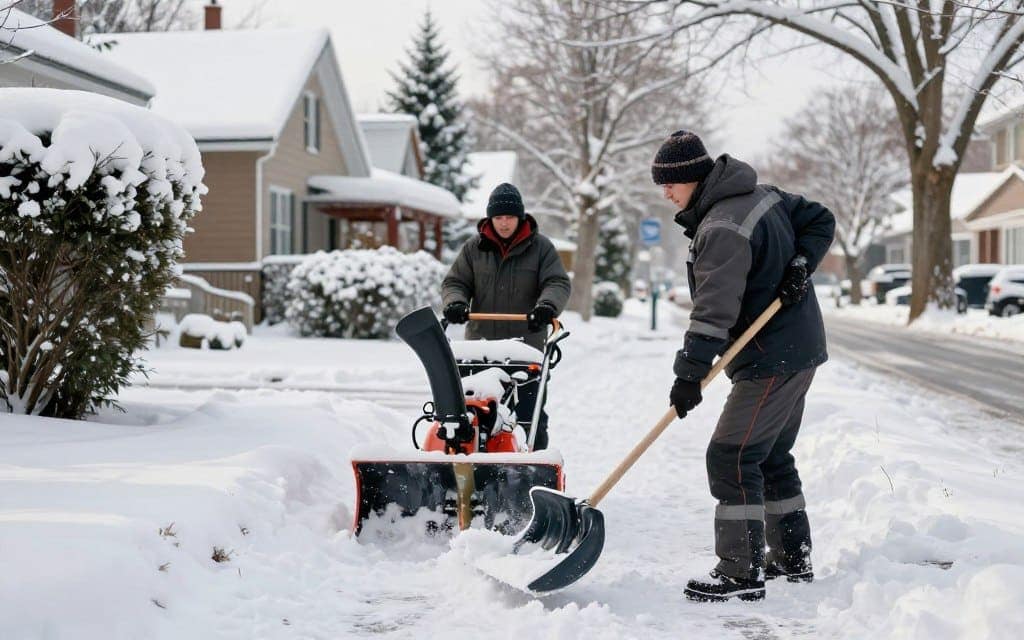




Have you ever wondered which approach truly keeps a commercial lot safe and open after a storm? In this guide, snow removal means consistent access, fewer slip-and-fall risks, predictable budgeting, and minimal disruption to tenants and customers.
This page outlines what a professional service covers: plowing lots, clearing walks and docks, and using de-icing and anti-icing strategies. A pro approach differs from ad-hoc work by prioritizing documentation, clear scopes, and rapid response.
We’ll preview core methods—plowing, blowing, shoveling, de-icing, and anti-icing—and explain how property layout, traffic patterns, and ice risk determine the right mix. Expect notes on refreeze cycles that can turn cleared pavement into hazardous ice later the same day.
Costs are commonly event-based or seasonal. Transparency in scope and logs matters for commercial decision-makers focused on reliability and responsiveness in the United States market.
Key Takeaways
- Best means safe access, fewer liability risks, and predictable costs.
- Professional snow removal services cover lots, walks, and docks with documented scopes.
- Choose a mix of plowing, blowing, shoveling, de-icing, and anti-icing by site needs.
- Refreeze cycles pose ongoing safety risks the same day work is done.
- Understand event-based vs seasonal pricing and insist on transparent documentation.
Snow removal services for commercial properties in the United States
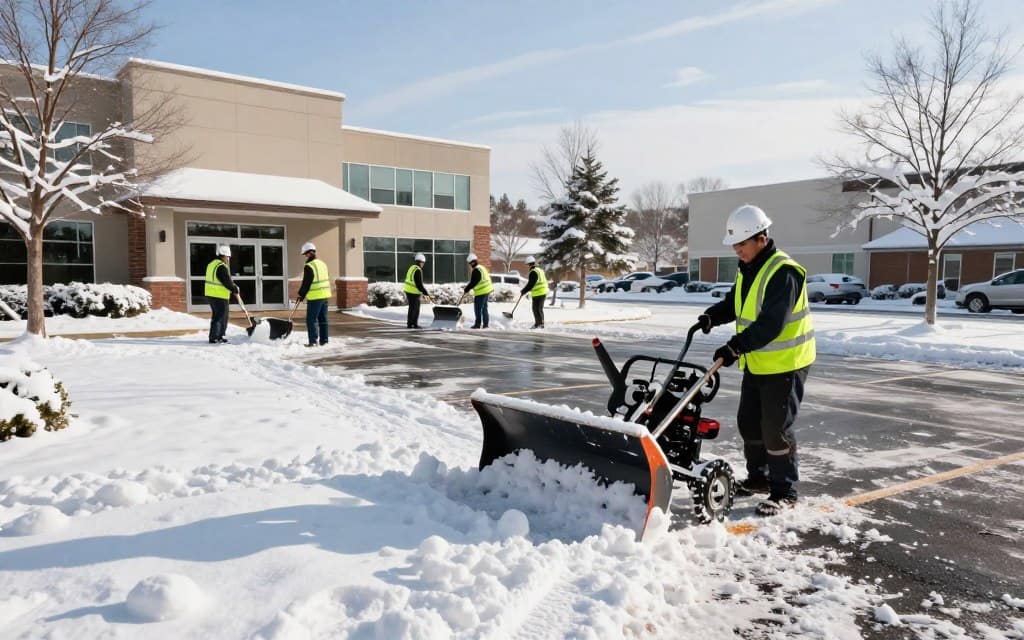
Commercial sites need a clear plan to stay operational when winter weather hits. Contracted snow removal services focus on high-liability zones first: sidewalks, entrances, ADA routes, and building approaches. These areas reduce slip-and-fall risk and protect tenants and visitors.
Who benefits most
Parking lots, drive lanes, and loading docks get constant attention because they affect deliveries and customer access. Pedestrian paths get targeted crews for clearing and traction. Controlled piles and visibility at entrances keep operations moving.
Service expectations today
Clients expect proactive communication, on-call dispatch, and clear response time targets. Crews perform post-storm cleanups to remove drift, plow trails, and compacted snow to limit ice formation.
Seasonal rotation model
Properties are grouped into routes so crews return at the right time during and after storms. Frequent passes keep depths manageable, cut compaction, and reduce ice risk where traffic packs the surface. A well-defined scope — lots, sidewalks, entrances — prevents gaps and disputes and keeps emergency and delivery access open.
How winter weather and storm tracking shape service timing
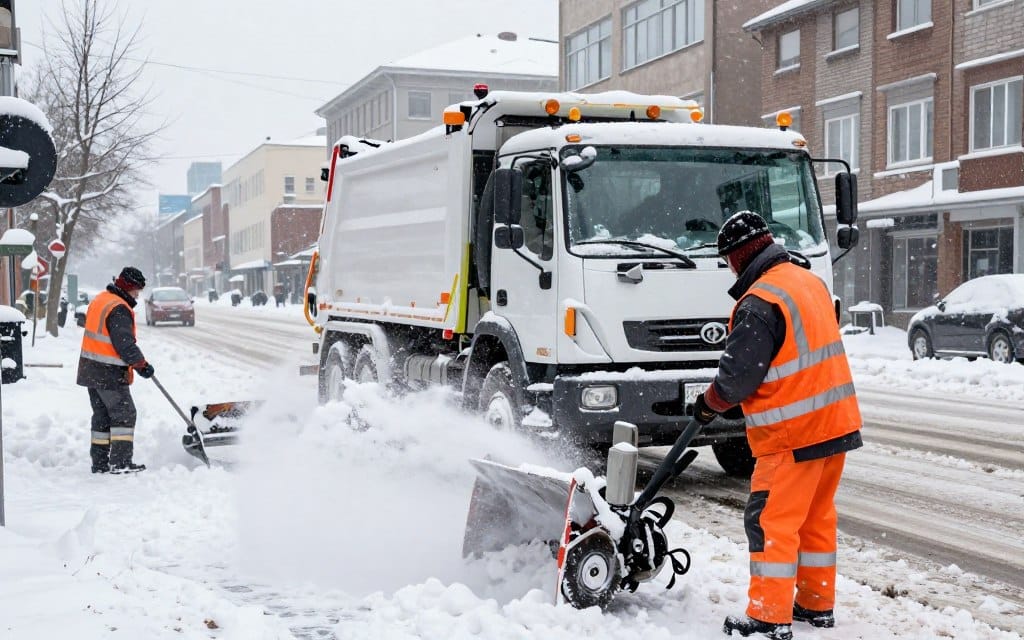
Accurate storm tracking and timing make the difference between a single pass and repeated site visits. Providers monitor forecasts to schedule crews so properties stay usable without early, wasted passes. This planning informs staffing, routing, and dispatch windows.
Monitoring forecasts and changing storm conditions for safer scheduling
Crews watch rate of snowfall, wind-driven drifting, and temperature swings. They adjust routes and start times when conditions shift to keep surfaces safer and reduce compaction.
Trigger depths, refreeze risk, and why timing matters during active snowfall
Contracts often set trigger depths: when accumulation reaches an agreed level, plowing begins to protect pavement and maintain access. Mid-storm passes prevent compaction that leads to bonded snow ice, which is harder to clear later.
Refreeze is a major risk. Melted snow can refreeze into slick ice, so de-icing timing and follow-up checks matter as much as the first pass. Property managers should coordinate schedules with business hours and deliveries to make sure service aligns with peak traffic.
Expect variable site time during storms. Changing conditions increase the number of visits required to meet safety and compliance goals.
Tools and equipment used to clear snow and manage ice

Equipment choice shapes how quickly a site is cleared and how much wear the pavement takes. Commercial crews pick gear to balance speed, surface protection, and final cleanup quality.
Snow plowing for lots and drives: blade types and surface protection
Straight, V, and containment blades each suit different tasks. Straight blades push evenly, V blades help cut through heavy depth, and containment boxes hold windrows for hauling.
Operators use rubber edges and float settings to protect curbs and asphalt. On lots, crews plan stacking zones; on drives they clear access lanes and control windrows to keep entrances visible.
Blowers, shovels, and tight-area tactics
Blowers and hand shovels work where plows can’t go—walkways, decks, and entries. Small machines reduce back strain and prevent piling that blocks doors or ramps.
De-icing, traction tools, and anti-icing
Spreaders enable targeted salt or traction compound application; more product is not always better for surfaces or runoff. Pre-treatment with brine and similar anti-icing mixes reduces bonding so later clearing is faster and lowers slick, black ice risk.
Choosing the best snow removal method for your property
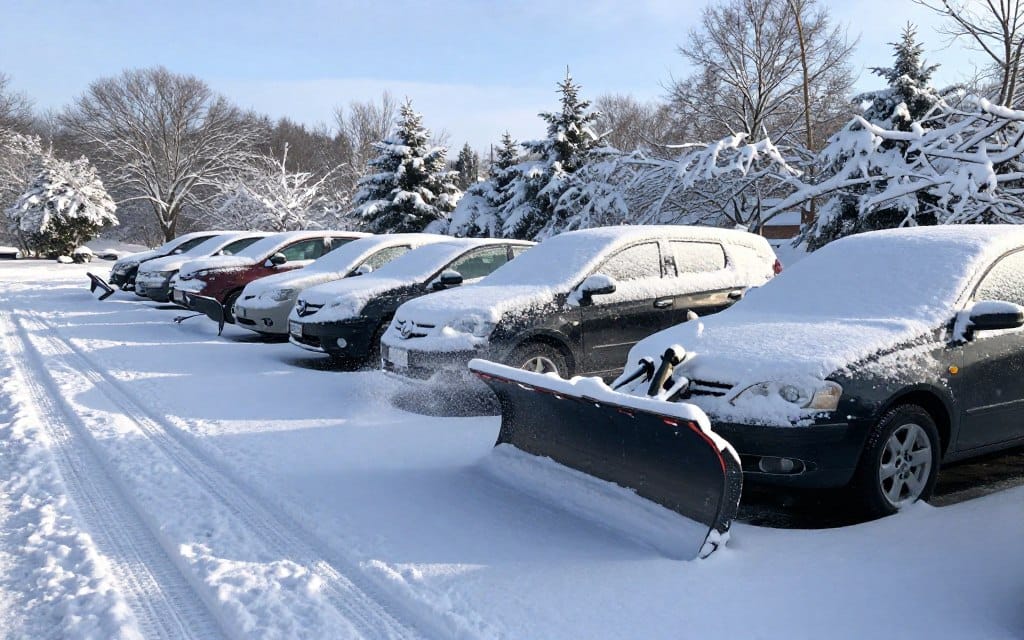
A property’s function and traffic patterns should drive which winter tactics you pick.
Decision framework by property type
Retail sites need rapid access for customers; prioritize frequent passes and cleared parking aisles. Office campuses benefit from scheduled daytime service tied to business hours. Industrial yards require clear loading lanes and larger stacking zones. Medical sites must keep entrances and patient drop-off areas clear at all times. Mixed-use properties combine these needs and often require layered services.
Parking lot strategy
Designate stacking zones where snow is piled so plows don’t block exits. Keep two or more access lanes open during peak times.
Preserve visibility at entrances, intersections, and crosswalks to reduce collisions and pedestrian risk.
Walkway and ADA access planning
Prioritize ramps, curb cuts, accessible parking paths, and door approaches. Clear high-traffic points first to lower slip hazards.
Protecting landscaping and lawn edges
Mark curbs, irrigation heads, and bed lines before the season. These markers help crews avoid damage when blades and blowers work near turf and planting beds.
Right-of-way considerations
Confirm municipal Snow Routes and right-of-way rules—Nashville’s DOT guidance, for example—so you know what the city maintains versus what the property owner must handle.
Match methods to business needs
Align service frequency and materials with operating hours, delivery schedules, and tenant expectations. Tailor plow, shovel, and ice-control sequencing to keep essential access open while minimizing damage to landscaping and lawn care systems.
Snow and ice safety precautions to reduce risk and liability
Managing ice after a storm needs predictable checks, treatments, and clear team protocols. Consistent procedures matter as much as the initial plow or broom work because hazards create legal exposure for property owners.
Black ice prevention and refreeze 대응
Monitor temps and re-treat high-risk zones where meltwater pools. Schedule follow-up checks when temperatures fall and apply anti-icing mixes to cut bonded snow ice and black ice formation.
Refreeze means planning time-based site checks and quick reapplication when conditions change after a pass.
Pedestrian safety
Prioritize walkways and entrances so cleared paths are safe to traverse. Use signage and temporary barriers to reroute foot traffic during active work.
Keep door approaches and ramps treated and visible to reduce slip incidents.
Vehicle safety and coordination
Control lot speed with signage and cones, maintain sightlines at entries, and apply traction where braking and turning occur.
Coordinate the team to work safely around parked cars, delivery vehicles, and pedestrians during peak hours.
Documentation and accountability
Keep weather notes, time-stamped service logs, site-check photos, and crew records. Good documentation supports internal audits and helps defend claims when needed.
Snow removal costs: what impacts pricing and how to budget
Understanding what drives pricing helps property managers avoid surprise charges during heavy years. Start with site size, surface type, and how often crews must return.
Key cost drivers
Lot size and surface type set base rates. Complex sites with islands, medians, or tight access take longer and cost more.
Accrued totals also reflect snowfall totals and how frequently ice needs treatment. Trigger depths and refreeze windows increase visits and materials use.
Per-push vs seasonal contracts
Per-push pricing charges by event. It fits sites with mild winters or infrequent needs.
Seasonal agreements smooth budgeting and cover many visits in active months. Heavy years can still add hauling or extra passes, so check caps and surge terms.
Add-ons and budgeting tips
Common extras include hauling when piles exceed capacity, dedicated sidewalk crews, and anti-icing programs. These raise totals but improve safety.
Review last year’s storms, mark high-risk areas, and match the contract to your operational hours and needs. Ask for a detailed quote that separates base service, ice materials, and optional line items for easy comparison.
Requesting a quote and preparing your site before the first storm
Preparing property details before the first storm speeds response and reduces damage risk. A clear plan helps crews arrive ready and reduces added work after the weather changes.
Pre-season walkthrough and marking
Schedule a pre-season walkthrough to map curbs, irrigation heads, and hidden lawn features. Mark edges with stakes or flags so crews avoid landscape and lawn damage when visibility is poor.
Access planning and piling zones
Define parking rules to keep main lanes open and share gate codes before winter begins. Pick specific pile areas and mark no-pile zones near hydrants, drains, loading docks, and visibility triangles.
What to share for faster service
Provide a site map, priority areas (entrances, docks, ADA routes), and emergency contacts. Note any time windows when work can or cannot occur to prevent conflicts with deliveries or business hours.
What a professional team should confirm
A reputable team will confirm route placement and rotation schedules, staffing plans, and readiness to adjust for changing storm conditions. Expect clear on-call channels and documented service windows for each visit.
Anti-icing planning: Pre-treatment with brine or salt mix works best before active precipitation and helps reduce bonding so later clearing is faster.
Service partner note: For questions about scope and quotes, contact C&T Lawn and Landscape as your local point of contact for year-round lawn care and winter services.
Conclusion
Choosing the right winter tactics protects access and keeps operations on schedule. Match plowing, shoveling/blowing, de-icing, and anti-icing to site layout, traffic flows, and risk zones instead of a one-size approach.
Clear triggers, defined priorities, and documented procedures cut disruptions. Timely monitoring matters—refreeze and high-traffic periods raise ice risk quickly, so plan follow-up checks.
Pre-season scope setting and site marking reduce surface damage and create consistency across the season. Use this guide to compare options, align internal expectations, and set measurable standards for your service team.
Next step: request a detailed quote, confirm priorities, and finalize a written plan for removal and ice control before the first storm.