




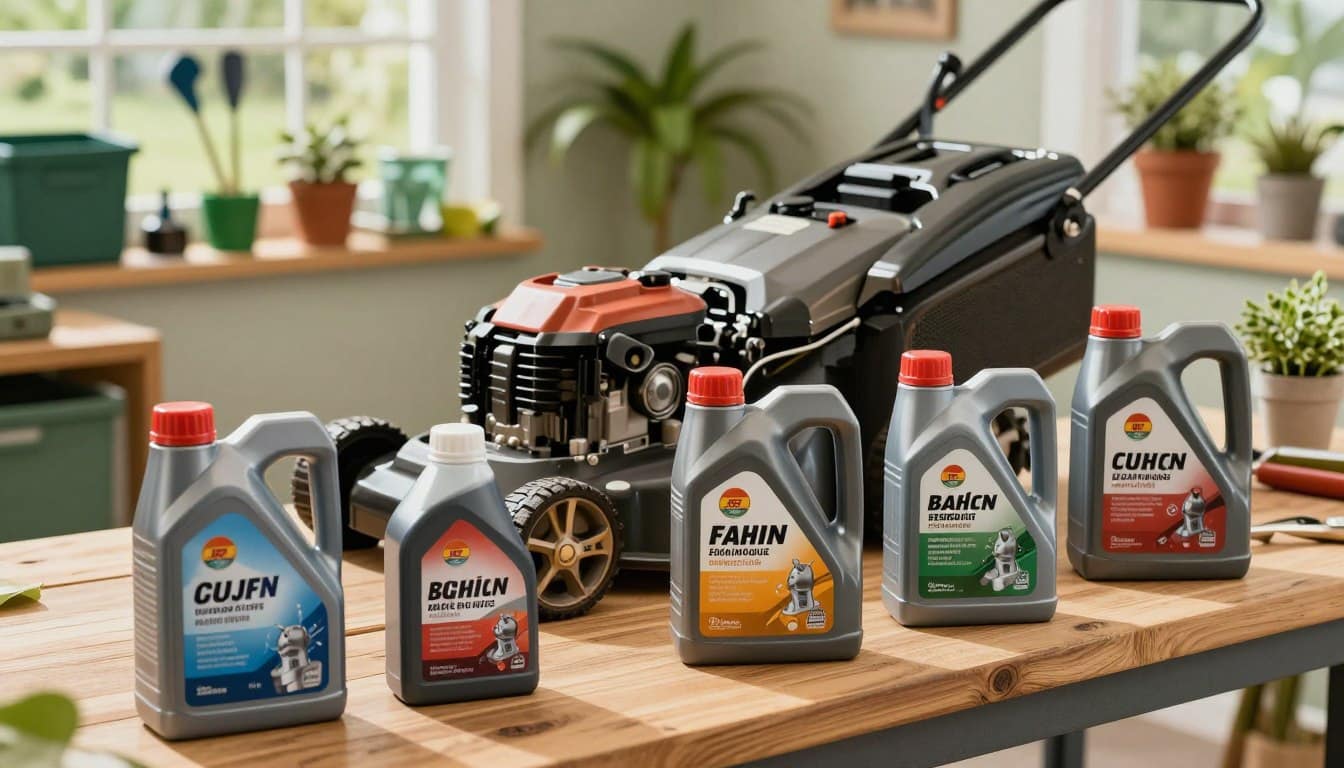
Quick answer: Most four-stroke walk-behind and riding mowers use SAE 30 or 10W-30 engine oil. Two-stroke equipment uses two-cycle oil mixed with gasoline, commonly at a 40:1 or 50:1 ratio only when the owner’s manual specifies it.
The correct lawn mower oil type depends on the engine, manufacturer requirements, and operating temperatures. Check the owner manual before you buy oil or change oil. SAE 30 often suits warm weather, while 10W-30 can work across changing temperatures when approved.
Oil reduces friction, carries heat away, and protects small engines from wear. A low or deteriorated level may reduce performance or damage the engine. Connecticut’s seasonal lawn temperatures make routine maintenance especially important.
Use this guide to compare oils, confirm the best lawn mower oil for your machine, and plan service. Review this small-engine guide, visit CT Lawn, or explore professional maintenance services for dependable equipment care.
Key Takeaways
- Four-stroke mowers commonly use SAE 30 or 10W-30.
- Two-stroke engines require a manual-specified oil-and-gas mixture.
- The owner’s manual determines the correct grade and capacity.
- Check the oil level before use to prevent costly damage.
- Regular maintenance supports reliable Connecticut lawn care.
What lawn mower oil type does your engine need?
Identify the engine design before adding oil. A four-stroke lawn mower usually has a separate gasoline tank, crankcase, and dipstick; a two-stroke mower engines uses one fuel tank for a manufacturer-specified gasoline-and-oil mixture. The owner manual overrides general recommendations.
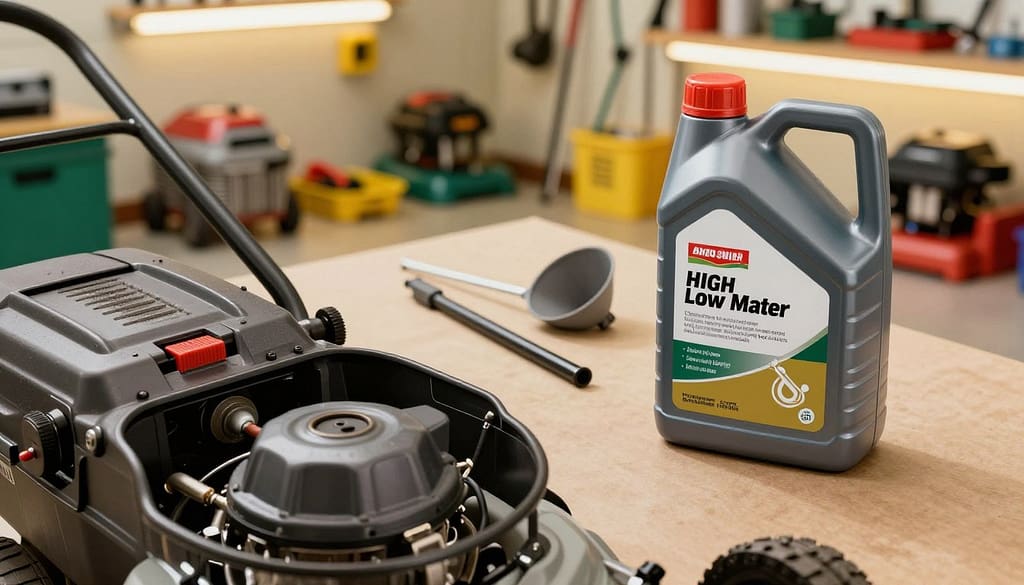
How four-cycle and two-cycle mower engines differ
Four-stroke engines keep engine oil in a separate crankcase and burn gasoline from the fuel tank. Two-stroke engines burn oil used in a gasoline mixture, often at 40:1 or 50:1 only when the manufacturer specifies that ratio. Never put 10W-30 in a two-stroke fuel tank, and never pour two-cycle oil into a four-stroke crankcase. The wrong product can cause excess smoke, a fouled spark plug, poor running, lubrication failure, or engine damage.
Why your owner’s manual is the final authority
Your owner manual lists the correct oil lawn mower specification, capacity, viscosity grade, API service rating, and fuel-mixing ratio. For additional manufacturer guidance, review the Briggs & Stratton oil guide. A newer API category is not automatically correct for every small engine.
- Use automotive engine oil only when its grade and API rating match the manual; this may be the best oil for a compatible four-stroke mower.
- Photograph the model and serial labels before asking CT Lawn or another lawn-care professional to identify the type.
Which oil grades work best in Connecticut weather?
Quick answer: The best oil for a lawn mower depends on the manufacturer’s approved grade, engine design, and operating temperatures. Small engine oil viscosity describes how readily oil flows when cold and how it protects the engine when warm. In 10W-30, “W” means winter; the first number indicates cold-flow behavior and the second describes warm viscosity.
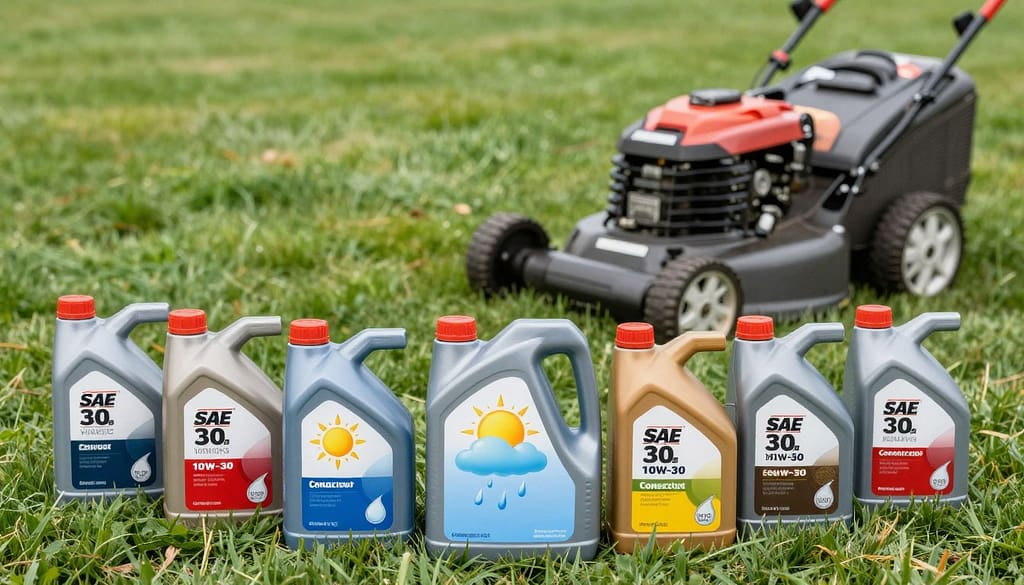
SAE thirty for warmer mowing conditions
SAE 30 can suit standard lawn mower engines during warmer temperatures when the manual approves it. It provides dependable protection for routine summer mowing.
SAE ten-W-thirty for changing temperatures
SAE 10W-30 is a common multi-season choice for mowers because it flows more easily during cool starts and supports performance as temperatures change. Check the oil level regularly because some engines may use more oil with this grade.
Synthetic SAE five-W-thirty for year-round protection
Synthetic lawn mower oil, such as SAE 5W-30, may support cold starting and stable protection across broader operating temperatures when approved for the machine. For high-load commercial mowers, 15W-50 may be suitable, but only if the manufacturer specifies it.
| GradeStarting behaviorMain advantageConnecticut use | |||
| SAE 30 | Best in warm conditions | Simple summer protection | Established summer routines |
| SAE 10W-30 | Improved cool starts | Flexible seasonal coverage | Spring and fall changes |
| Synthetic 5W-30 | Strong cold starting | Wide protection range | Year-round home use |
Confirm every oil grade in the owner’s manual before use. For the correct engine oil and safe oil change steps, follow the manual first.
Should you use synthetic oil in a lawn mower?
Direct answer: Synthetic oil may be the best mower oil for a lawn mower that faces cold starts, high temperatures, long work sessions, or repeated heat cycles. Use synthetic 5W-30 or 10W-30 only when the manufacturer approves that type and viscosity.
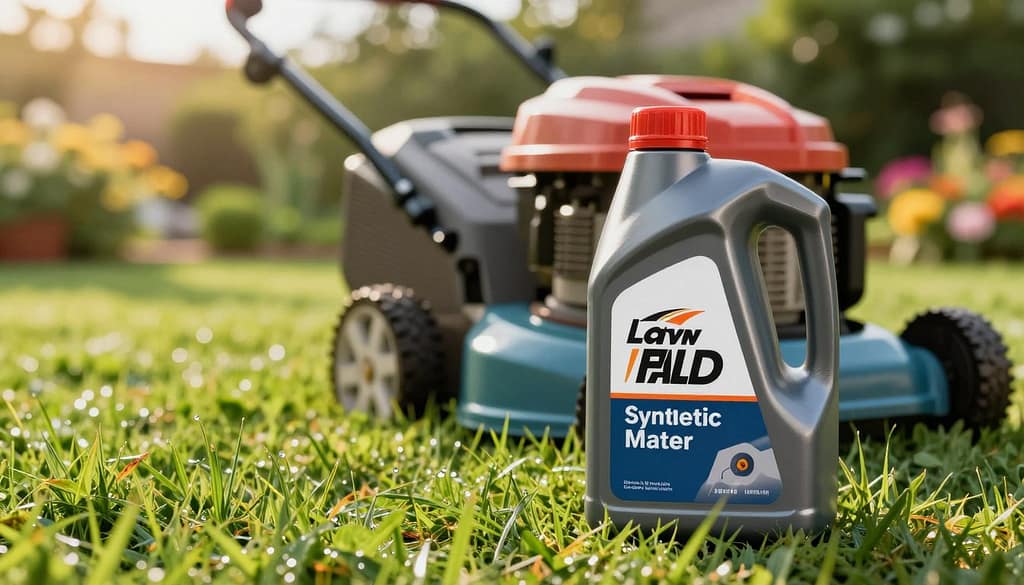
Synthetic lawn mower oil is made from refined base oils and performance additives designed to maintain lubrication as temperatures change. It may support easier starting, cleaner operation, and protection against wear, but results depend on the engine, workload, and service condition.
Conventional oil generally costs less, synthetic blends balance price and performance, and full synthetic oil offers strong temperature stability. However, synthetic oil is not automatically better for every engine, does not replace maintenance, and does not extend the change interval unless the manual says so.
- Follow the manufacturer’s approved grade, API rating, and oil specification.
- Check the level before each cutting session.
- Replace the oil at the scheduled interval and never substitute synthetic oil for the required type.
When Connecticut homeowners need seasonal equipment care, CT Lawn can help with routine maintenance and professional service. Even durable engines require fresh oil at the required interval to preserve performance and service life.
How do you check and change lawn mower oil?
A quick oil check helps small engines start safely and prevents avoidable repairs. Park the lawn mower on level ground, stop the engine, and let hot parts cool before beginning maintenance.
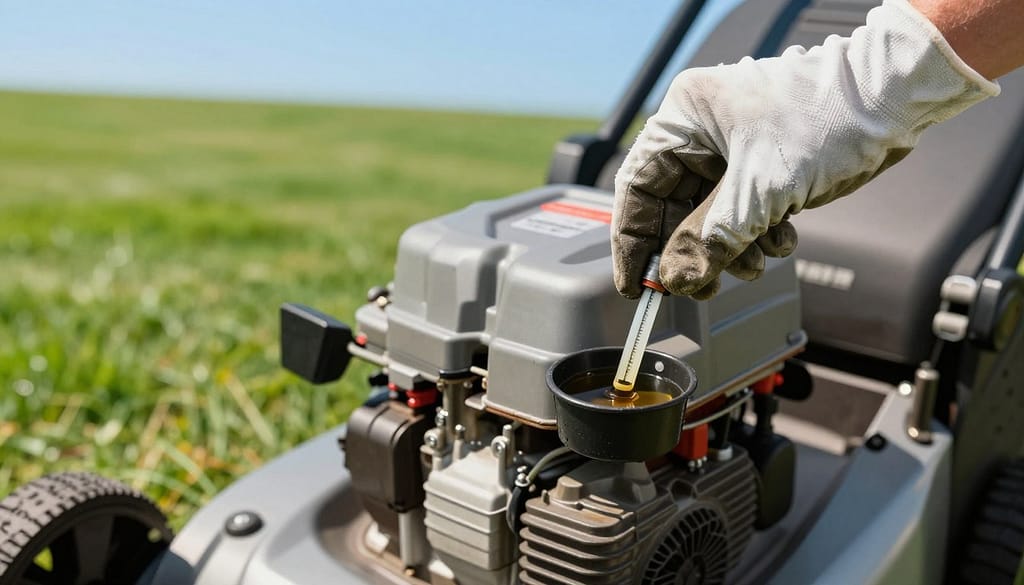
How to check the oil level safely
- 1. Find the oil-fill tube and dipstick. Remove the dipstick, wipe it clean, reinstall it according to the owner manual, and remove it again.
- 2. Confirm that the level is within the marked range. Never fill above the upper mark; too much oil can damage seals, gaskets, or the combustion chamber.
- 3. To change oil, identify the drain plug or approved draining method, place a suitable container below it, and keep used oil away from the lawn.
- 4. Add the specified mower oil slowly with a funnel. Check the level after each small amount, replace the cap securely, and recycle the oil used at an approved collection facility. For the correct engine oil capacity, follow the owner manual.
When to change oil in walk-behind and riding mowers
Many walk-behind mowers need an oil change once each season or every 50 hours. Riding mowers and zero-turn mowers may require service every 100 hours or once yearly, but the manufacturer’s schedule always comes first.
- Service a new mower after its first three to five hours when the manual recommends it. Break-in wear can release fine metal particles.
- Warm the engine for several minutes, shut it off, disconnect the spark plug wire, and drain the oil safely.
- Many walk-behind engines hold approximately 15 to 20 ounces, while riding mower capacity varies by engine. Some John Deere models hold about 1.8 to 2.2 quarts, or 58 to 70 ounces; never fill by estimate.
| EquipmentTypical intervalSafety point | ||
| Walk-behind | Seasonally or every 50 hours | Check before each session |
| Riding or zero-turn | Seasonally or every 100 hours | Confirm capacity in the manual |
For professional mower maintenance, seasonal service, and equipment support, contact CT Lawn or find CT Lawn on Google Maps.
How does proper oil maintenance protect Connecticut lawns?
Connecticut’s cool-season grass grows quickly during mild spring and fall weather. A dependable mower helps homeowners maintain an even cut as New England temperatures change. The correct grade of engine oil supports smooth starts and steady performance, but oil alone does not determine lawn quality.
Fresh mower oil reduces friction, heat, and wear inside lawn mower engines. A low or deteriorated level can lower performance and increase repair risk. Blade sharpness, air flow, spark-plug condition, and engine governor operation also affect cutting results and lawn appearance.
- Check the oil level and service walk-behind equipment before demanding growth periods.
- Maintain riding mowers on larger properties to reduce downtime.
- Inspect blades, clean the air filter, check the spark plug, and store equipment properly.
- Follow the manual before adding additives, mixing oils, or changing products.
Professional CT Lawn maintenance: Homeowners who prefer expert care can arrange seasonal tune-ups, oil changes, blade sharpening, equipment inspections, and routine upkeep through CT Lawn’s maintenance services. Technicians can help identify the appropriate oil lawn equipment needs and prepare it for changing weather.
For help with equipment, soil, or seasonal turf needs, Connecticut homeowners can review this approved lubricant guide, view CT Lawn on Google Maps, or contact CT Lawn for professional support.
What is the best lawn mower oil type for my engine?
Choosing the correct lawn mower oil type starts with the engine design and owner manual. Confirm the required grade, API rating, viscosity, and capacity before buying oil.
SAE 30 may suit warmer temperatures, while SAE 10W-30 works across changing weather when approved. Synthetic lawn mower oil may provide added protection, but always check the manual and oil level before use.
Use this three-step checklist: identify the engine type, match the oil grade and API specification, and fill only to the model-specific capacity.
Can I use regular car oil in my lawn mower? Yes, if its viscosity and service classification match the manufacturer’s requirements. Do not use automotive oil in a two-stroke fuel mixture unless specified. For details, read this car-fluid guidance.
Follow the manufacturer’s service schedule for change oil intervals; riding mowers may require service by hours or annually, whichever comes first. For professional Connecticut care, visit CT Lawn’s maintenance services or find CT Lawn on Google Maps.