


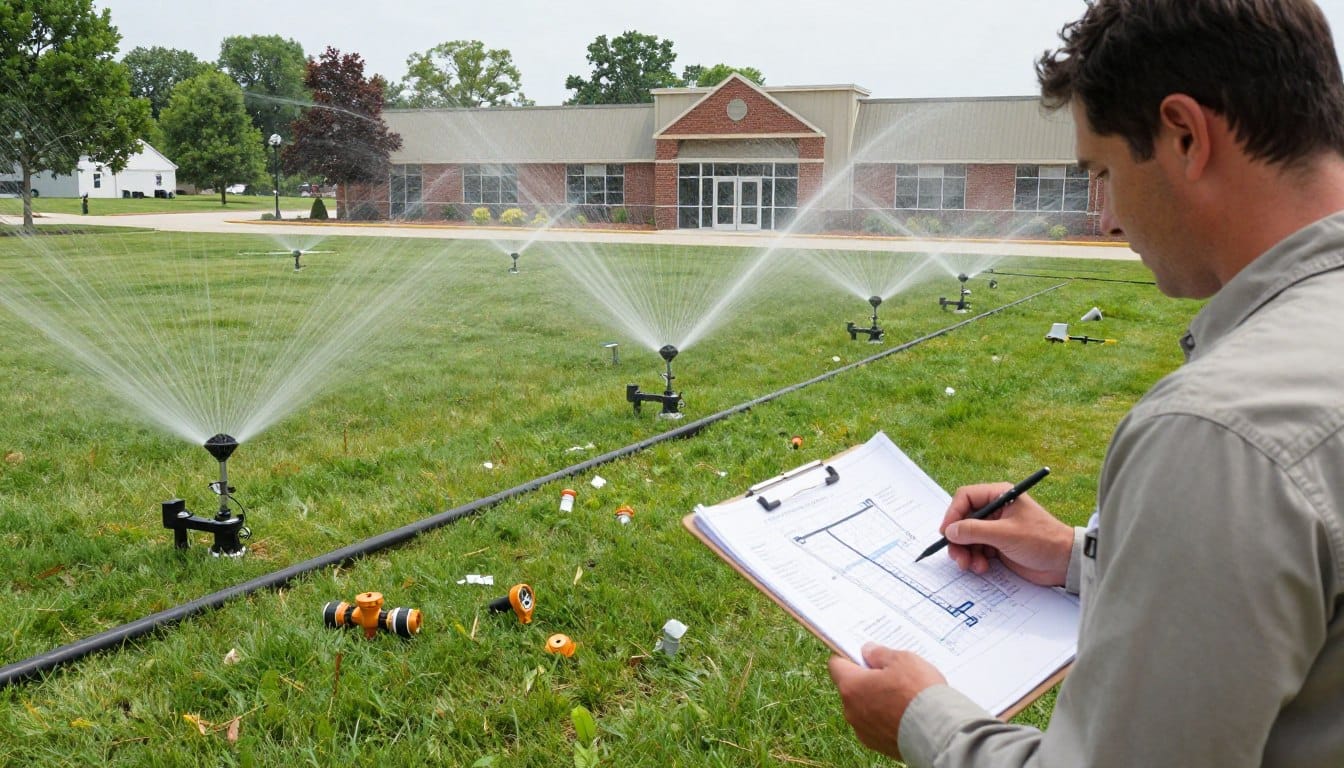



The best time of day to water lawn areas is generally early morning, when temperatures are cooler and wind is often calmer. Watering at this time gives moisture an opportunity to reach the soil and root zone before heat increases evaporation. The ideal window is a practical guideline, not a rigid rule: adjust it for rainfall, wind, soil type, grass variety, and local water restrictions.
Most Connecticut lawns contain cool-season grass, such as Kentucky bluegrass or fine fescue, which benefits from consistent but carefully measured irrigation. Proper timing helps grass use water efficiently, supports root growth, and allows foliage to dry during the day. Watering late at night is not automatically harmful, but prolonged leaf wetness can increase disease risk under favorable conditions.
This guide explains how to create an efficient watering schedule, recognize when a lawn needs water, and avoid common irrigation mistakes. For additional lawn-watering guidance, read this resource and contact a local Connecticut lawn-care professional for property-specific advice.
Key Takeaways
- Early morning is usually the most efficient time to water.
- Measure water instead of relying only on a timer.
- Allow grass blades to dry before evening when possible.
- Deep irrigation supports stronger root growth.
- Adjust watering when rain is expected.
Quick Answer
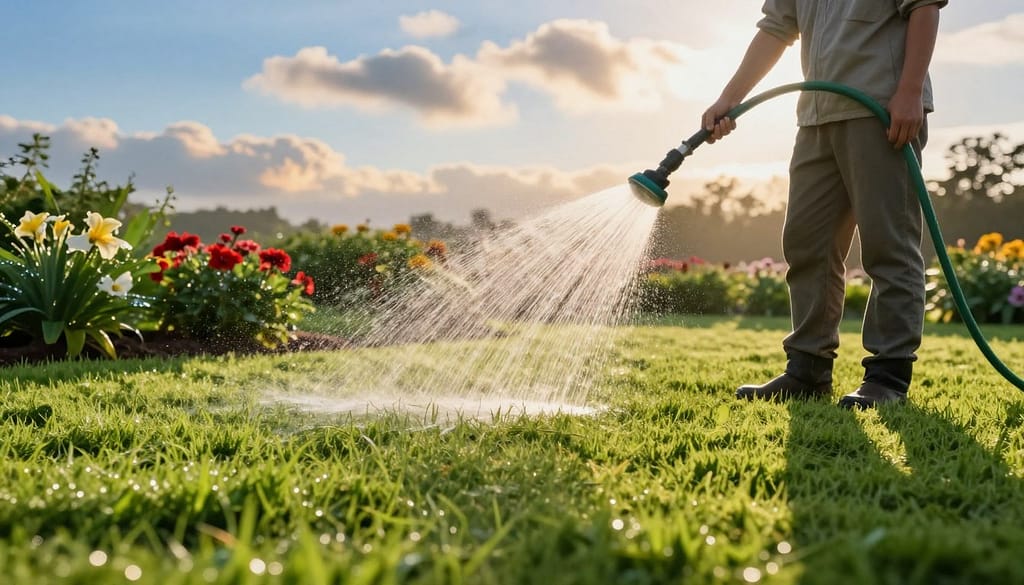
The best time to water lawn areas is usually early morning, between about 6 a.m. and 10 a.m. This morning window is a practical target rather than a strict rule. It gives water time to soak into the soil before rising temperatures and direct sun increase evaporation.
When you water lawn grass in the early morning, moisture can reach the root zone while grass blades have time to dry during the day. That drying period may reduce disease risk associated with prolonged leaf wetness. Connecticut lawns with cool-season grass, including Kentucky bluegrass, often benefit from this schedule.
Adjust the time when rain is expected, wind is strong, drought restrictions apply, or your irrigation system cannot provide even coverage. Check your local forecast and measure the amount of water delivered instead of relying only on a timer. For help creating a lawn-watering schedule, visit our Connecticut lawn-care team or find us on Google Maps.
| Time FrameBenefitsRecommended For | ||
| 6 a.m. – 7 a.m. | Cool conditions and strong soil absorption | Most grass types |
| 7 a.m. – 8 a.m. | Lower evaporation and calmer morning conditions | Cool-season grass |
| 8 a.m. – 10 a.m. | Still suitable when foliage can dry afterward | Many established lawns |
Essential Steps for Proper Lawn Watering
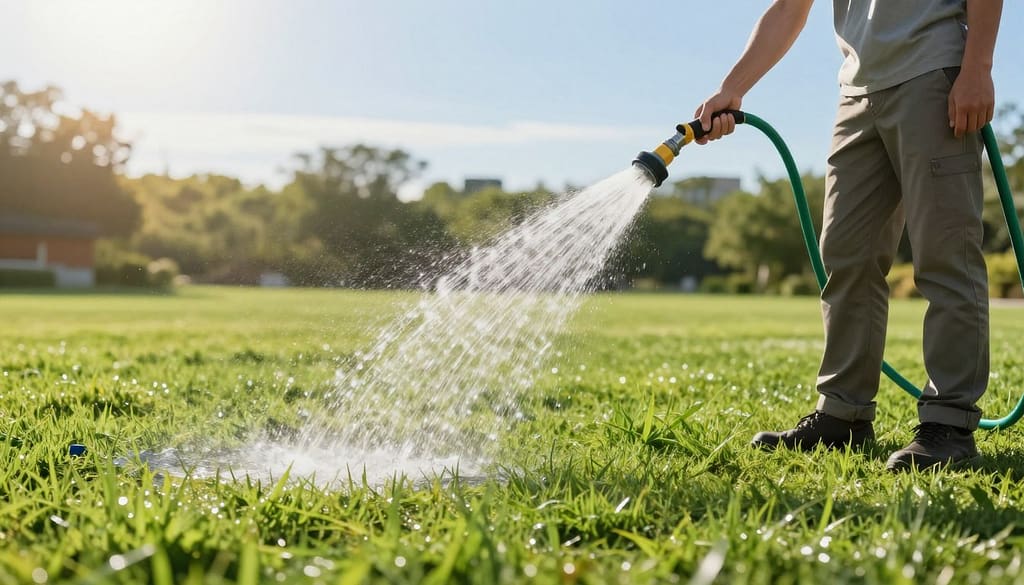
Most established lawns need about 1 to 1.5 inches of water per week, including rainfall. This water per week target is a starting point, not a fixed schedule. Your lawn needs may change with grass variety, soil texture, slope, shade, compaction, temperature, and recent rain. Check soil moisture before you water and watch for dull, blue-green grass or footprints that remain visible.
For proper watering, water deeply and infrequently rather than sprinkling lightly every day. Deep watering helps moisture move through the root zone and supports a deeper root system, although the ideal depth varies by soil and grass. Water slowly enough to limit runoff, especially on slopes or compacted soil. If water begins to pool, pause and allow it to absorb before continuing.
To measure the amount applied, place several empty tuna cans or straight-sided containers around the lawn while the system runs. Record the average depth and adjust the runtime until the irrigation delivers the desired inches of water per week. A rain gauge helps track rainfall separately. Newly seeded grass and new sod may require more frequent, lighter watering until roots establish, so do not apply established-lawn rules automatically. For compacted soil, consider professional aeration or soil improvement to support healthier growth.
| Watering TechniqueDescriptionBenefits | ||
| Deep Watering | Slow, thorough sessions spaced as needed | Supports deeper roots and stronger grass |
| Surface Watering | Frequent, light applications | Useful for seed or new sod; established grass may develop shallow roots |
| Rain Gauge Method | Measuring water intake with containers | Helps verify the amount of water applied |
Benefits of Early Morning Watering

Early morning irrigation is usually the most efficient way to water a lawn. Cooler temperatures, lower sun intensity, and calmer wind can reduce evaporation, helping more water reach the soil and root zone. This gives grass time to absorb moisture before the hottest part of the day.
Morning watering also allows grass blades to dry gradually during daylight. Drier foliage may reduce disease risk because many lawn diseases spread more readily when blades remain wet for long periods. Apply water slowly enough to limit runoff, especially on slopes or compacted soil, and follow a measured lawn disease prevention plan when problems persist.
If morning watering is impossible, late afternoon may be acceptable when the grass can dry before evening. Avoid late-night watering whenever practical, but do not let a severely dry lawn decline simply to follow a rigid schedule. In extreme heat, emergency watering during the day may be necessary; use shorter cycles to reduce runoff and check the soil afterward.
Avoiding Common Watering Mistakes
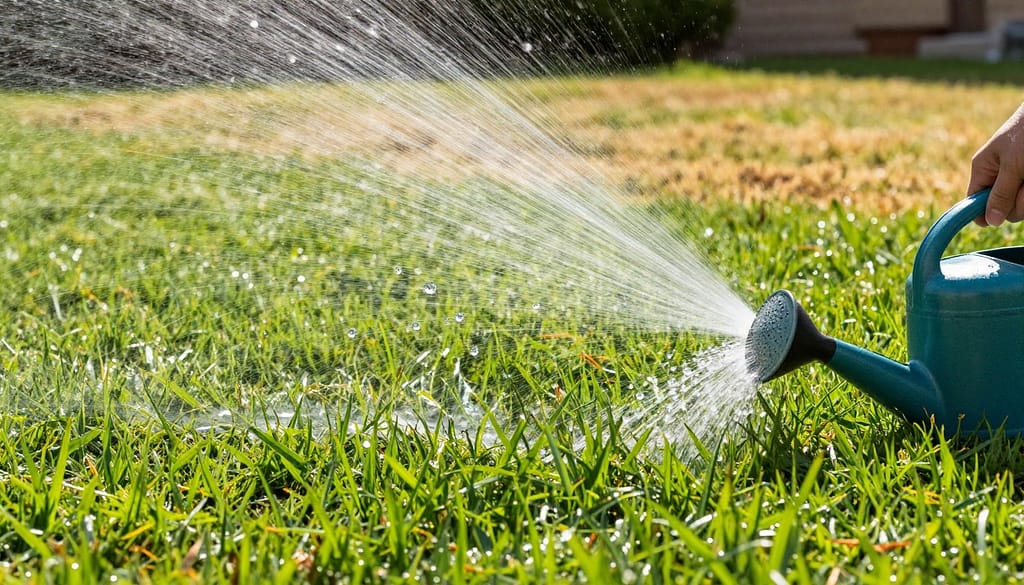
Common mistakes include watering at night, running irrigation during strong midday heat, and applying more water than the soil can absorb. Night watering is not automatically damaging, but wet blades that remain damp into the evening can raise disease risk. Midday water can also evaporate quickly, although watering lawn areas during heat may be appropriate when grass shows serious stress.
Use a rain gauge, inspect sprinkler coverage, and adjust the schedule for rainfall, wind, and soil conditions. These steps help protect lawn health, prevent brown patches, and support steady grass growth.
Guidelines for the best time of day to water lawn
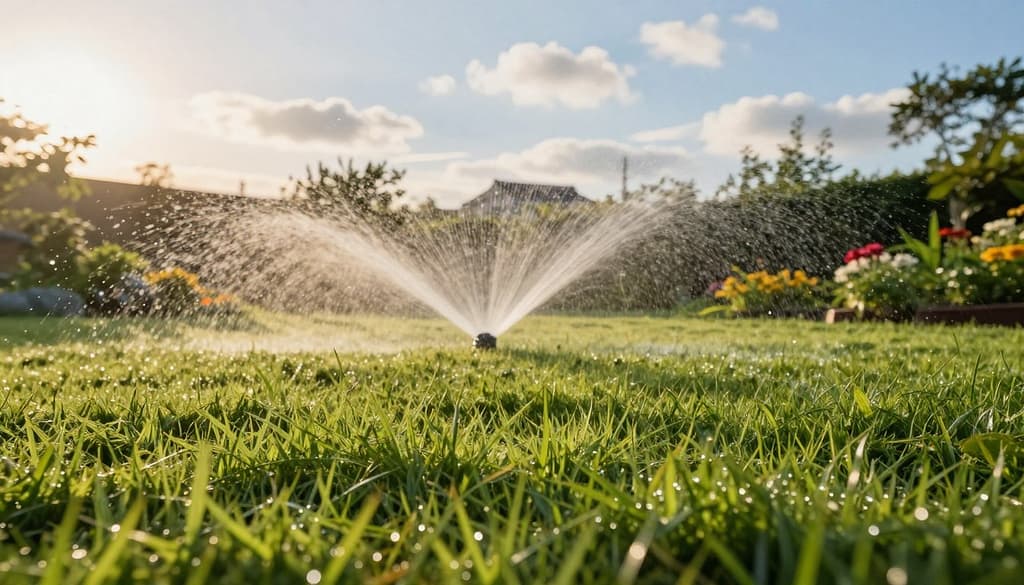
The best time of day to water lawn areas is generally early morning, when the root zone can absorb moisture before heat and wind increase evaporation. Aim to wet the upper six inches of soil for established grass when conditions allow, but treat this as a practical guide rather than a universal rule. Soil texture, compaction, slope, shade, and grass type all affect how much water the lawn needs.
Water slowly and deeply enough to encourage a deeper root system, then adjust the schedule according to rainfall and local temperatures. Check the weather forecast before you start irrigation, and do not water when rain is expected to provide sufficient moisture. Follow local watering restrictions, particularly during unusually dry weeks.
For tailored recommendations, explore our Connecticut lawn-care services or find our Connecticut lawn care location.
- Watering early in the morning can improve moisture absorption.
- Deep irrigation supports the health of cool-season grass.
- Encouraging deeper roots can improve drought resistance.
- Clay soil holds water longer than sandy soil, so it may need less frequent irrigation.
- Watch shaded, sloped, or compacted areas and adjust watering as needed.
Local CT Tips for Lawn Care
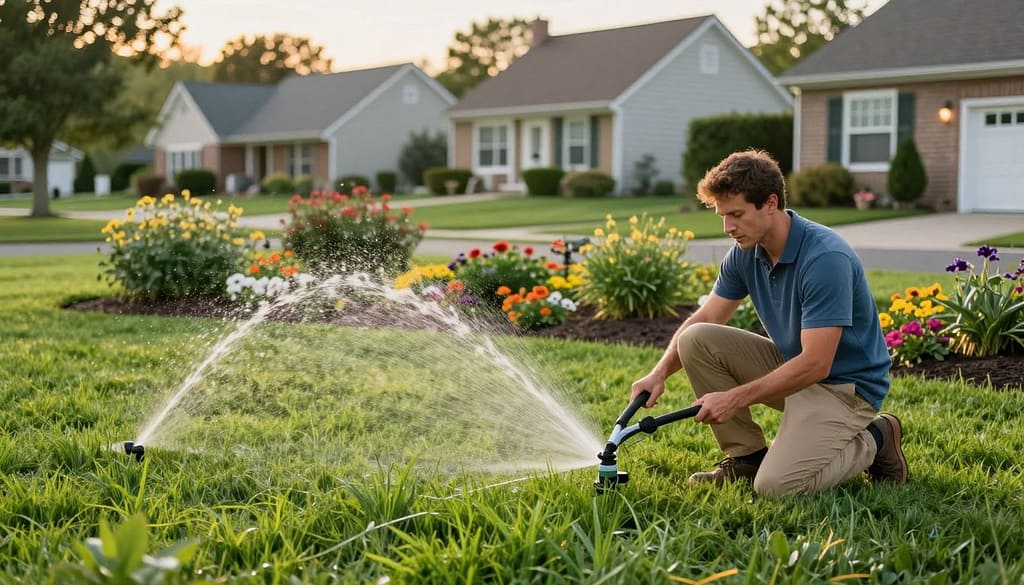
Connecticut’s cool springs and warm summers generally favor cool-season grasses such as Kentucky bluegrass and fine fescue. Many local lawns have clay soil, which can retain moisture longer than sandy soils. However, drainage, organic matter, slope, and compaction determine how quickly water moves through the soil.
Use these local conditions to refine your watering plan:
- Connecticut’s climate is well-suited for cool-season grass.
- Clay may need less frequent, slower irrigation to prevent runoff.
- Sandy soil may need smaller, more frequent applications.
- Lawns in shade usually dry more slowly than lawns in full sun.
- Compacted areas may require aeration before water can reach the roots effectively.
- Monitor grass during high temperatures and follow local water-use restrictions.
| Soil TypeMoisture RetentionWatering Frequency | ||
| Clay | High | Less frequent, slower applications |
| Sandy | Low | More frequent, smaller applications |
| Loamy | Moderate | Regular, measured irrigation |
Irrigation System Setup & Maintenance
An efficient irrigation system can help your lawn receive the right amount of water without waste. Before selecting a system, assess the yard layout, water pressure, soil type, slopes, and areas that need different coverage. A properly designed setup supports healthy grass growth and more consistent watering.
Run a sprinkler audit at least once each season. Check that sprinkler heads provide even coverage, measure the water output with straight-sided containers, inspect for leaks or clogged nozzles, and correct overspray onto sidewalks or driveways. Program the system for early morning irrigation, but review the schedule whenever weather or lawn conditions change. For installation or repairs, explore our irrigation services.
Regular maintenance prevents dry spots, standing water, and conditions that may contribute to disease. It also helps every part of the lawn receive the moisture it needs while protecting long-term turf health.
Adjusting Watering Schedules with Weather Changes
Rainfall should be included in the total water per week your grass receives. More than one inch of rain in a week may reduce or eliminate the need for irrigation, but do not follow that rule automatically. Check soil moisture, rainfall distribution, runoff, temperature, and visible plant stress before changing the schedule.
During a dry week, increase or extend deep watering only when the soil is drying and the lawn shows stress. After heavy rain, pause the system until the soil can absorb more moisture. Always check the forecast before running irrigation to conserve water and prevent oversaturation.
Weather-based adjustments help maintain a healthy balance of moisture and support steady growth. They also reduce unnecessary water use and keep your irrigation system aligned with changing Connecticut conditions.
- Count rainfall toward the lawn’s weekly water needs.
- Use soil moisture, not rainfall totals alone, to guide watering.
- Adjust the schedule during dry or unusually wet periods.
- Inspect the system after storms for leaks or displaced heads.
Incorporating Fertilization with Watering
Fertilizer should be applied only when the grass is actively growing and the soil is not saturated or severely dry. Follow the product label for the correct amount, timing, and application method. A light watering after fertilization can help nutrients reach the root zone, while excessive water may cause runoff.
Never fertilize drought-stressed turf without following professional guidance. Coordinate fertilizer with forecast rain or irrigation only when conditions are suitable, and keep nutrients away from paved surfaces and waterways. Properly fed and watered grass is better prepared to resist weeds, pests, and environmental stress.
Deep vs. Shallow Watering Strategies
The way you water grass affects its growth and long-term health. Deep watering wets the root zone gradually, helping established grass develop stronger, deeper roots and better tolerance for dry conditions. The ideal depth and frequency depend on soil type, infiltration rate, slope, shade, and current weather.
Shallow watering keeps moisture near the surface and may encourage a less resilient root system when used routinely on established turf. To water grass effectively, apply water slowly enough to prevent runoff and allow it to soak into the soil. Newly seeded areas and new sod are exceptions and may need lighter, more frequent watering while roots develop.
Use a measured deep watering schedule rather than a fixed routine. For drought-prone properties, review our drought-resistant lawn care guidance for ways to improve turf resilience.
Handling Unique Lawn Challenges
Every lawn responds differently to irrigation. Use the footprint test as one indicator: if footprints remain visible after walking across the grass, the turf may be under moisture stress. However, visible footprints do not prove dehydration by themselves, so also check the soil and recent rainfall before you water.
Compacted soil, slopes, heavy clay, and shaded areas can change how quickly water moves and how long moisture remains available. Divide watering into shorter cycles when runoff occurs, and water shaded areas less often if the soil stays damp. Overwatering can create soggy soil and conditions that favor disease.
- Use the footprint test together with a soil-moisture check.
- Visible footprints may indicate stress, but they are not the only measure.
- Healthy grass usually recovers after foot traffic when moisture is adequate.
- Adjust watering for compaction, shade, slope, and soil texture.
- Avoid excess water to protect roots and reduce disease risk.
Structured Watering Data for Lawn Health
Most established lawns need about 1 to 1.5 inches of water per week, including rainfall. Treat this water per week amount as a seasonal starting point, not a rigid schedule. Measure irrigation output with a rain gauge or containers, then adjust the runtime according to soil moisture, grass needs, and weather.
Water deeply when the soil can absorb it, and monitor the lawn’s response throughout the season. Accurate measurements help support steady growth without wasting water.
Key Watering Tips
- Track total inches of water per week, including rain.
- Use deep watering for established grass when conditions allow.
- Measure the amount applied instead of relying only on a timer.
- Adjust irrigation when the lawn or soil shows stress.
- Use a rain gauge to verify watering amounts.
Comparison of Watering Techniques
| TechniqueDescriptionBenefits | ||
| Deep Watering | Slow, thorough applications spaced according to conditions | Supports deeper roots and stronger grass |
| Shallow Watering | Frequent, light applications | Useful for seed or new sod; may create shallow roots on established turf |
| Rain Gauge Method | Measuring water intake during watering | Confirms the amount applied |
Watering Myths vs. Facts
Myth: Watering at night is always harmful. Fact: Night irrigation is not an automatic cause of disease, but grass blades that stay wet through the evening may increase disease risk. Early morning is usually better because the lawn can dry during the day.
Myth: More water always produces healthier grass. Fact: Overwatering can leave soil saturated, waste water, and weaken lawn health. Water grass according to soil moisture, rainfall, and the amount it needs rather than using a fixed routine.
Myth: Smart technology eliminates waste. Fact: A properly configured irrigation system can improve efficiency, but sensors and controllers still need testing and seasonal adjustments. See our water-conservation services for help.
Seasonal Watering Adjustments
Adjust watering as seasonal conditions change. In spring, monitor rainfall and new growth; in summer, higher temperatures and evaporation may increase water needs. In fall, cool-season grass may still need moisture while recovering from summer stress. Connecticut lawns often enter dormancy in winter, but the timing depends on grass type, soil temperature, moisture, and weather duration rather than one fixed temperature.
Check the forecast each week, follow local restrictions, and adapt irrigation for different soils and rainfall patterns.
Innovative Practices for Water Conservation
Smart controllers can adjust the amount of water using weather data, rain sensors can pause irrigation after rainfall, and soil-moisture sensors can measure conditions below the surface. These tools support conservation when installed, calibrated, and maintained correctly.
| TechnologyDescriptionBenefits | ||
| Smart Controllers | Adjust watering based on weather | Can reduce unnecessary water use |
| Rain Sensors | Detect rainfall and pause irrigation | Helps prevent overwatering |
| Soil Moisture Sensors | Measure moisture in the soil | Supports informed scheduling |
Conclusion
The best time to water a lawn is usually early morning, around 6–10 a.m. Proper watering in measured, deep applications supports grass roots, growth, and long-term lawn health.
Check soil moisture, rainfall, soil type, and temperature before you water. For a watering audit, irrigation repair, or lawn-care estimate, contact ctlawn.net or visit our Connecticut service area on Google Maps.