


Have you ever wondered how professionals achieve that perfectly smooth surface in their yards? The secret often lies in mastering the art of using a landscape rake. This heavy-duty tool is designed with wide, sturdy tines, making it ideal for moving soil, gravel, and debris efficiently.
Whether you’re preparing a new lawn or maintaining a gravel driveway, understanding how to level ground is essential for any landscaping project. With the right technique, you can transform uneven areas into a polished finish, ready for seeding or sod installation.
This guide will walk you through every step, from selecting the right rake to refining your surface for that professional touch. By the end, you’ll be equipped with the knowledge to tackle any job like a seasoned pro, saving time and avoiding common pitfalls.
Understanding Landscape Rakes and Their Importance in Yard Care
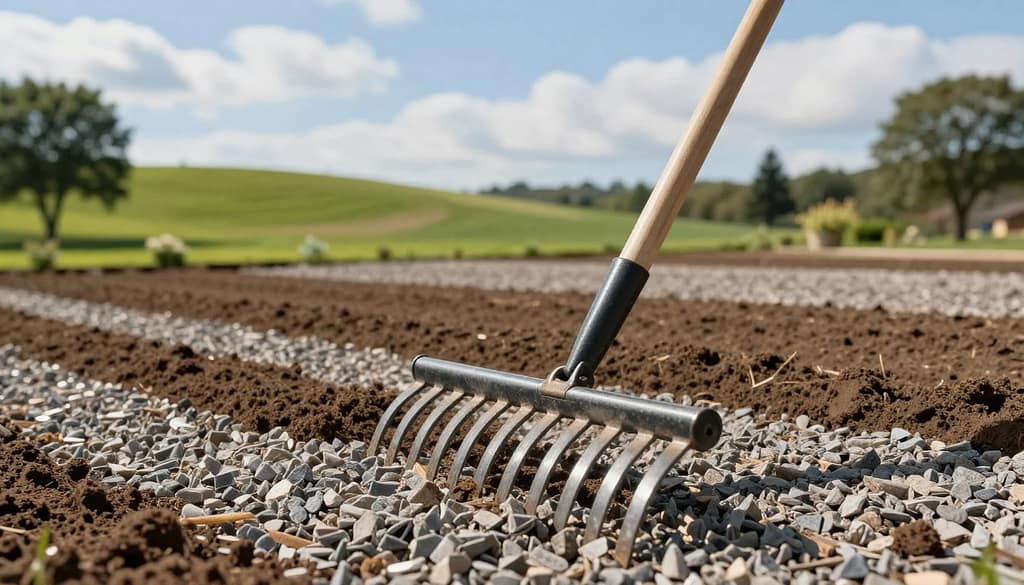
Understanding the mechanics of a landscape rake can elevate your yard care game. This specialized tool features wide, curved tines that penetrate approximately 2 inches into the ground. As it sifts through soil, it captures rocks, roots, thatch, and unwanted debris, making it an essential instrument for effective landscaping.
The unique design of landscape rakes allows fine soil particles to pass through while larger materials are collected. This mechanism is crucial for efficient yard work. Unlike standard garden rakes, landscape rakes are built for heavier tasks, with a wider working width that excels in leveling expansive areas.
Using a landscape rake offers numerous benefits. It saves significant time compared to hand tools, ensures precision in creating smooth surfaces, and works effectively with various materials like soil, sand, gravel, and mulch. For professional-quality lawn preparation, it guarantees an even seedbed that promotes uniform germination and healthy root establishment for new lawns.
Common applications include:
- Clearing land after construction or flooding.
- Spreading topsoil for garden beds.
- Leveling gravel driveways.
- Preparing ground for sod installation.
This tool is highly effective in removing stones, sticks, and organic debris that can hinder planting, mowing, or hardscape installation. Professionals, including landscaping contractors and park maintenance departments, rely on landscape rakes for their essential role in yard care.
For homeowners, investing in or renting a landscape rake transforms weekend yard projects from labor-intensive chores into efficient, satisfying tasks. The vibrating action of the rake teeth, especially in tow-behind models, breaks up clods of soil and mulches the surface, creating an ideal grade ready for seeding or sod.
Types of Landscape Rakes: Choosing the Right Tool for the Job
When it comes to achieving the best results in your -, selecting the appropriate tool is crucial. There are several types of rakes available, each designed for specific tasks. Understanding these options can make a significant difference in efficiency and effectiveness.
Handheld Landscape Rakes
Handheld landscape rakes are lightweight and easy to maneuver. They are perfect for smaller areas, such as garden beds and detailed finishing work. These tools excel at spreading soil, mulch, or sand around patios and garden paths. Their compact size allows for precision, making them ideal for residential projects.
Bow Rakes (Garden Rakes)
Bow rakes, also known as garden rakes, feature shorter, curved tines. They are particularly useful for breaking up clumps of soil and spreading materials evenly. This type of rake is excellent for prepping small areas before planting, ensuring a smooth surface for seeds or transplants.
Tow-Behind Landscape Rakes
Tow-behind landscape rakes are heavy-duty attachments designed to connect to tractors, ATVs, or riding lawnmowers. They are perfect for covering large areas quickly, such as gravel driveways or fields. These rakes speed up soil leveling and debris removal, making them indispensable for commercial landscaping projects.
Landscape Rock Rakes and Attachments
Landscape rock rakes are specialized tools designed to move rocks and gravel efficiently. They are ideal for preparing driveways or pathways with stone bases. Optional attachments can enhance the functionality of tow-behind rakes, such as:
- Caster wheels to regulate working depth and allow the rake to float over uneven ground.
- Scarifiers that rip up hard-packed soil before grading.
- Flip-up blades that transform the rake into a leveling and ditching tool.
- End boots that convert the blade into an effective earthmover, increasing material capacity.
Choosing the right size rake is essential. An undersized rake on a large area can lead to fatigue and uneven results. Conversely, an oversized rake in a tight space can become cumbersome and difficult to control. The combination of a scarifier, blade, and landscape rake creates a complete site preparation unit, often referred to as the “Swiss Army Knife” of landscaping tools.
Before selecting a rake, assess your property size, material type, and project goals. Rental options are widely available for those needing a tow-behind model for a one-time project. Understanding the types of landscape rakes will help you choose the right tool for the job, ensuring professional results with less effort.
| Type of Rake | Best For | Key Features |
|---|---|---|
| Handheld Landscape Rake | Small areas, garden beds | Lightweight, maneuverable |
| Bow Rake | Breaking up soil, small planting areas | Short, curved tines |
| Tow-Behind Rake | Large areas, commercial projects | Heavy-duty, connects to vehicles |
| Landscape Rock Rake | Moving rocks, gravel | Reinforced tines, robust construction |
How to Use a Landscape Rake Like a Pro: Step-by-Step Guide
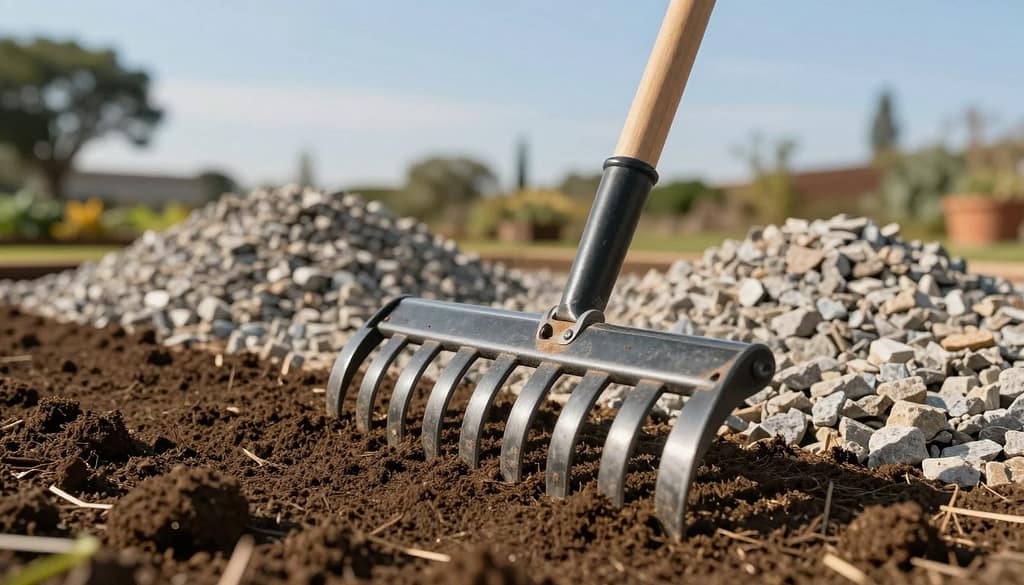
Mastering the art of raking can significantly enhance your landscaping efforts. By following these steps, you can ensure a professional finish for your yard or driveway. Each step is designed to maximize efficiency and effectiveness while minimizing effort.
Step 1: Choosing the Appropriate Landscape Rake
Select the right rake based on your project needs. For small areas like backyard gardens, a handheld rake works best. For larger tasks, such as leveling a driveway, a tow-behind model is ideal. Understanding the compatibility with your tractor’s horsepower and rake width is crucial. Ensure your equipment matches the project scale for optimal results.
Step 2: Preparing the Work Area for Raking
Before you start, clear away large branches, rocks, and other debris. This step prevents damage to the rake tines and improves the quality of the finished surface. If you’re working on a new lawn, lightly water the soil the day before. This makes leveling easier and reduces dust.
Step 3: Raking in One Consistent Direction
Position the rake at the edge of the area and pull it in smooth, even strokes. Always work in one consistent direction to collect debris and level the surface. For tow-behind rakes, drive in straight passes, overlapping slightly with each pass. This technique ensures uniform results and prevents uneven ridges.
Step 4: Leveling Soil and Gravel Evenly
Utilize the wide head of the landscape rake to spread and level soil, sand, or gravel evenly. Focus on filling dips and knocking down high spots. For gravel driveways, alternate the direction of passes to avoid creating ridges. This method promotes uniform distribution across the entire surface.
Step 5: Refining the Surface for a Smooth Finish
After leveling, go back over the area with lighter strokes. This helps break down clumps of soil and smooth out minor imperfections. Aim for a polished surface that is perfect for planting or hardscape installation.
Step 6: Efficiently Removing and Disposing of Debris
Gather any rocks, sticks, and roots collected by the rake. Dispose of them properly to maintain a clean work area. For larger projects, consider using a wheelbarrow to transport debris efficiently to a disposal location.
Step 7: Proper Maintenance and Care of Your Landscape Rake
After each use, rinse off dirt and soil from the tines. Store the rake in a dry place to prevent rust. For tow-behind models, check for loose bolts and lubricate moving parts regularly. Maintaining your equipment extends its life and ensures optimal performance.
By following these steps, you can effectively use a landscape rake to achieve a professional-quality finish in your yard or driveway. For more detailed guidance, visit this resource.
Tips from C&T Lawn and Landscape for Effective Raking
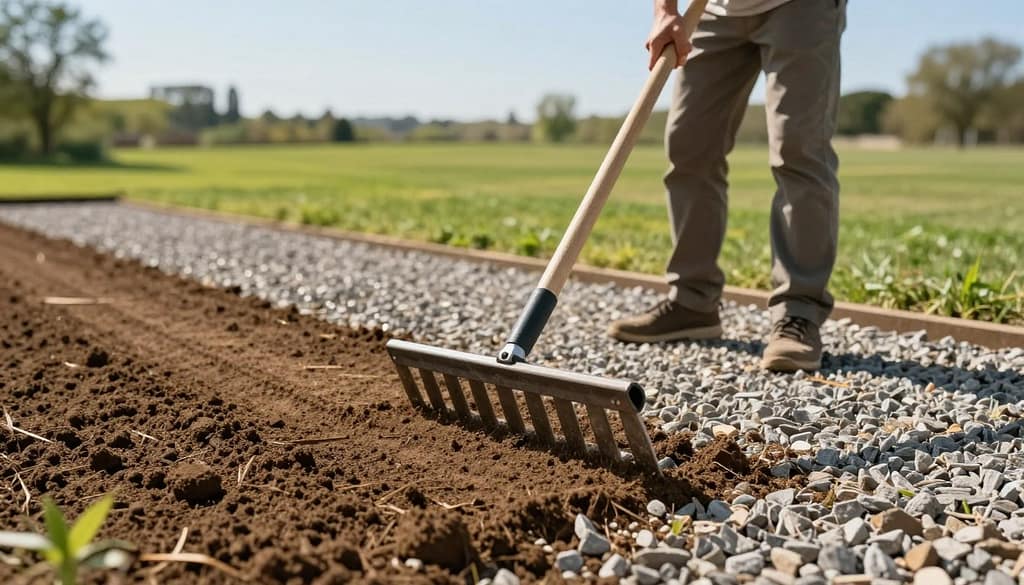
When it comes to enhancing your landscaping projects, implementing expert advice can make a significant difference. C&T Lawn and Landscape, a trusted name in the industry, shares essential tips to maximize efficiency while using a landscape rake. By following these best practices, you can achieve superior results on any property.
Best Practices to Maximize Efficiency
Planning your raking pattern is crucial. Start from the highest point of your yard and work downward. This approach takes advantage of gravity, reducing the effort needed to move material. Additionally, maintain a steady pace throughout the process. Controlled movements allow the rake tines to engage properly with the soil or gravel, leading to a more uniform surface.
Common Mistakes to Avoid When Using a Landscape Rake
Several common errors can undermine your raking efforts. Raking in multiple directions can disrupt the leveling process, resulting in an uneven surface. Skipping the debris removal step is another mistake. Large rocks and branches can damage the rake tines and lead to inconsistent finishes.
Using the wrong size rake is also problematic. A handheld rake may not be effective for large areas, while an oversized rake can be cumbersome in tight spaces. Regularly checking the grade and slope during the raking process is essential to ensure proper drainage and prevent water pooling.
Using Attachments and Extensions to Enhance Performance
Attachments can significantly boost the performance of your landscape rake. For instance, caster wheels help regulate working depth and allow the rake to float over uneven ground. Scarifiers can break up compacted soil before raking, while flip-up blades add leveling and ditching capabilities. To maximize the scarifier’s effectiveness, shorten the top link on a three-point hitch to allow deeper penetration into hard-packed soil.
Investing time in learning proper techniques and utilizing the right attachments transforms a landscape rake into a comprehensive site preparation system. This not only saves time but also enhances the quality of your landscaping projects.
| Common Mistakes | Impact | Best Practice |
|---|---|---|
| Raking in multiple directions | Creates uneven surfaces | Rake in one consistent direction |
| Skipping debris removal | Damages rake and affects finish | Remove all debris before raking |
| Using the wrong rake size | Leads to exhaustion or poor results | Choose the right size for the area |
| Not checking grade or slope | Causes drainage issues | Regularly assess the surface |
Understanding Soil and Gravel Preparation for a New Lawn or Driveway
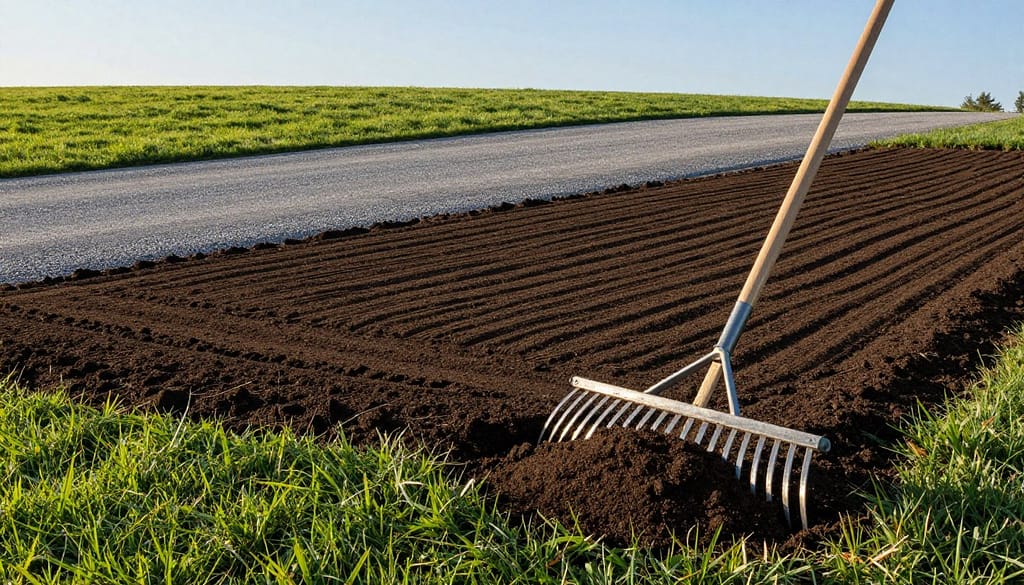
Preparing soil and gravel for a new lawn or driveway is essential for achieving a smooth, even surface. The right techniques can significantly impact the outcome of your landscaping project. This section will guide you through the critical aspects of soil moisture, leveling techniques, and ensuring proper drainage.
Importance of Soil Moisture and Pre-Rake Preparation
Soil moisture plays a vital role in the effectiveness of your raking efforts. Before starting work on a new lawn, it’s advisable to lightly water the soil the day before. Moist soil is easier to level and helps reduce dust during the process. Overly dry soil can become dusty and difficult to control, making it prone to scattering rather than leveling. Conversely, overly wet soil clumps together and can stick to the rake tines, leading to uneven compaction.
Leveling Techniques for Different Materials
Different materials require tailored leveling techniques. For soil, the goal is to achieve a flat, even surface free of dips and high spots. This ensures that seeds germinate uniformly or that sod sits flush against the ground for optimal root contact. When leveling gravel, run the rake in alternating directions to prevent ridges and ensure even distribution of stone material. This method avoids creating low spots that collect water.
The vibrating action of the rake teeth plays a crucial role in this process. As the rake moves, pulverized soil and fine material pass between the tines, while larger stones and debris are gathered into neat rows for collection. This screening action produces an ideal finished surface, ready for planting.
Ensuring Proper Drainage and Surface Slope
Proper drainage and surface slope are critical in preparation. Even a beautifully leveled lawn or driveway can fail if water pools against foundations or collects in low areas. To prevent this, ensure that the surface slopes away from structures. Assess your land after rainfall to identify any low spots or drainage issues.
Consider using a scarifier attachment to rip up hard, compacted ground and break down ridges before raking begins. Following this, a blade attachment can help cut down high spots and fill depressions, creating a uniform base that the landscape rake can finish to perfection.
Taking the time to properly prepare soil and gravel before the final raking pass pays dividends in the long-term health of lawns and the stability of driveways. Understanding these nuances separates amateur efforts from professional-grade results.
Maintaining and Caring for Your Landscape Rake to Extend Longevity

Proper maintenance of your landscape rake can significantly enhance its longevity and performance. A quality landscape rake represents a significant investment. With proper care, it can deliver reliable performance for many years across countless landscaping projects. Therefore, upkeep should be a priority for every owner.
Cleaning and Storage Tips
After each use, rinse off dirt, soil, and debris from the tines. This prevents the buildup of corrosive materials that can lead to rust and deterioration over time. Store the rake in a dry place to prevent rust formation.
For optimal storage, consider these tips:
- Keep the landscape rake in a dry, covered location like a garage or shed.
- Hang handheld models on wall hooks to prevent tine damage.
- Store tow-behind attachments on level ground to avoid warping the frame.
Inspecting and Repairing Wear and Tear
Regular inspection for wear and tear is essential. Check for bent or broken tines, loose bolts on tow-behind models, and cracks in welds. Look for signs of rust or corrosion that could compromise the tool’s structural integrity and performance.
Address minor repairs promptly. Tighten loose hardware and replace individual damaged tines when possible. Treat surface rust with a wire brush and protective coating before it spreads and causes deeper damage.
Lubrication and Attachment Maintenance
Lubrication is crucial for tow-behind landscape rakes. Grease pivot points, wheel bearings, and any moving parts on attachments like scarifiers and flip-up blades. This ensures smooth operation and prevents premature wear.
Specific maintenance for attachments includes:
- Periodic bearing checks on caster wheels.
- Inspecting scarifier teeth for sharpness and replacing them when dull.
- Occasional sharpening of blade edges to maintain cutting and leveling efficiency.
The robust construction of modern landscape rakes, refined through decades of development, makes them serious tools built to withstand demanding job site conditions. However, only with consistent care can owners maximize their performance.
Establishing a seasonal maintenance routine is beneficial. Conduct a thorough inspection and lubrication at the beginning of spring before the landscaping season starts. Clean and treat the rake before winter storage.
Ultimately, the small amount of time invested in landscape rake maintenance pays for itself many times over. This effort extends the tool’s lifespan, maintains peak performance, and avoids costly replacements or job site delays caused by equipment failure.
Conclusion
Achieving a flawless surface in your yard can be a straightforward task with the right techniques. Mastering how to use a landscape rake can make outdoor projects smoother and more effective. This versatile tool is invaluable for preparing soil, leveling gravel, and ensuring a polished finish.
Key takeaways include:
- Proper tool selection and methodical technique are essential for outstanding results.
- Following a step-by-step process leads to success on any project.
- Avoiding common mistakes, such as improper raking direction and neglecting debris removal, is crucial.
- Attachments can enhance the rake’s capabilities, transforming it into a comprehensive site preparation system.
With practice, the time invested in learning to use a landscape rake pays off, leading to faster project completion and enhanced property value. Whether you’re maintaining a sprawling country property or refreshing a suburban yard, this tool remains an indispensable ally in creating beautiful outdoor spaces.