

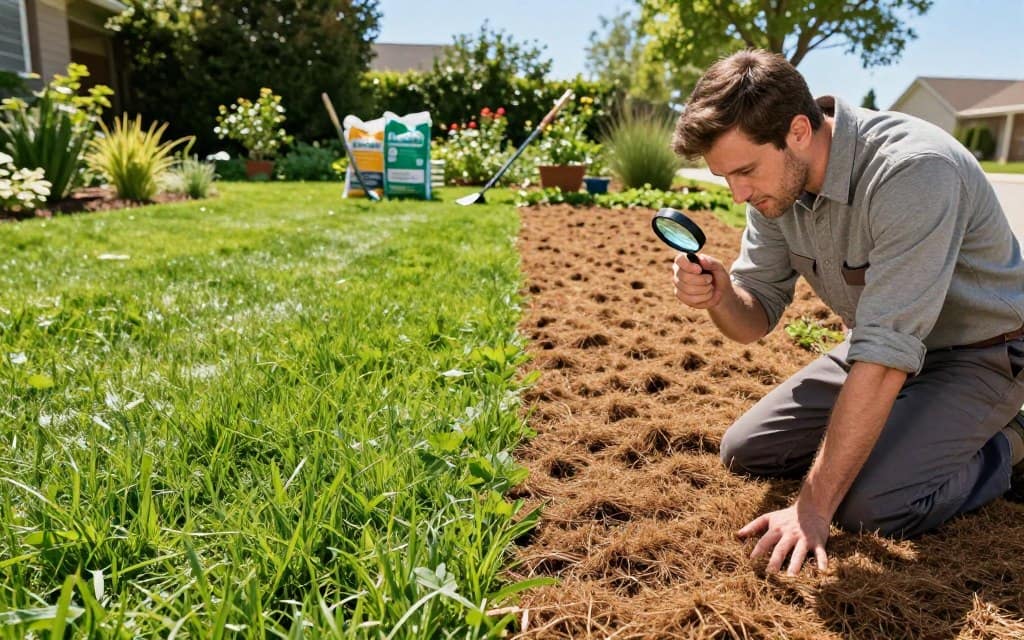
You want a lush lawn and you know turf aeration is the key. But jumping in without a plan can harm grass, break sprinklers, or waste a weekend.
Almost any yard benefits from the basic process of perforating soil so air, water, and nutrients reach roots. Done at the right time and with the right tool, this simple step improves absorption, builds stronger roots, and reduces thin spots.
Many problems come from skipping diagnosis, using the wrong equipment, or working in bad weather. This guide takes a practical how-to approach and follows a clear format: mistake → why it matters → how to fix it.
It also answers common questions like “Do I really need this?” and “How will I know I did it right?” The tips apply to typical U.S. lawns now, whether cool-season or warm-season grasses, and focus on getting the best results with minimal risk.
Key Takeaways
- Follow a simple plan to avoid common errors when you aerate lawn areas.
- Timing, tool choice, and coverage determine final results.
- Diagnose soil compaction before you start to prevent wasted effort.
- Proper technique improves absorption, rooting, and overall turf health.
- Read the step-by-step checks to answer common questions and avoid setbacks.
Why Aeration Matters for a Healthier Lawn
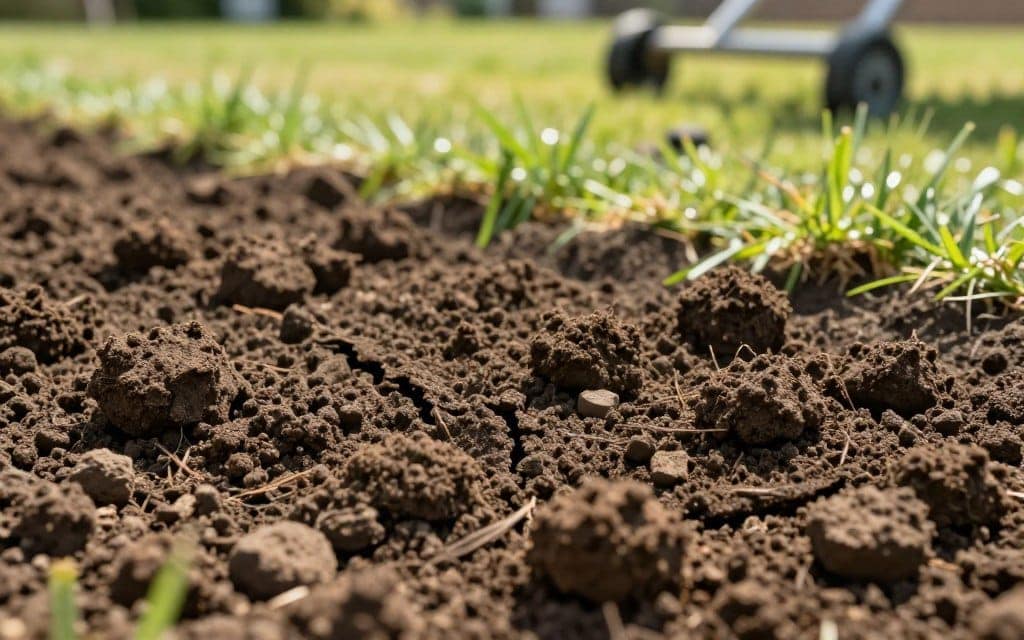
Compacted soil quietly steals vigor from even well-kept lawns. Grass roots need air, water, and nutrients to grow thick and strong, but packed ground limits those essentials. When pore space shrinks, air exchange slows and water stays near the surface instead of moving into the root zone.
How soil compaction blocks air, water, and nutrients in the root zone
Compaction reduces pore space so oxygen and nutrients cannot travel down to roots. That forces roots to stay shallow and makes the lawn more stressed during heat or drought.
Why even a thin compacted layer can weaken grass roots and turf health
Even a 1/4–1/2 inch compacted soil layer can meaningfully weaken grass roots and overall health. Lawns may fade, thin, or die out despite regular watering and fertilizer if compaction is the real limiter.
| Problem | Common Symptom | Measurable Outcome |
|---|---|---|
| Compacted surface | Shallow rooting | Reduced drought tolerance |
| Poor pore space | Water pools at top | Wasted irrigation and nutrients |
| Limited oxygen | Fading color | Thinner, weaker grass |
Treating this as optional is the first common mistake. Creating holes into compacted soil lets oxygen, water, and nutrients reach roots so lawns develop deeper root systems, better infiltration, and more resilient growth. Effective work targets the real limiter—compaction or thatch—rather than serving as a routine chore.
Signs Your Yard Needs Aeration Before Problems Get Worse
A few simple checks reveal whether your lawn is struggling under compacted ground or heavy thatch. Look for obvious clues so you only use lawn turf aeration where it will help most.
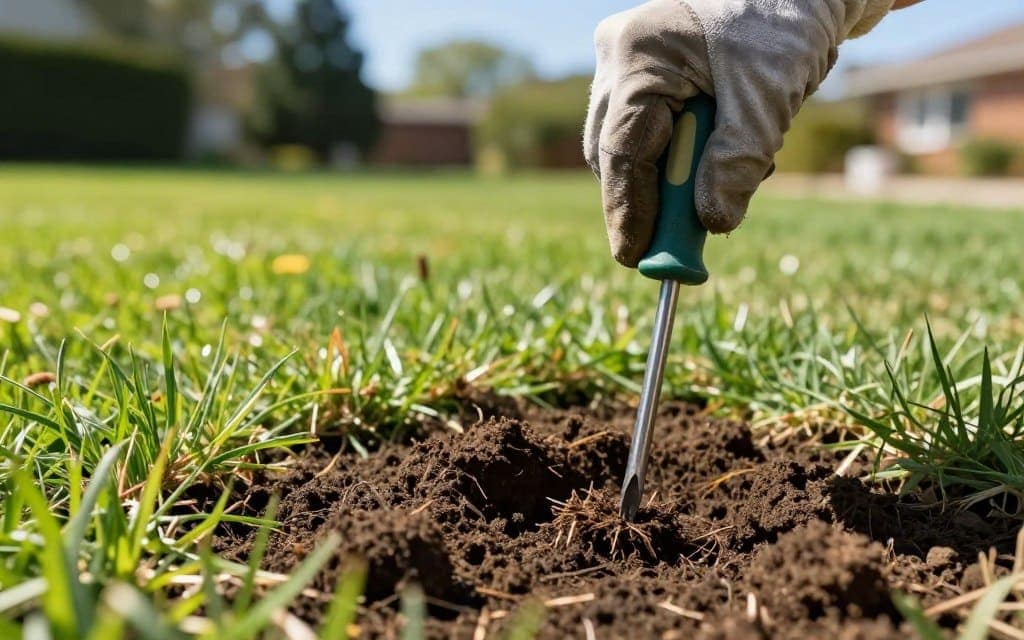
The screwdriver test to spot compacted soil
Push a screwdriver straight into the soil near grass roots. It should slide in with moderate pressure.
If the tool meets hard resistance, that indicates compacted soil and a need for targeted aeration work.
High-use areas, new build lawns, and clay soil red flags
Inspect play areas, pet runs, and paths first. These areas compact fastest and show the biggest improvement after aeration.
New construction lawns often have buried topsoil or heavy equipment compaction that restricts roots. Clay soils in many U.S. yards also pack down quickly and may need regular attention.
When thatch becomes a surface barrier
Measure thatch depth by pulling up a small plug. When the layer above the soil is over about 1/2 inches, it blocks air, water, and nutrients like compacted ground does.
Puddling after rain, hard ground underfoot, or recurring brown patches point to compaction or excess thatch rather than surface watering or feeding problems.
| Indicator | Likely Cause | Suggested Action |
|---|---|---|
| Hard to insert screwdriver | Compacted soil | Targeted lawn aeration in problem areas |
| Thatch > 1/2 inches | Surface barrier | Dethatch or core first, then aerate |
| New sod or post-construction | Layering/compacted subsoil | Inspect, loosen, and prioritize repair |
Turf Aeration Basics: The Process, Tools, and What “Good Coverage” Looks Like

Good work begins with matching the process and tool to the problem. Use the right approach for compacted soil or heavy thatch to let water and nutrients reach roots.
Core (plug) vs spike and slicing
Core (plug) machines remove soil plugs and are best for true compaction and thatch. The removed cores break down on the surface and return nutrients to the soil.
Spike tools poke solid holes but can compress soil around the openings. Slicing machines cut through the surface and create channels without pulling cores.
Hole depth, plug size, and spacing targets
Aim for holes about 2–3 inches deep, with plug diameters near 0.5–0.75 inches. Space holes roughly 2–3 inches apart for meaningful relief.
Those targets deliver the best results for water movement and root growth while avoiding needless work on healthy patches.
| Tool | When to Use | Expected Result |
|---|---|---|
| Core (plug) | Compacted soil or thick thatch | Plugs removed, better water and nutrient flow |
| Slicing | Moderate thatch, better seed contact | Channels created, less surface disruption |
| Spike | Light maintenance only | Quick holes but risk of extra compaction |
Pass patterns and focusing effort
One pass rarely does enough. Work back-and-forth like mowing and make at least two directional passes over problem areas.
Concentrate on compacted zones and skip unaffected patches to save time and reduce stress on the soil surface.
DIY vs hiring a lawn care service
Rentals can work but have a learning curve and require physical effort. Many homeowners underestimate coverage needs or make spacing mistakes.
A professional lawn care service like C&T Lawn and Landscape brings experience in pass patterns, correct depth, and efficient coverage. That often leads to faster, more consistent results.
After core work, leave plugs to dry and crumble. Then consider overseeding and light fertilizer—openings give seed and nutrients a direct path into the soil for stronger regrowth.
Timing Mistakes That Reduce Lawn Aeration Results
Timing the work correctly makes the difference between quick recovery and a stressed lawn.
Wrong timing is one of the biggest causes of disappointing lawn aeration results. The process helps only when grass is actively growing and can repair the holes quickly.
Aerating during dormancy instead of active grass growth
Never aerate a dormant lawn. If grass is not growing, recovery slows and open holes stay exposed longer.
Fix: schedule work during peak growth so seed and roots fill gaps fast.
Best windows for cool-season and warm-season grasses
Cool-season grasses do best in early fall, with early spring as a second option depending on weather. These windows match natural growth and give the lawn time to recover before stress periods.
Warm-season grasses recover fastest if treated in late spring to very early summer. That timing uses rapid spring growth to close openings and build roots.
Aerating in bone-dry soil or overly wet conditions
Bone-dry soil prevents proper plug formation and shallow holes. Water the lawn the day before or aerate the day after rain to get moist, workable ground.
Too-wet conditions smear soil and reduce clean core removal. Wait a few days after heavy rain until the lawn is workable to avoid damage.
| Mistake | Impact | Quick Fix |
|---|---|---|
| Aerating dormant grass | Slow recovery and exposed holes | Schedule during active growth |
| Wrong season | Poor fill-in and weak roots | Cool-season: early fall/early spring; Warm-season: late spring |
| Incorrect soil moisture | Shallow plugs or smeared soil | Moist but not saturated—water day before or wait after rain |
Correct timing supports faster recovery, stronger root development, and more efficient use of water and inputs. Plan work around growth cycles and soil moisture for the best results.
Execution Mistakes That Can Increase Compaction or Waste Effort
Simple mistakes while working the lawn can increase compaction instead of fixing it. Focus and technique matter more than speed. The right tool and targeted passes protect roots and help water and nutrients reach the root zone.
Why spike tools often make problems worse
Spike tools poke holes but can squeeze soil sideways and tighten the surrounding surface. On already compacted ground, that pushes material into denser bands and reduces long-term soil health.
Fix: use core equipment that extracts plugs and lowers soil density. Core removal lets water and nutrients move deeper and gives roots room to grow.
The one-pass mistake and how to focus effort
Each machine pass affects only a small percentage of a lawn. Skipping multiple passes in compacted areas produces minimal benefit.
Do at least two directional passes where compaction is worst. Prioritize high-use areas and problem spots instead of blanketing the entire lawn.
Soil layering from sod and drainage traps
Sod installation can leave a finer layer over coarser native soil. That layering holds water near the surface, causing shallow roots and chronic stress.
A proper core approach breaks layers, improves drainage, and helps water and nutrients reach the root zone. Severe drainage problems, however, may need more than this process to correct.
| Mistake | Impact | Quick Fix |
|---|---|---|
| Using spike tools | Worsens compaction around holes | Switch to core equipment that removes plugs |
| Single pass over compacted areas | Little root improvement | Make 2+ passes in different directions |
| Ignoring sod layering | Poor drainage and shallow roots | Targeted core work; consult on severe cases |
Quality-control checklist: confirm hole density in problem areas, verify cores are extracted (not just poked), and match coverage to worn or compacted areas. If layering, severe compaction, or uneven results persist, involve a lawn care service like C&T Lawn and Landscape to diagnose and correct the root cause.
Conclusion
A planned approach makes the difference between a tired yard and a thicker, healthier lawn.
Key takeaway: lawn aeration works when you diagnose compaction or excess thatch, choose the right method, time work with active growth, and give enough coverage where it matters.
Top mistakes to avoid are aerating at the wrong time, using spike tools on compacted ground, and making only one pass in high-traffic areas.
Quick next steps: test soil, pick an aeration approach, schedule when grass is growing, moisten the ground, aerate with proper coverage, then resume routine care like mowing, watering, and fertilizing.
Leave plugs to break down, overseed thinning spots with grass seed, and expect steady maintenance to deliver the best results and long-term benefits.
If you prefer professional evaluation o r consistent coverage, consider a lawn care service such as C&T Lawn and Landscape for answers to remaining questions and reliable results.