




Are you curious about the real cost of maintaining a beautiful yard? Understanding the question of how much is lawn service per month is essential for homeowners who want to keep their property looking its best. With various services available, the pricing can vary significantly based on location, yard size, and the type of care required.
On average, homeowners might spend anywhere from $100 to $410 monthly for lawn maintenance. Basic services like mowing typically start around $42 per visit, while comprehensive packages can reach $430 or more each month. This guide will delve into the factors influencing these costs, helping you budget effectively and avoid unexpected expenses.
From basic mowing to full-service care, we will explore the spectrum of prices, ensuring you have the knowledge to make informed decisions. By understanding the average costs and services available, you can confidently maintain a healthy, vibrant lawn.
Key Takeaways
- Understanding lawn care pricing is crucial for budgeting.
- Basic mowing can cost around $42 per visit.
- Full-service lawn care may range from $120 to $430 monthly.
- Prices vary significantly by region and yard size.
- This guide offers data-backed figures for informed decision-making.
Understanding User Intent Behind “How Much Is Lawn Service Per Month”

Gaining insight into lawn care pricing helps homeowners make informed decisions. Many individuals searching for lawn service costs are in the consideration phase. They actively compare pricing options before committing to a professional provider.
These searchers seek concrete, localized data rather than generic advice. They want to budget for recurring expenses and understand what a fair monthly rate looks like in their area. Most homeowners typically spend between $130 and $200 each month during the growing season. This amount usually covers weekly mowing, edging, and trimming every other week, along with monthly fertilization and weed spraying when needed.
User intent often includes comparing DIY lawn maintenance costs against professional services. Homeowners weigh the value of their time against the expense of hiring a service. Many have already received quotes and are validating whether the pricing aligns with industry standards. Transparent cost breakdowns are essential for building trust.
Seasonal factors also influence search behavior. Peak query volume occurs in early spring as homeowners plan their lawn maintenance schedules. They seek to lock in service providers before the growing season rush begins. Understanding user intent means recognizing that homeowners want immediate price ranges and long-term projections. Monthly rates should translate to annual budgets effectively.
Searchers often have specific lawn concerns driving their queries. Issues like weed overgrowth, patchy grass, or compacted soil prompt the need for pricing information tied to specific services. Commercial intent involves comparing different lawn care companies and their packages. Providing benchmark pricing helps homeowners evaluate multiple options objectively.
Regional variations in pricing mean that national averages only provide a starting point. Users need to understand how local market conditions affect monthly costs. By addressing these user intent signals directly, this guide helps homeowners move from uncertainty to confident decision-making about their lawn care investments.
How Much Is Lawn Service Per Month: Average Cost Overview for Homeowners

Understanding the financial commitment for lawn care can empower homeowners. Knowing the typical expenses associated with maintaining a yard helps in planning budgets effectively. On average, the monthly costs for lawn maintenance can range significantly.
The national average for monthly lawn care costs falls between $100 and $410. This wide range reflects various factors, including yard size, service frequency, and the specific services included in each package.
- A single lawn mowing visit averages about $55 nationwide, with costs typically ranging from $30 for smaller urban lots to $80 for larger suburban properties.
- Full-service lawn care programs, which often bundle mowing with fertilization and weed control, usually cost between $120 and $430 each month during the growing season.
- Homeowners generally invest between $1,000 and $2,400 annually for comprehensive lawn care, depending on lawn size and service frequency.
- The average lawn size in the U.S. is approximately 8,712 square feet, or one-fifth of an acre, which serves as a baseline for national pricing.
- Basic lawn mowing services range from $42 to $68 per visit, while hourly labor rates for lawn care vary from $32 to $68 based on provider experience and local market conditions.
- In Tennessee, the median accepted mowing price is $45, with Nashville prices starting around $39 for smaller lots.
- Homeowners can often reduce monthly costs on a per-visit basis by committing to recurring service agreements, as companies can optimize their routes and offer better rates.
- During the growing season, the average monthly expenditure for complete lawn care, including weekly mowing, biweekly edging, and monthly fertilization, typically ranges from $130 to $200.
These averages provide a reliable starting point for homeowners. However, it is crucial to obtain personalized quotes based on specific property size, grass type, and individual service needs to ensure accurate monthly pricing. For more detailed information on available services, consider visiting this resource.
Lawn Care Service Costs Breakdown
Understanding the various costs associated with lawn care services is vital for homeowners. Different services carry vastly different price tags, from affordable weekly mowing to multi-thousand-dollar sod installation projects. Knowing these costs helps homeowners budget accurately for their specific lawn needs.
Mowing: Basic Lawn Cutting and Its Pricing
Basic lawn mowing costs between $42 and $68 per visit nationally. Hourly rates range from $32 to $68. Mowing frequency, grass type, and yard size are the primary drivers of this essential lawn care expense.
For small yards under 1/8 acre, mowing services can be found for as low as $25-$35 per visit. Conversely, large properties over one acre may pay $79-$100 or more per mow. Typically, weekly service offers the best per-visit value.
A standard mowing visit includes cutting all turf areas, string trimming around obstacles, edging along hard surfaces, and blowing clippings off walkways. Grass clippings are usually mulched back into the lawn rather than bagged.
Weeding and Weed Control Treatments
Weed control treatment costs range from $50 to $210, depending on lawn size and method. Chemical applications are at the lower end, while manual hand-pulling by a gardener can cost between $35 and $105 per hour.
Applying pre-emergent herbicides in early spring, when soil temperatures reach about 55 degrees, can prevent weeds before they appear. This proactive approach reduces long-term weed control expenses and keeps lawns healthier throughout the growing season.
Fertilization and Soil Nutrient Management
Professional lawn fertilization costs between $67 and $405 per application. The total price is driven by lawn square footage, soil test results, and the specific nutrient blend required for the grass type and regional soil conditions.
Most lawns benefit from three to five fertilizer applications per year. Soil testing through university extension services costs about $15 plus shipping, helping homeowners avoid over-fertilizing and wasting money on unnecessary treatments.
Dethatching and Aeration Services
Dethatching costs between $65 and $165, removing the layer of dead organic debris between soil and turf. Core aeration runs from $107 to $202, with a national average of around $154. Both services are critical for relieving soil compaction.
Thatch buildup beyond half an inch blocks water and fertilizer from reaching grass roots and can create breeding grounds for pests. Therefore, periodic dethatching is essential for long-term lawn health and reducing future lawn care costs.
Aeration and overseeding bundles cost between $160 and $425 per 10,000 square feet, with fall being the ideal season for these services, especially for cool-season grasses like tall fescue common in transition zone states.
Leaf Removal and Seasonal Cleanups
Leaf removal costs range from $107 to $435 per season. Pricing depends on yard size, tree density, and whether the service uses raking, blowing, or vacuum collection methods to clear fallen leaves from the lawn.
In tree-heavy regions, such as Nashville, leaf removal can cost two to three times the regular mowing price during fall months. Leaving wet leaf mats on grass over winter promotes fungal diseases and smothers the turf.
Seeding, Hydroseeding, and Sod Installation
When comparing grass establishment methods, conventional seeding costs between $427 and $1,514, making it the most affordable but slowest option. Hydroseeding ranges from $0.07 to $0.21 per square foot, offering mid-range pricing. In contrast, sod installation costs between $2,028 and $3,394 for 1,000 to 1,500 square feet, providing instant results.
Sod installation costs about $1 to $2 per square foot, delivering a mature lawn immediately. Seeding typically takes one to two years to fully establish but costs significantly less upfront, making it the budget-friendly choice for patient homeowners.
Tree and Bush Trimming Services
Professional tree trimming averages between $430 and $640 per tree. Pricing is heavily influenced by tree height, accessibility, and branch density. Bush trimming costs approximately $46 per bush or $50 to $75 per hour for hedge work.
Sprinkler System Installation and Repair
Installation costs for sprinkler systems range from $0.29 to $0.48 per square foot, translating to $3,169 to $5,238 for a standard quarter-acre lawn. Repair costs range from $59 for minor fixes to $1,354 for major system overhauls.
Yard Cleanup and Miscellaneous Services
General yard cleanup services cost between $216 and $462. This encompasses tasks like raking, bagging yard waste, removing debris, and tidying landscape beds. Pricing varies based on the volume of material and labor hours required.
Many lawn care companies offer bundled packages combining several of these services at a discount. Homeowners who need multiple treatments can often reduce their overall lawn care costs by signing up for comprehensive seasonal plans.
| Service Type | Cost Range |
|---|---|
| Mowing | $42 – $68 per visit |
| Weeding | $50 – $210 |
| Fertilization | $67 – $405 |
| Dethatching | $65 – $165 |
| Aeration | $107 – $202 |
| Leaf Removal | $107 – $435 |
| Seeding | $427 – $1,514 |
| Sod Installation | $2,028 – $3,394 |
| Tree Trimming | $430 – $640 |
| Bush Trimming | $46 per bush |
| Sprinkler Installation | $0.29 – $0.48 per sq ft |
| Yard Cleanup | $216 – $462 |
How Yard Size Influences Lawn Service Costs
The size of your yard plays a crucial role in determining the overall costs of lawn care. Larger properties require more labor, fuel, and equipment wear, leading to higher pricing from lawn care providers.
Here’s a breakdown of pricing tiers based on yard size:
- Tiny yard (less than 1/8 acre): $25-$35 per visit, $100-$140 monthly. This makes professional care affordable for urban homeowners.
- Small yard (1/8 to 1/4 acre): $35-$45 per visit, $140-$180 monthly. This reflects the additional time needed for mowing and trimming.
- Medium yard (1/4 to 1/3 acre): $45-$55 per visit, $180-$220 monthly. This aligns closely with the national average lawn size of 8,712 square feet.
- Medium-large yard (1/3 to 1/2 acre): $55-$75 per visit, $220-$300 monthly. More time is needed to navigate larger areas and handle trimming.
- Large yard (1/2 to 1 acre): $75-$125 per visit, $300-$500 monthly. These properties require significant care and maintenance.
- Extra large yard (1 to 2 acres): $125-$200 per visit, $500-$800 monthly. The size greatly impacts labor and equipment costs.
- Massive yard (2+ acres): $200-$400+ per visit, $800-$1,600+ monthly. At this point, many homeowners consider commercial-grade equipment.
Nashville homeowners face unique challenges, as the city has the largest median lot size among the top 50 U.S. cities at 11,813 square feet (0.27 acres). In older neighborhoods, lots can average nearly 19,000 square feet.
Lawn care professionals often price by square foot for larger properties, charging 1 to 4 cents per square foot. Knowing your lawn’s exact square footage helps in obtaining accurate quotes and comparing pricing fairly.
To estimate your lawn’s size, measure its length and width in feet and multiply the two numbers. For irregularly shaped yards, measure in sections and sum the total for precise cost estimates.
Regional Pricing Variations: Spotlight on Nashville and Nationwide Trends

Lawn care costs vary significantly based on geographic location and other factors. Differences in the cost of living, local labor rates, and climate zones all play a role in determining pricing. For instance, Nashville stands out as a representative market in the mid-South region.
In Nashville, most homeowners pay between $35 and $85 for a mowing visit. The median price for a standard quarter-acre lot is around $45 to $50. This aligns closely with the national average of about $50 for basic mowing services.
Full-service lawn care programs in Nashville typically range from $100 to $400 per month. The median accepted mowing price on service platforms is about $45, with some prices starting as low as $39 for smaller properties.
Comparing costs across the nation reveals interesting trends. For example, basic mowing starts at $44 in cities like Dothan, AL, and Orlando, FL. In contrast, major Northeastern cities like New York see starting prices around $59 due to higher operating costs for lawn care companies.
The upper end of regional cost ranges can reflect extensive services like sod installation. Prices can reach as high as $3,964 in New York and $3,744 in Seattle. This demonstrates how the same lawn project can vary by hundreds of dollars based on location.
Additionally, Nashville has the largest median lot size among the top 50 U.S. cities at 11,813 square feet. This means local homeowners often pay more for lawn care than national averages suggest, simply because they have more grass to maintain.
Regional pricing can also be broken down by urban, suburban, and rural categories. For example:
- Northeast cities: $45-$90 for mowing.
- Southeast cities: $40-$70 for mowing.
- Midwest cities: $40-$75 for mowing.
- West Coast cities: $50-$100 for mowing.
- Southwest cities: $40-$80 for mowing.
Suburban lawn care pricing is typically 20-30% lower than urban rates across all regions. Meanwhile, rural properties enjoy the lowest per-visit costs, ranging from $25 to $60, depending on the area.
Climate factors, such as growing season length and annual rainfall, also affect pricing. For instance, Nashville receives about 50 inches of rain per year, influencing the types of services needed. The prevalence of certain grass types, like tall fescue, further impacts the cost of care.
Homeowners are encouraged to obtain multiple local lawn care quotes rather than relying solely on national averages. Local competition and specific property characteristics ultimately determine actual monthly lawn service costs.
Considering Equipment Costs: DIY vs. Professional Lawn Care
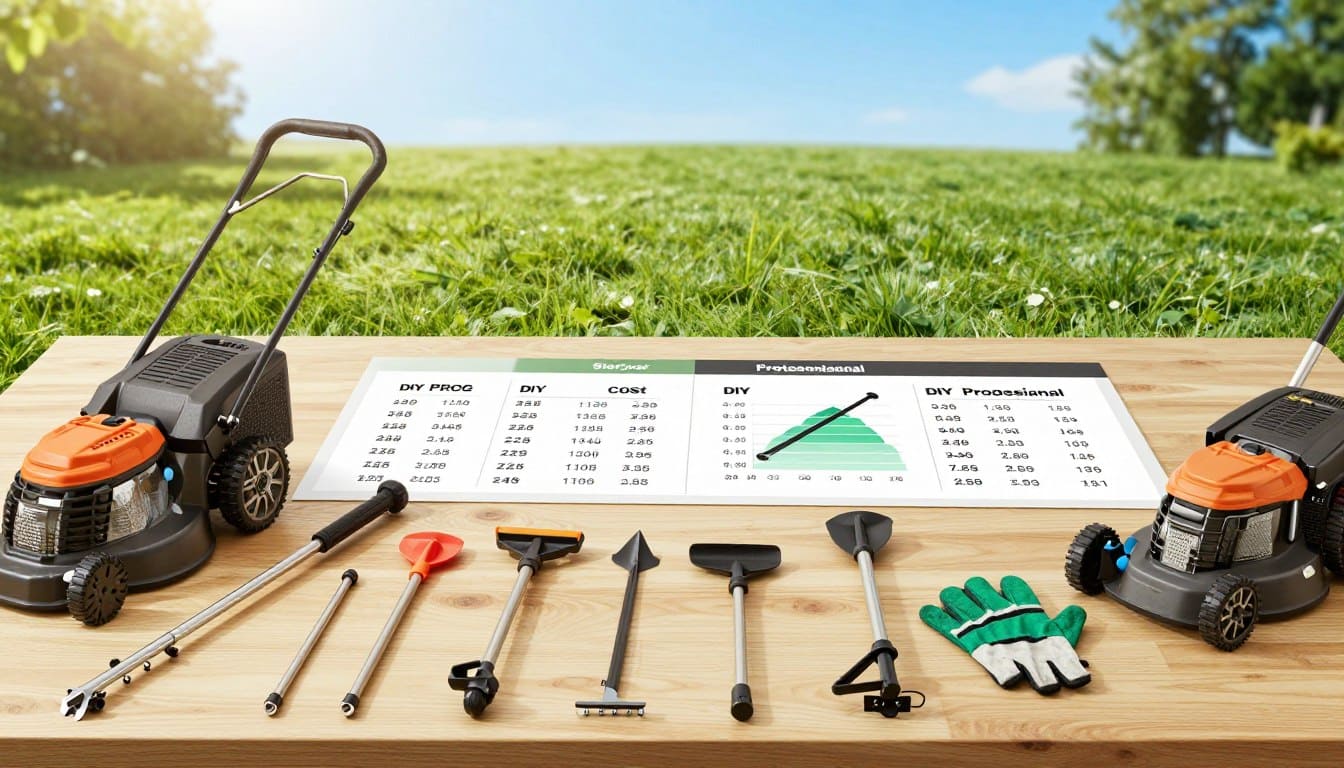
The decision to manage your lawn maintenance personally or to hire experts involves careful consideration of costs and benefits. Homeowners often find themselves weighing the financial implications of DIY lawn care against the convenience of professional services.
When opting for DIY, the initial investment can be significant. Quality equipment such as a mower, string trimmer, leaf blower, and spreader can cost between $500 and $2,500. Additionally, homeowners should budget for annual supplies like seed, fertilizer, and weed control products, which can range from $200 to $600 each year.
Ongoing equipment maintenance is another cost to consider. This typically runs between $100 and $300 annually for tasks like blade sharpening and oil changes. Neglecting maintenance can lead to poor performance and even damage to your grass.
Time commitment is another crucial factor. DIY lawn maintenance often requires 2 to 5 hours each week during the growing season, totaling over 100 hours annually. This is time that could be spent with family or pursuing hobbies.
In contrast, professional lawn care services provide a clear financial framework. Basic annual service costs between $1,000 and $2,400, while complete lawn care programs can range from $2,000 to $5,000 or more. This investment not only saves time but also offers peace of mind.
Professional providers bring expert knowledge of grass types, soil conditions, and pest management that many homeowners lack. This expertise can prevent costly mistakes that arise from improper DIY care. Additionally, professional lawn care companies carry liability insurance, protecting homeowners against potential property damage.
Professional lawn mowing costs typically range from $42 to $68 per visit. This service includes not just cutting grass but also trimming, edging, and cleaning hard surfaces. Achieving a polished look is often challenging for homeowners using consumer-grade equipment.
When comparing the average monthly lawn care cost of $100 to $410 with the hidden costs of DIY, the value of professional services becomes clearer. Homeowners must consider equipment depreciation, storage needs, and the value of their time at even a modest hourly rate.
For many homeowners, especially those with larger properties or busy schedules, hiring professional lawn care services often represents better value than DIY, despite the apparent cost savings of managing it themselves.
| Aspect | DIY Costs | Professional Costs |
|---|---|---|
| Initial Equipment Investment | $500 – $2,500 | N/A |
| Annual Supplies | $200 – $600 | N/A |
| Ongoing Maintenance | $100 – $300 | N/A |
| Time Commitment | 2 – 5 hours/week | 100+ hours saved/year |
| Annual Service Cost | N/A | $1,000 – $5,000+ |
| Lawn Mowing Cost/Visit | N/A | $42 – $68 |
Key Factors That Affect Lawn Care Pricing
Lawn care costs are never one-size-fits-all. Understanding the variables involved helps homeowners anticipate their actual monthly expenses. Six key factors significantly influence lawn care pricing.
Yard Size and Property Layout
The size of your yard is the dominant pricing factor. Larger properties require more labor hours, fuel, and equipment time. In Nashville, the median lot size is 11,813 square feet, larger than most major U.S. cities.
Property layout also affects mowing efficiency. Open rectangular lawns are the fastest to service. In contrast, properties with multiple disconnected grass areas, narrow side yards, or fenced sections require more time and can lead to higher costs.
Obstacles and Terrain Complexity
Obstacles such as slopes, hills, and uneven terrain can add 10% to 30% to lawn care costs. Mowing on inclines is slower and more physically demanding. For example, a 30-degree slope can nearly double the time needed compared to flat ground.
Additionally, obstacles like tree stumps, large surface roots, and playground equipment force crews to switch from efficient riding mowers to slower push mowers. This switch can increase labor time and service costs by 10% to 20%.
Current Lawn Condition and Maintenance History
The condition of your lawn plays a crucial role in pricing. Overgrown grass exceeding 8 to 10 inches in height triggers surcharges of about 50%. First-time cuts on severely neglected properties can cost double the standard rate due to the extra time and equipment strain involved.
Lawns with a poor maintenance history often require additional treatments like dethatching, aeration, and weed control before regular care can begin. While this increases initial costs, it can reduce long-term expenses through improved lawn health.
Experience Level of Lawn Care Provider
The experience level of your lawn care provider can affect pricing as well. Providers with training, certifications, and years in business often command higher rates. However, they typically deliver better results and more reliable service.
In Tennessee, hiring licensed, insured providers is essential for applying fertilizers, herbicides, or pesticides. This protects homeowners and ensures treatments meet state regulatory standards.
Seasonal Demand and Service Frequency
Spring and summer are peak pricing seasons due to high demand. During these months, weekly mowing services offer the best per-visit value. In contrast, biweekly or monthly schedules can cost 50% to 100% more per visit.
Homeowners should consider booking lawn care services four to six weeks before the growing season begins. In regions like Nashville, this means scheduling by February to lock in better pricing and secure a spot on a provider’s schedule before the spring rush.
Packaged Plans and Recurring Service Agreements
Bundled lawn care packages, which combine mowing, fertilization, aeration, and weed control, typically cost less than purchasing each service separately. Seasonal contracts can cut per-visit costs by as much as 25%.
Recurring service agreements provide price stability and guaranteed scheduling during peak seasons. They often include priority service for additional requests, making them the most cost-effective option for homeowners committed to regular lawn maintenance.
By understanding these six pricing factors, homeowners can negotiate better lawn care deals and avoid surprise charges on their monthly bills.
Benefits of Hiring a Lawn Care Service Like C&T Lawn and Landscape
While some homeowners may attempt DIY lawn care, professional services like those from C&T Lawn and Landscape offer convenience and expertise that elevate lawn maintenance beyond what most can achieve alone. This transforms lawn care from a burdensome chore into a seamless, hands-off experience.
One of the most significant advantages of hiring a professional is the convenience it provides. Imagine not having to spend your Saturday mornings pushing a mower under the hot sun. This benefit is especially valuable for seniors aging in place, busy families, or anyone who prefers to enjoy their weekends without the hassle of yard work.
By opting for professional lawn care, homeowners can save over 100 hours annually that would otherwise be spent on mowing, trimming, weeding, and maintaining equipment. This time can be redirected toward family, hobbies, or simply relaxing in a well-kept outdoor space.
Professional lawn care providers bring specialized knowledge about grass types, soil conditions, and pest management. This ensures that lawns receive exactly what they need to thrive throughout each season. Companies like C&T Lawn and Landscape deliver professional results that enhance curb appeal and property value. With crisp edging, even mowing patterns, and properly timed treatments, they create lawns that truly turn heads.
Moreover, investing in professional lawn care can reduce long-term costs. Well-maintained lawns require less spending on pest control and disease treatment over time. Regular aeration, dethatching, and fertilization help prevent issues before they start, leading to healthier grass and lower maintenance costs.
Professional providers also carry liability insurance and proper licensing. This protects homeowners from financial responsibility in case of accidents or property damage during lawn care operations.
In terms of health benefits, professional lawn care includes guidance on proper watering techniques. For instance, watering before 10 a.m. helps prevent evaporation, while deep but infrequent watering encourages robust root systems. Many homeowners overlook these critical aspects when managing their own lawns.
Consistency is another advantage of recurring professional lawn care. The same trained crew will be familiar with your property’s specific needs, ensuring reliable service and eliminating the boom-and-bust cycle often seen with DIY maintenance.
For homeowners who value their time, desire guaranteed results, and prefer enjoying their outdoor spaces rather than laboring over them, hiring a professional lawn care service represents a worthwhile investment in both property and quality of life.
| Benefit | Description |
|---|---|
| Convenience | Eliminates the need for homeowners to spend weekends on lawn maintenance. |
| Time Savings | Frees up over 100 hours annually for family and leisure activities. |
| Expert Knowledge | Provides specialized care tailored to grass types and soil conditions. |
| Professional Results | Enhances curb appeal and property value with high-quality lawn care. |
| Cost Reduction | Minimizes long-term expenses on pest control and disease treatment. |
| Insurance Protection | Professional providers carry liability insurance, protecting homeowners. |
| Health Benefits | Offers proper watering guidance for optimal lawn health. |
| Consistency | Ensures reliable maintenance with familiar crews for each property. |
Understanding Lawn Care Service Scheduling and Contract Options
Choosing the right scheduling and contract options for lawn care can significantly impact both the quality of maintenance and overall costs. Homeowners typically have several scheduling frequencies to consider, including weekly, biweekly, and monthly visits.
Weekly mowing is the most cost-effective choice. This option keeps grass at a manageable height, allowing crews to work efficiently without dealing with overgrowth. Regular maintenance ensures that your yard looks its best while minimizing the need for extensive cleanup.
In contrast, biweekly services can be more expensive per visit. Longer grass requires additional time to cut, more frequent blade cleaning, and extra cleanup of clumped clippings. This can lead to a price increase of 20% to 40% compared to weekly visits.
Monthly or one-time mowing visits can be even pricier. These services can run 50% to 100% more per visit than recurring weekly rates. Providers often need to make multiple passes to achieve an acceptable cut quality on overgrown grass, which increases labor time and costs.
Opting for recurring service agreements can lead to significant savings. By signing up for regular weekly or biweekly lawn care, homeowners can reduce their average monthly costs to between $100 and $410. This is a better financial strategy than paying premium rates for individual one-time visits throughout the season.
Seasonal or annual contracts are another option. These can cut per-visit costs by as much as 25% compared to one-off pricing. Contracts also provide price stability and guaranteed scheduling during peak seasons, ensuring that your lawn care needs are met promptly.
However, it’s essential to consider the trade-offs of contracts. While they lock in favorable pricing and secure a spot on the provider’s schedule, they may reduce flexibility. Homeowners should feel confident in their chosen provider before committing to a full-season agreement.
In Nashville, the growing season runs from approximately March through November, covering about eight months of active maintenance. Booking lawn care services in February for a March start can help homeowners avoid spring rush surcharges and limited provider availability.
Seasonal service needs can vary. Spring cleanup typically costs between $100 and $250, while weekly mowing continues through summer. In September, aeration and overseeding for cool-season grasses become essential, and leaf removal in fall can range from $150 to $700, depending on tree coverage and property size.
Homeowners can benefit from scheduling optimization. Providers who streamline their routes by neighborhood often offer better pricing. Giving providers a two-to-three-day scheduling window can lead to lower costs when your property fits their existing routes.
To make informed decisions, homeowners should obtain three to five quotes. Look for itemized breakdowns that separate labor, materials, and add-on services. Ask about contract discounts, scheduling flexibility, and what happens if service days need to be rescheduled due to weather.
| Service Type | Cost Range |
|---|---|
| Weekly Mowing | Best value, average $100 – $410 per month |
| Biweekly Mowing | 20% – 40% more than weekly |
| Monthly Mowing | 50% – 100% more than weekly |
| Spring Cleanup | $100 – $250 |
| Leaf Removal | $150 – $700 |
| Aeration and Overseeding | Varies by service |
Conclusion
Understanding lawn care costs is essential for homeowners. Monthly expenses typically range from $100 to $410, influenced by yard size and service frequency. Full-service programs, covering mowing and treatments, often fall between $130 and $200 during the growing season.
Annual budgets can vary significantly, from $1,000 to $2,400 for basic maintenance to over $5,000 for comprehensive care. Obtaining multiple quotes is crucial, as comparing three to five bids can yield savings of 20% to 30%.
Accurate measurements of your lawn’s square footage are vital for precise pricing. Additionally, recurring service agreements provide cost savings and consistent care throughout the year.
Booking services early—ideally four to six weeks before the growing season—ensures better pricing and availability. While DIY may seem cheaper, professional care often proves more economical when considering equipment and time costs.
Ultimately, understanding these factors empowers homeowners to navigate the lawn care market confidently, select appropriate services, and maintain a beautiful lawn without overspending.