

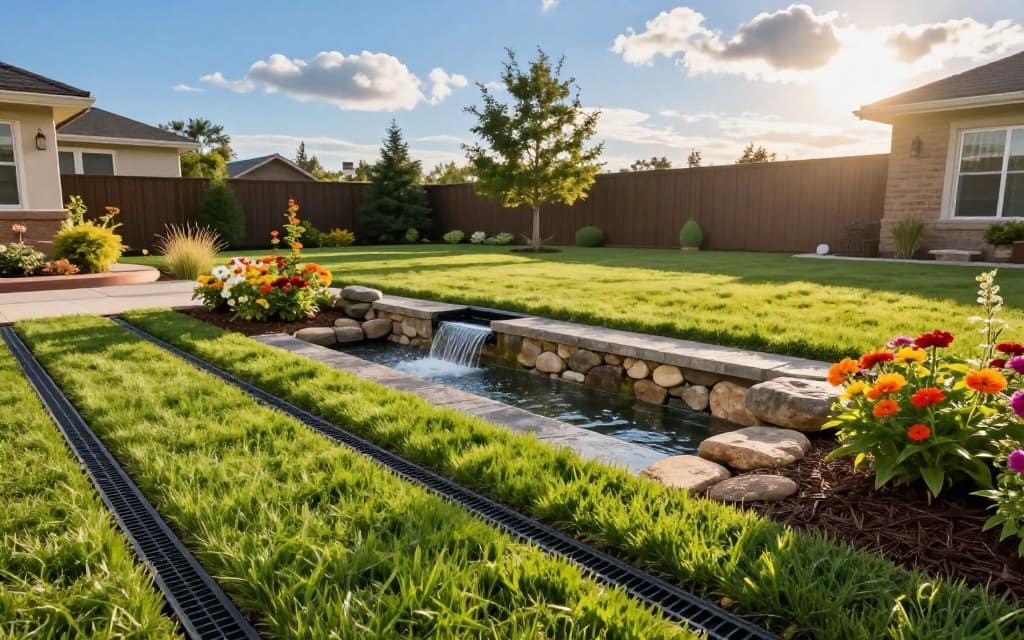
Are you tired of soggy patches and puddles that refuse to go away after a storm? The guide opens with residential backyard drainage solutions that manage water so it moves away from problem spots instead of pooling in the yard.
A well-designed system collects and redirects excess water to proper outlets like rain barrels or dry wells. This prevents erosion, foul odors, pest breeding, and protects your foundation.
This article shows how to spot drainage problems, diagnose causes, and pick practical fixes that fit common property layouts. Some fixes are DIY-friendly, such as downspout extensions and aeration. Others like underground drains need more planning.
Addressing standing water quickly keeps your lawn healthier and reduces long-term repair needs. We explain when the issue is surface runoff, subsurface saturation, or roof runoff dumping too much water, and offer a toolbox of options: grading, trench drains, gravel, plantings, and collection systems.
Key Takeaways
- Manage water to move away from problem areas and the home.
- Learn to identify surface, subsurface, and roof runoff issues.
- Simple DIY fixes can help, but some projects need professional planning.
- Quick action on standing water protects your lawn and foundation.
- A toolbox approach—grading, drains, gravel, plants, and collection—lets you choose the right fix.
Why backyard drainage matters for a dry, healthy yard
Too much water can turn a pleasant backyard into a muddy, unusable mess. When soil stays saturated, grass roots get starved of oxygen and turf thins out. Over time this causes dead patches and stressed landscaping that need costly repair.
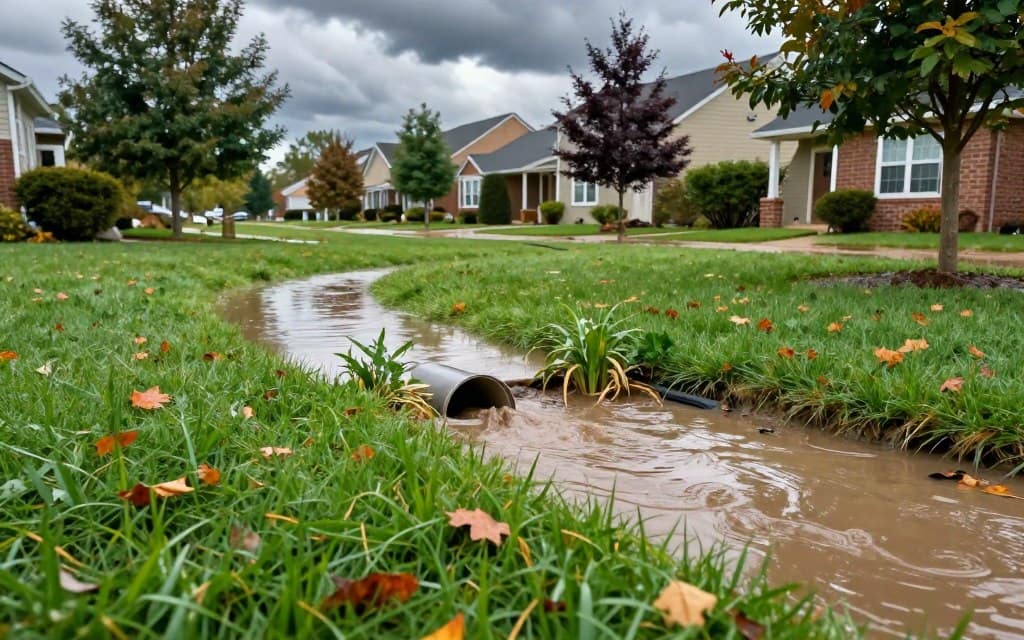
Oversaturation also feeds erosion. Fast-moving water strips topsoil, carves ruts, and deepens channels so each rain worsens future drainage problems. Lingering puddles trap organic debris and create foul odors, making outdoor spaces messy and unpleasant.
Standing water invites pests like mosquitoes and other insects that make the yard less enjoyable. Closer to the home, pooled water can soften soil near the foundation and raise the risk of seepage, mold, and structural damage.
Good water management protects property. Proper site care keeps lawns healthier, reduces mud and smells, and lowers the chance of expensive foundation and landscaping repairs.
Spot the signs of drainage problems and standing water
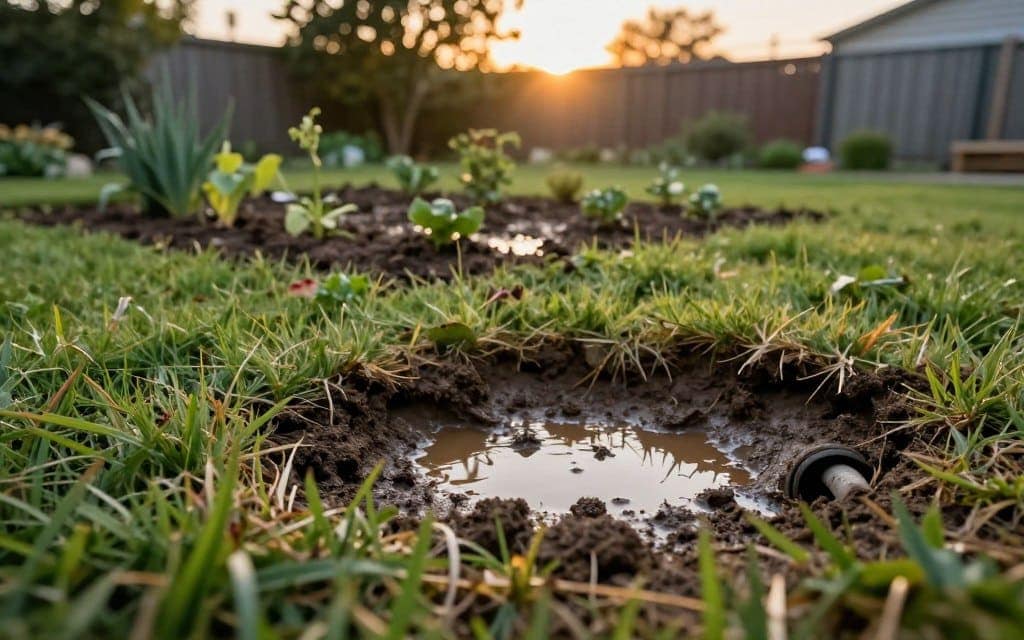
After a heavy shower, the spots where water clings tell the real story of your yard. Walk the property and map where water sits longer than a few hours. Note low ground, spongey turf, and recurring puddles.
Where to look
Check patios, driveway ends, fence lines, and the base of slopes. Flattened grass, exposed soil, small gullies, and debris lines reveal runoff and the main water flow paths.
Practical checkpoints
Watch for muddy footprints, algae-like staining in shaded areas, and repeat wet spots after different storms. These signs point to chronic saturation rather than a one-time pooling event.
When it becomes a property issue
If pooling occurs against the house, or you detect wet basement or crawlspace smells, treat the problem as a structural concern. Repeated flooding near the foundation raises risk to the house and needs faster action.
Document patterns across several rains so fixes target the true source, not just symptoms.
Diagnose what’s causing poor yard drainage on your property
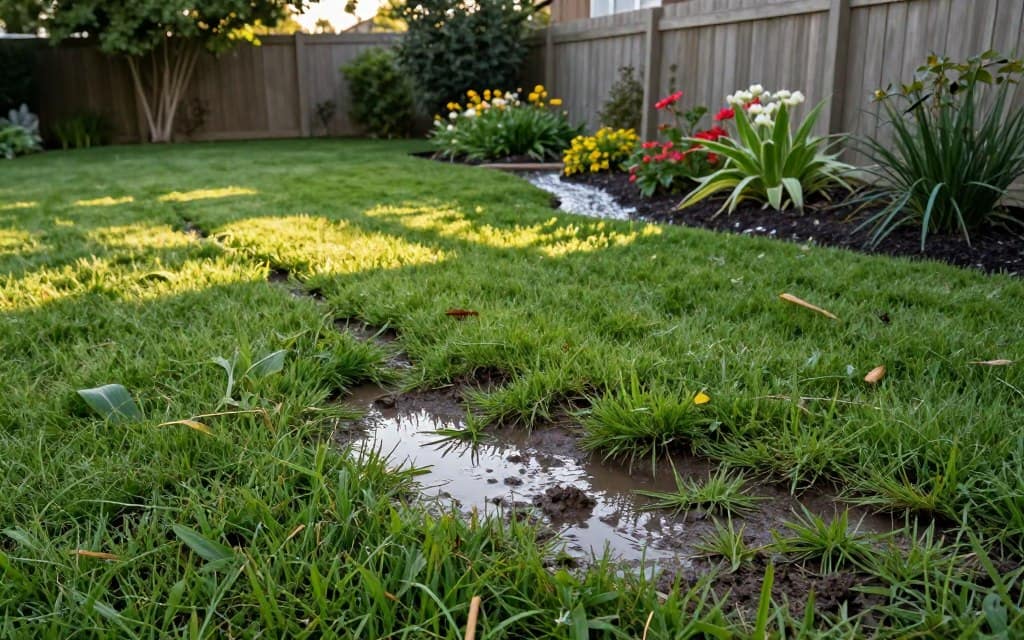
Start by tracing where water travels across your lot after a storm—it reveals the source of persistent wet spots.
Slope and grading problems
If the ground pitches toward the home, water will follow and collect near the foundation.
A practical benchmark is about 1 inch of fall per foot of horizontal run to move water away effectively. Small grade errors can cause large pooling.
Soil type and compaction
Dense, compacted soil slows absorption and keeps water near the surface.
Test with a screwdriver or soil probe; if it’s hard to push in, the soil is compacted and needs loosening or organic amendment.
Gutters, downspouts and roof runoff
Clogged gutters or downspouts that dump next to beds will repeatedly saturate the same area.
Check extensions and where runoff lands; moving that outlet even a few feet can protect turf and the home.
Hardscape surfaces and concentrated flows
Driveways, patios, and similar construction increase surface water volume and speed.
These hardscape surfaces can channel fast water toward weak lawn spots, so identify flow lines and address multiple causes with coordinated systems.
Residential backyard drainage solutions that actually work
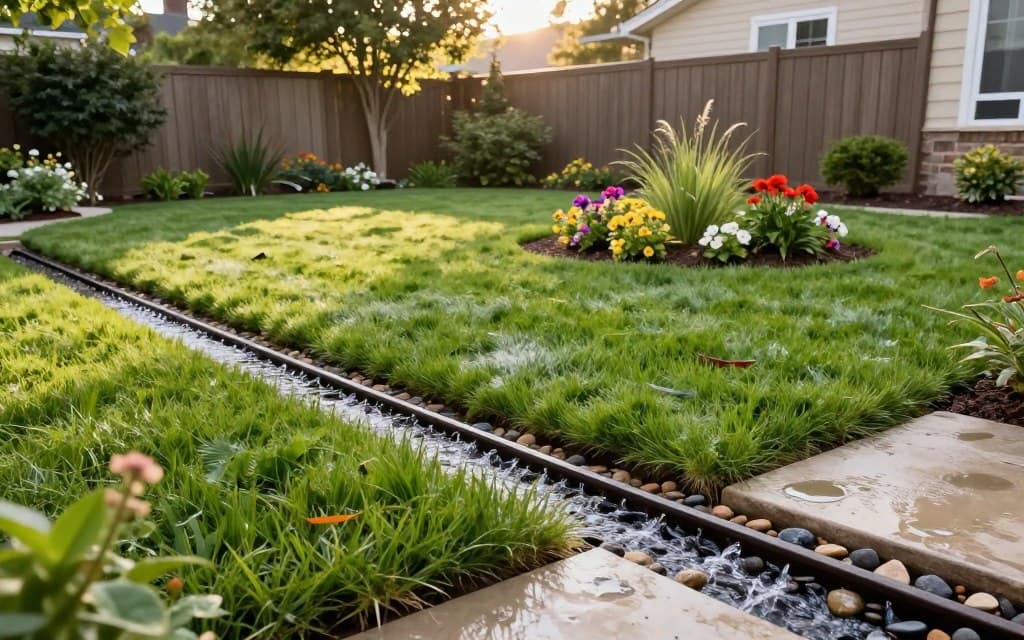
Fixing persistent wet spots starts with choosing practical fixes that match your yard’s flow. The right mix of grading, collection, and porous materials moves water away from the foundation and stops repeat pooling.
Regrade the ground to direct water away from the foundation
Adding soil and shaping the ground creates a consistent slope that helps direct water away from the house. This is often the most effective fix but can be labor intensive.
Downspout extensions to move roof water away from the house
Extend downspouts or add a short pipe so roof runoff exits well beyond turf and planting beds. This prevents concentrated flow from overwhelming one corner of the yard.
French drains for persistent standing water and saturated soil
A French drain uses a trench, gravel, and a perforated pipe to collect subsurface water and carry it to a safe outlet. It’s ideal where soil stays saturated after storms.
Trench drains, catch basins, and dry wells
Trench drains capture fast surface flow near driveways and patios. Catch basins sit at low points to collect then convey water into a pipe. Dry wells hold excess water underground so it can slowly percolate into surrounding soil.
Swales, berms, and dry creek beds
Shallow swales and raised berms redirect surface runoff across the landscape. A dry creek bed uses rocks and gravel to create a natural-looking channel that guides flow and reduces erosion.
Permeable gravel, aeration, plantings, and rain barrels
Use permeable gravel to cut surface pooling and improve infiltration. Core aeration opens soil so water soaks in, and deep-rooted plants help remove excess water. Rain barrels capture roof water for reuse—check local rules before installing.
How to choose the right drainage solution for your yard
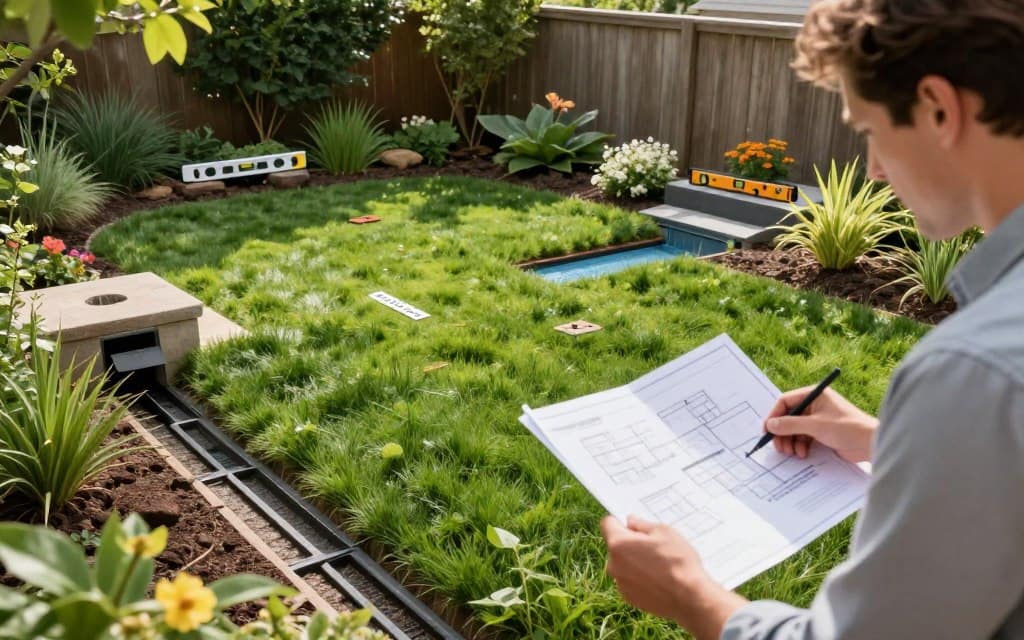
Decide on a plan only after you map how storms move water across your property. A quick map shows whether the issue is fast surface runoff, slow subsurface saturation, or concentrated roof flow.
Match the fix to the problem
Surface water that runs fast often needs grading, swales, trench drains, or a dry creek channel to redirect water flow away from low areas.
Slow-draining, saturated soil usually calls for French drains, perforated pipes, or dry wells that collect and move water below grade.
Plan outlets and legal discharge
Every system needs a safe outlet. Confirm local rules and pick outlet options that don’t move the problem to a neighbor or into restricted areas.
Balance function and landscape
Think in chains: collect → convey → discharge. Use features like berms, plantings, and rock beds to make a functional drainage solution that also improves the landscape.
Prioritize durable materials and layouts that resist clogging and handle peak storms while fitting routine yard use.
Installation planning, safety, and when to hire a pro
A safe, well-planned installation matters as much as the drain design itself.
Call 811 before you dig. Marking utility lines is the first step for any trench or pipe work so crews avoid hazards and service interruptions.
Backfill and materials
Use coarse-grained soil as backfill in wet areas because it drains faster than fine soils and helps the trench stay firm. Pea gravel is ideal around perforated pipe and trench edges; it lets water move while supporting nearby soil.
Place larger rocks strategically to guide flow and slow fast water. Rocks work well in creek-style channels and at inlet points to cut erosion.
Build quality basics
Correct trench depth, a consistent slope, and proper pipe orientation reduce clogs and improve performance during storms. Keep debris out of the pipe and check outlets so water leaves the system cleanly.
When to hire a pro
If you face persistent flooding, heavy runoff affecting multiple yards, or water reaching the home, get a professional diagnosis. Complex underground systems often need design and construction oversight.
If you need local help, C&T Lawn and Landscape can assess your drainage yard conditions and recommend a system.
Conclusion
Pinpointing flow paths and low spots turns guesswork into effective action. Start by finding where runoff begins and where it ends on your yard. That simple map guides every repair and prevents recurring standing water.
Prioritize fixes near the foundation first to avoid structural damage. Then tackle chronic low areas, hardscape runoff, and saturated turf zones in order.
Use a layered approach: reshape grade, add collection points, run conveyance lines, and create infiltration or storage areas as needed. Match each fix to the cause—surface flow and subsurface saturation need different work.
After the next rain, re-check the yard, note improvements, and tweak downspouts, rock edges, or low spots to keep puddles from returning.