



Imagine planting a beautiful flower bed, only to watch it turn into a swamp after a spring rain. Many homeowners face this frustrating scene, as their lovely yards become unusable, muddy areas. The problem often starts with poor water management and a lack of effective drainage solutions.
Inadequate water flow creates soggy spots that linger long after the rain stops. These areas lead to dirty shoes and can become breeding grounds for pests. Standing water problems are common issues that many people struggle to resolve without proper drainage solutions. These challenges can affect the health of a garden and even threaten a home’s foundation over time.
This guide explores how to protect outdoor spaces. It covers various approaches, from simple do-it-yourself fixes to more complex systems. The goal is to redirect water away from problem zones. Understanding the root cause is the first step toward a lasting fix.
Key Takeaways
- Proper water flow is essential for a healthy and functional yard.
- Poor drainage can create muddy areas and damage garden plants.
- Standing water near a home can lead to foundation issues.
- Identifying the cause of water problems is crucial for an effective fix.
- Several methods exist to manage excess water in the landscape.
- Addressing these issues quickly helps maintain property value.
- Simple changes can often prevent major water-related damage.
Understanding Garden Drainage Problems
Recognizing drainage challenges begins with observing how water behaves across the property. Homeowners should watch for patterns during and after rainfall to identify trouble spots.
Identifying Soggy Spots and Waterlogged Soil
Persistent puddles indicate areas where water cannot penetrate the ground. These soggy zones often appear where grass struggles to grow.
Waterlogged soil creates muddy patches that remain wet long after rain stops. This condition prevents healthy root development and can damage plant health.
The Impact of Soil Compaction on Drainage
Compacted soil occurs when foot traffic, snow accumulation, or lawn equipment compresses the ground. This compression creates a hard surface that repels water.
When soil becomes too dense, rainwater cannot absorb properly. Instead, it pools on the surface or flows toward low-lying areas of the yard.
Various factors contribute to this problem. Home repairs that disrupt natural water flow or excessive watering near foundations often create drainage issues.
| Soil Type | Drainage Speed | Water Retention | Best For |
|---|---|---|---|
| Sandy Soil | Fast | Low | Well-drained areas |
| Clay Soil | Slow | High | Moisture-loving plants |
| Loamy Soil | Moderate | Balanced | Most garden plants |
| Compacted Soil | Very Slow | Excessive | Requires improvement |
Drainage Solutions
When simple fixes aren’t enough, more robust systems can redirect water effectively. These approaches involve installing components below or at ground level. They offer a permanent solution for managing heavy runoff.
Exploring Catch Basins, Dry Wells, and French Drains
A catch basin is a buried container with a slotted cover. It collects surface water and sends it through pipes away from the area.
A dry well is a large hole filled with gravel. It captures runoff and lets it soak slowly into the earth. This reduces pressure on municipal storm drains.
French drains use a perforated pipe buried in gravel. This channel carries water from soggy spots to a better location. They are excellent for protecting foundations.
Channel drains act like in-ground gutters. They are perfect for driveways or patios where water pools. These drains efficiently move water into an underground system.
When to Consider Professional Guidance
Some projects are complex and need expert help. Installing extensive underground drainage systems is a key example. A professional can correctly diagnose severe flooding causes.
They ensure the system is designed and installed for maximum effect. For any digging project, always call 811 first. This free service marks underground utility lines to prevent accidents.
| System Type | Best For | Key Component | Water Destination |
|---|---|---|---|
| Catch Basin | Collecting surface runoff | Buried container & pipe | Directed away from property |
| Dry Well | Slow water dispersal | Gravel-filled pit | Absorbed into subsoil |
| French Drain | Redirecting groundwater | Perforated pipe in gravel | Storm drain or safe outlet |
| Channel Drain | Removing standing water | In-ground trench & grate | Underground piping system |
Choosing the right solution depends on the specific water challenge. These drainage solutions provide effective long-term results for a healthier yard.
Soil Preparation and Yard Grading
Transforming a waterlogged yard starts with two fundamental improvements: soil aeration and proper grading. These techniques address water issues at their source rather than just managing the symptoms. They create a healthier foundation for the entire landscape.
Aeration Techniques for Enhanced Water Absorption
Yard aeration involves creating small holes in the ground to break up compacted soil. This process opens pathways for water and nutrients to reach grass roots. It transforms hard surfaces into absorbent areas that support lawn health.
Homeowners can use several tools for this task. Garden forks work well for small patches. Aerator shoes strap to your feet and poke holes as you walk. Spike aerators are effective for larger lawn areas.
Proper grading ensures water flows away from the home’s foundation. An incorrectly pitched yard creates a funnel effect. This directs water toward the structure instead of away from it.
Grading projects typically involve adding clay-type soil. The ground should slope gently downward from the house. This natural slope prevents pooling in low-lying areas.
For particularly wet spots, coarse-grained soil makes excellent backfill material. It offers superior drainage compared to dense clay. This combination of aeration and grading creates comprehensive water management.
Installing French Drains Effectively
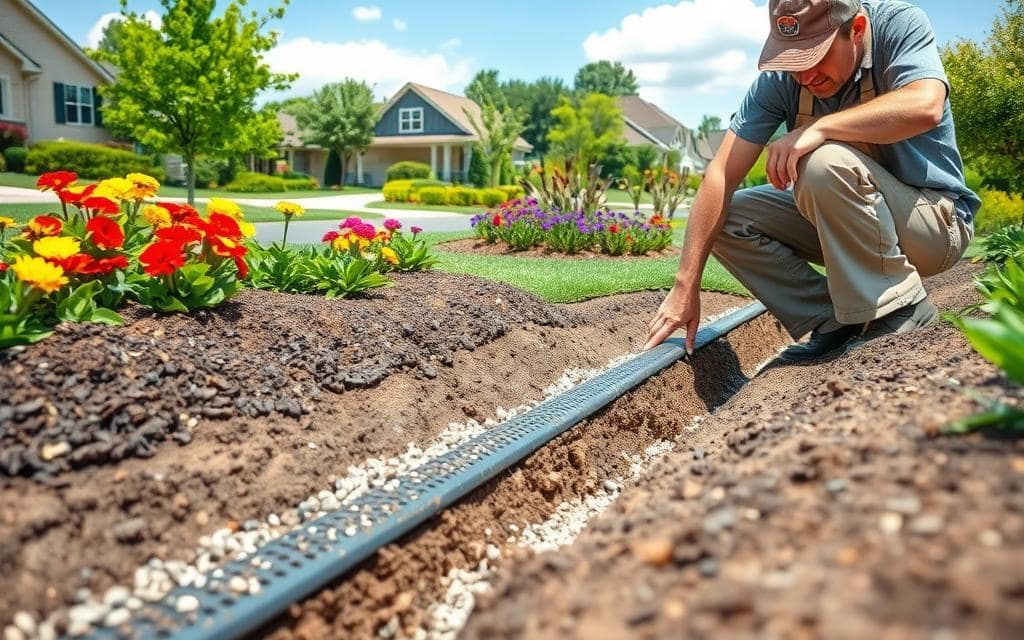
Proper French drain installation requires careful planning and precise execution for optimal results. This underground system intercepts water before it reaches problem areas. It keeps foundations and garden beds dry during heavy rainfall.
Designing the Trench and Pipe Layout
The trench design determines the system’s effectiveness. Homeowners must map the water flow pattern first. This helps identify where to place the trench for maximum interception.
A properly sloped trench ensures water moves efficiently. The pitch should be consistent along the entire length. This prevents pooling within the pipe system.
Materials and Step-by-Step Installation Tips
Quality materials are essential for long-lasting performance. Perforated pipe surrounded by gravel creates the core system. This combination allows water to enter while filtering out debris.
The drainage installation process begins with trench excavation. Workers dig to the required depth and width. They then add a gravel base before laying the pipe.
After positioning the pipe, more gravel fills the trench. Landscape fabric prevents soil from clogging the system. Proper installation creates reliable water management for years.
Professional drainage installation costs range from $2,800 to $6,500. The price depends on trench length and site conditions. This investment provides permanent solutions for water issues.
Optimizing Downspouts and Gutter Extensions
A home’s roof collects a massive amount of rainwater, and the gutter system is its primary path to the ground. This network forms the first line of defense, designed to channel water away from the foundation. However, if the downspouts simply dump water right next to the home, they can create the very pooling issues they are meant to prevent.
Proper Placement to Divert Excess Water
Many soggy garden beds start with a downspout that discharges too close to the structure. The simplest fix is often a downspout extension. These flexible, accordion-style pipes attach directly to existing downspouts.
They redirect water toward lawn areas with better natural drainage. A critical rule is to move water at least 4-6 feet away home from the foundation. This simple step prevents basement moisture and protects the home’s structural integrity.
Homeowners have several options. Basic extensions are affordable and temporary. For a more permanent solution, buried pipes can carry water away completely. Placement should consider yard slope and garden bed locations.
| Extension Type | Best Use Case | Installation Effort | Relative Cost |
|---|---|---|---|
| Flexible Accordion | Quick, seasonal fixes | Very Easy (DIY) | Low |
| Rigid Plastic | Durable, semi-permanent | Easy (DIY) | Medium |
| Buried Pipe System | Permanent, invisible | Moderate to Hard | Higher |
With a national average cost of around $480, optimizing downspouts is one of the most cost-effective drainage improvements. It efficiently manages roof runoff before it becomes a problem.
Enhancing Drainage with Catch Basins and Yard Drains
Concentrated water flow from downspouts often creates the most challenging pooling problems. When rainwater pours directly onto compacted ground, it cannot absorb properly. This leads to soggy areas that damage lawns and garden beds.
Underground collection systems offer reliable alternatives for managing excess moisture. They work effectively regardless of soil conditions or saturation levels.
Installing a Catch Basin Below Downspouts
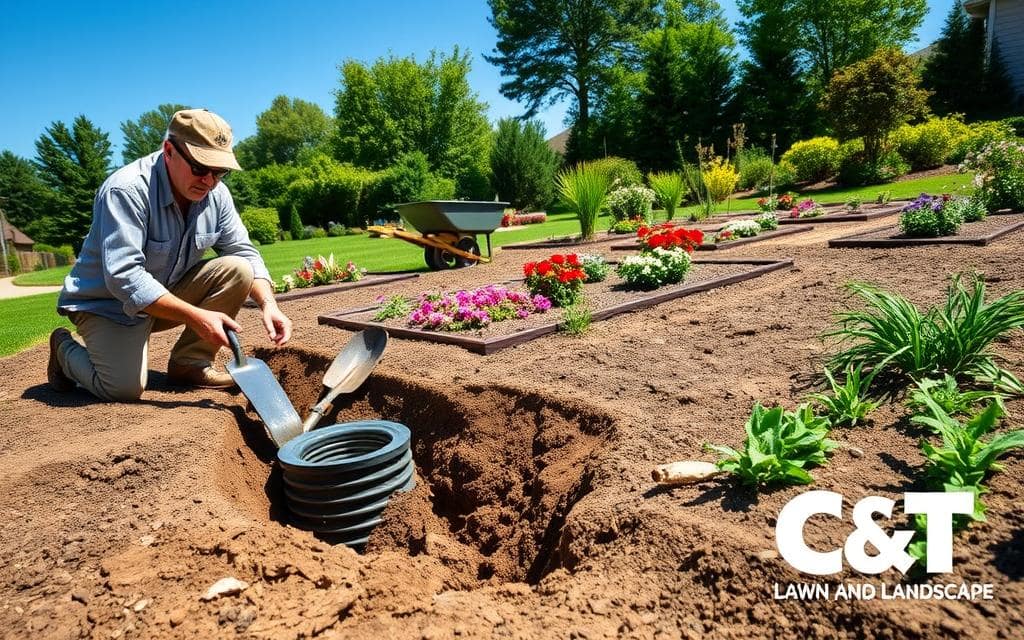
A catch basin serves as an underground container that captures roof runoff. It functions like a buried drum with attached pipes. These pipes redirect water away from problem areas.
The installation process requires excavation to accommodate the basin unit. Proper sizing ensures it can handle expected water volumes during heavy storms. Connection options include directing flow to soil areas or municipal systems.
This approach works reliably even in clay-heavy soil conditions. The catch basin continues functioning when natural absorption fails.
Utilizing Yard Drains for Frequent Water Collection
Yard drains act as strategic collection points throughout the landscape. They resemble floor drains designed for outdoor spaces. Homeowners install them wherever water frequently gathers.
Placement should target low spots where water naturally accumulates. The installation requires excavation for both the drain and connecting pipes. Once properly backfilled, only a small grid remains visible on the surface.
This makes yard drains ideal for well-maintained lawns with recurring wet spots. They capture surface water and redirect it to better-draining locations.
| System Type | Primary Function | Installation Depth | Visibility After Installation | Cost Range (per linear foot) |
|---|---|---|---|---|
| Catch Basin | Downspout water management | Below ground level | Completely hidden | $8 – $30 |
| Yard Drain | Surface water collection | Surface to shallow burial | Small grid visible | $12 – $25 |
Both systems provide effective water management for different scenarios. The catch basin handles concentrated downspout discharge. Yard drains address general surface accumulation throughout the yard.
Proper installation creates a comprehensive drainage system that protects outdoor spaces. Homeowners can budget accordingly with cost guidance between $8 and $30 per linear foot.
Selecting Permeable Hardscape Materials
Traditional paving choices can unintentionally worsen water pooling issues in landscapes. Materials like concrete and brick create impermeable surfaces that shed rainwater onto surrounding areas.
This runoff collects in low spots, creating ideal conditions for mildew and pests. Instead of absorbing into the ground, water flows across these hard surfaces.
Choosing Gravel, Pebbles, and Other Drain-Friendly Options
Permeable alternatives allow water to pass through while providing stable walking surfaces. Loose materials like gravel and pebbles prevent puddles from forming on the yard surface.
Pea gravel stands out as an excellent choice for landscape drainage. Its small size promotes efficient water flow while offering various color options.
Strategic arrangement of rocks can direct water toward absorption areas. These materials require minimal maintenance and remain durable over time.
Homeowners can replace problematic concrete sections with permeable gravel around garden beds. This creates dry pathways that complement the overall yard drainage system.
Designing a Functional Rain Garden
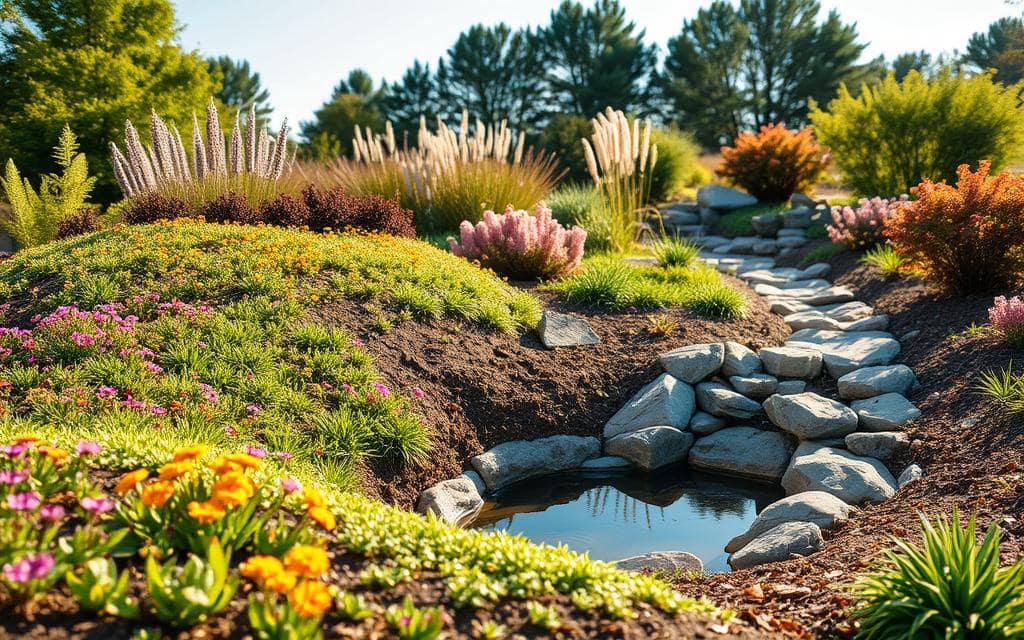
Instead of constantly battling pooling water, homeowners can embrace it with a strategically designed rain garden. These landscaped depressions capture excess water and runoff, allowing it to percolate slowly into the soil. They transform problematic wet areas into vibrant parts of the landscape.
Plant Selection for Wet Conditions
Choosing the right plants is crucial for a thriving rain garden. They must tolerate both occasional flooding and drier periods. Native species are often the best choice as they are adapted to local rain patterns.
Homeowners should research species suited to their garden zone. Excellent options include native sedges, lady ferns, and swamp milkweed. These plants not only survive but flourish with the extra moisture.
Designing for Maximum Water Absorption and Aesthetics
A well-planned rain garden maximizes water absorption while enhancing yard appeal. The size and depth should correspond to the volume of runoff it needs to handle. Proper positioning intercepts water flow from downspouts or slopes.
The design can include curves and layers for visual interest. This approach creates an attractive feature that solves drainage issues naturally. These gardens also filter pollutants from runoff, protecting groundwater.
| Plant Type | Water Tolerance | Sunlight Needs | Height at Maturity |
|---|---|---|---|
| Native Sedge | Very High | Partial Shade | 1-2 feet |
| Lady Fern | High | Full to Partial Shade | 2-3 feet |
| Swamp Milkweed | High | Full Sun | 3-4 feet |
| Blue Flag Iris | Very High | Full Sun to Partial Shade | 2-3 feet |
Installing a rain garden typically costs between $3 and $4 per square foot. This investment creates a beautiful, eco-friendly solution for managing stormwater.
DIY vs. Professional Drainage Installation
Homeowners facing persistent water problems must weigh the pros and cons of do-it-yourself fixes versus professional intervention. This decision impacts the effectiveness and longevity of the water management approach.
Benefits and Limitations of a DIY Approach
Many homeowners can successfully handle their water control project. Simple installations like downspout extensions or surface grading often work well as DIY undertakings.
This approach offers significant cost savings. Homeowners can work at their own pace on their property. They gain personal satisfaction from solving the issue themselves.
However, complex underground systems require professional expertise. Installing French drains or catch basins needs specialized equipment. Proper grading and pipe installation demand technical knowledge.
Before any digging project, always call 811. This free service marks underground utility lines. It prevents dangerous and expensive accidents.
Professional contractors bring valuable experience to complex situations. They accurately diagnose runoff causes. Their comprehensive system designs provide lasting solutions for the home.
The choice depends on project complexity and homeowner skill level. Simple surface issues often suit DIY methods. Extensive underground work typically needs professional drainage installation.
Conclusion
Homeowners can transform problematic wet areas into functional, beautiful parts of their property with the right strategies. Effective water management protects both the home’s foundation and valuable outdoor living spaces.
Without proper drainage, yards face serious risks including foundation damage from water pooling too close to the structure. Standing water also creates health hazards and eliminates usable landscape areas.
The approaches covered range from simple downspout extensions to comprehensive French drain systems. Each solution addresses specific water challenges based on yard conditions and budget considerations.
Proper water control prevents costly damage while creating attractive, functional outdoor spaces. Homeowners now have the knowledge to select appropriate methods for their specific situation.